Super-prime and Subprime, and Joel 2
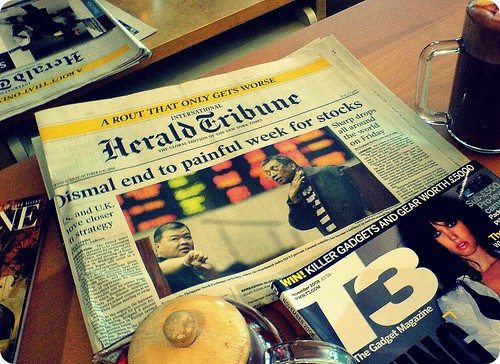
A flurry of emails from London, Tokyo and Hong Kong from ex-colleagues. In our past lives we'd done rookie overnighters together, pumped on adrenaline, working on deals that, we'd been told, had never before been seen in the region: repackaged derivatives, structured products, kosher instruments… the same idea neatly gift-wrapped for different investors with different (religious or irreligious) policy requirements.
My first question upon being given the initial brief had been why anyone would purchase products of little/no intrinsic value (or swap risks of uncertain exposure (for lack of thorough due diligence) but that's another matter). The answer given was similar to that of my economics tutors’ when queried about the value of money since cash was merely some special paper rolled off a printing press and cut into crisp handy-sized bills: it’s all about what it symbolises.
Regardless of whether these symbols are backed by gold or silver, property, mortgages, other derivatives!, the fact is that values of these underlying/backing assets are themselves what the amorphous market feels like ascribing to them; they have no objective value per se, value itself being wholly subjective. This was probably how, allegedly, Manhattan was bought for a few trinkets and baubles (although just who tricked whom continues to be a matter of debate).
It is easy to find witches to burn during the current financial crisis, credit default swaps and fat investment bankers happening to bob rather attractively in the river at the moment. But if the current financial crisis shows us anything at all, it is the eggshell meaninglessness of that on which much of our hopes and dreams have been based, what family and society extol us to strive for, what the world is built on.
Or perhaps…value isn't that subjective after all if we take God as our valuer (for if he is God, lord over and creator of the world, who else can authoritatively recession-proof-ly ascribe value to things). And if value isn't subjective, then there is objective meaning to things.
How Super-prime Was Really Sub-prime
Joel 2:18 – 32, which the DGs are studying this week, opens with the LORD becoming jealous for his land (Joel 2:18). In Joel's time, this meant the land of Israel, which he had given to the Israelites, a place for them to live in proper relationship with him, worshipping him and depending wholly on him (Deuteronomy 12).
Several centuries before Joel, God had given to the Israelites the land in all its bountiful misty-eyed goodness: hills and valleys with ample rain, flowing with milk and honey and grain and oil and fruit etc (Deuteronomy 11:8 – 17), not just for their sustenance, but filled it with good things more than enough for their existence so they might look upon his generous providence, remember him and praise his name (Deuteronomy 8:10 – 11).
If, however, the Israelites contrived to forget that it was God who'd provided them with the land and their lives, and turned aside to serve other gods, then God would stopper up the rain supply and the ungrateful and stupidly forgetful people would perish quickly in the sudden desertification of their formerly lush harvest fields (Deuteronomy 11:16 – 17).
The condition of the land of Israel then, was a barometer of Israel's spiritual health, her relationship with God.
So in the face of the people's sin in Joel, God did as warned and sent his army of locusts to wipe out the food and a drought to dry up the water (Joel 1). This was bad but not as bad as the total destruction that faced Israel on the day of the LORD, the Last Day, if they were found out of relationship with God then (Joel 2:1-11). The people, faced with such a prospect and being the shrewd businessmen they would later be known for being, but also assumedly with heartfelt, gut-wrenching sorrow repented of not treating God as God (Joel 2:12-17).
God's restoration to the land its former goodness – green fields, trees overladen with fruit, abundant rain, vats overflowing with grain, plentiful food etc (Joel 2:18 – 26) then, was not just for their enjoyment (though they must have been glad and rejoiced) but that they fulfil the purpose for which the land had been given to them – that they rejoice in the LORD their God (Joel 2:23) and praise his name (Joel 2: 26).
Fast forward several centuries to the time of Jesus and then several more from Jesus' death to us today, and that little hotspot in the Middle East called present-day Israel is no longer the barometer of anybody's relationship with God. Or West Bank Jewish settlers would be sitting on some major prime real estate.
How super-prime real estate was shown to be sub-prime was the coming of Jesus. Prior to his death, the most important part of the land of Israel had been the temple where the people could meet with God. However, the people would only have been able to communicate to God through the mediation of a priest and the priest himself only after offering appropriate grain or drinking offerings (cf. Joel 1:9, 13; Joel 2:14). So Graeme Goldsworthy argues that the ultimate inheritance of the Israelites had not been land rights but the privileges afforded by that designated locale: access to God. Which is why the ultimate picture of Israel living in right relationship with God was as a kingdom of priests (Exodus 19:6).
Jesus death on the cross once for all, for the sins of everyone who had ever lived and would ever live, was a sacrifice that allowed a holy God to relate to us sinners directly without further grain or drinking offerings. The day of Pentecost was the inauguration of a kingdom of priests.
So now, not just Israelites but anyone who calls on the name of the LORD/anyone whom the LORD calls (Joel 2:32) can relate rightly and personally to God through the gift of God's Spirit (Joel 2:28-29, Acts 2) and be saved from destruction on the day of the LORD. Uber-prime property unto perpetuity.
Labels: *Joel, Pop Economics