Wednesday, January 19, 2011

The Destruction of Pompeii and the World

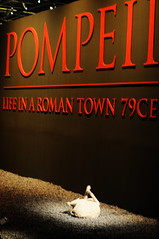
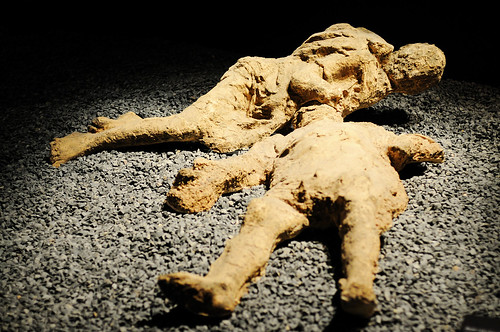
Pompeii: Life in a Roman Town 79CE Pompeii Victim Resin Body Casts
Pompeii has always evoked the same slow-down-to-gawk-at-road-accident schadenfreude fascination humans have for horror shows, gory nature shows and salacious murders that sell tabloids; delight at evidence that the world out there is wild and dangerous elevates our relative circumstances.

The remarkable thing about the Pompeii: Life in a Roman Town 79CE exhibition at the National Museum of Singapore (free entry during its concluding weekend. go see!) was the evidence that these were people not quite different from us who live in "developed" countries or in cities. It would possibly be more of a culture shock to visit a current-day "lost" Amazon tribe than to do a homestay with Lucius Caecilius Iucundus.

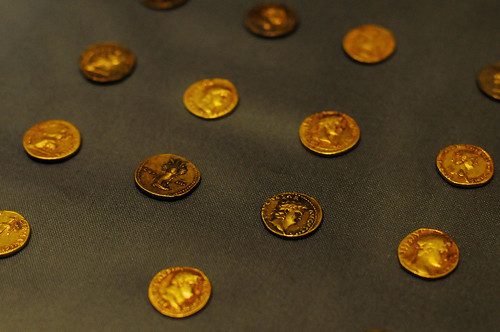
Pompeii Roman Coins

Lucius Caecilius Iucundus
was a banker who, basically, ran e-bay (before the "e"). He managed auctions by paying vendors immediately but allowed purchasers a time frame to pay, with interest. Proper accounts were kept of these transactions in legalese such as:
Umbricia Januaria declares that she has received from Lucius Caecilius Jucundus 11,039 sesterces, which sum came into the hands of Lucius Caecilius Jucundus by agreement as the proceeds of an auction sale for Umbricia Januaria, the commission due him having been deducted. Done at Pompeii, on the 12th of December, in the consulship of Lucius Duvius and Publius Clodius. (56AD)
and authenticated by seals and signatures of witnesses.

While he was situated in Pompeii, most of the bankers could be found 30 miles from Pompeii in Puteoli, which was a major shipping town. Three-hundred ton grain ships from Africa and Egypt docked here for transshipment of goods to Rome. One such precious cargo was a man known as Paul of Tarsus (Acts 28:13).

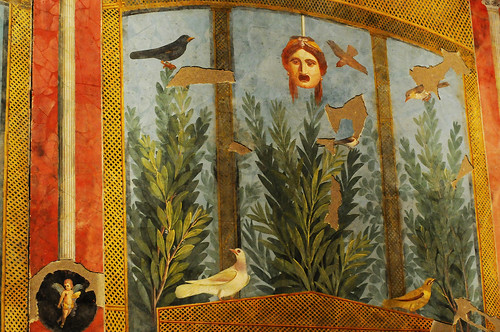
Pompeii Wall Garden Fresco, House of the Golden Bracelet
But back to Pompeii. Pompeii was the place for the leisured classes to live well - it was blessed with delightful climate, fertile soil for the garden and was politically stable. There, bankers and other successful merchants (and those who made their fortune on fish sauce empires) put their wealth to work in large luxurious seaview properties. The garden took up at least one-fifth of total floor area and consisted of not just of a practical kitchen garden (hortus) where fruits and vegetables were cultivated but elaborate peristyled affairs filled with life-like statues (even if some looked like Michael Jackson), water features, garden furniture, fine art tromp l'oeil wall frescos and even aviaries. (Sir) Roy Strong would have been in heaven there.

The gardens were watered by fresh clean spring water from hills about 40km away, piped to Pompeii via aqueduct. Water pipes entered at the front door, fed mosaic fountains at the side of the impluvium or in the peristyled garden for household needs and decoration, then flowed out into a drain on the road at the base of the kerbstones where it flushed the streets of rubbish before ending up in storm drains that carried it to the river.

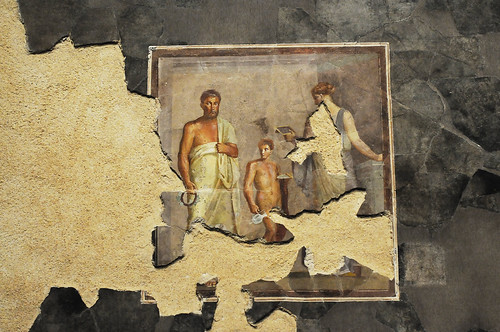
Pompeii Wall Painting
Bedrooms were located at the sides of the central courtyard and were windowless. Beds were made of stone or wood with bronze or silver trimmings. There was a headboard and a mattress base made of wooden cross pieces and strips of cloth or leather. In these rooms, women rocked their babies in wooden cradles and went about their daily ritual of doing their hair in the current fashion (this changed constantly and was set by the celebrity of the day - a member of the emperor's family) and beautifying themselves with cosmetics (whitening paste of chalk or lead, rouge, lipstick, soot eyebrow darkeners) and jewellery of elegant design and workmanship.

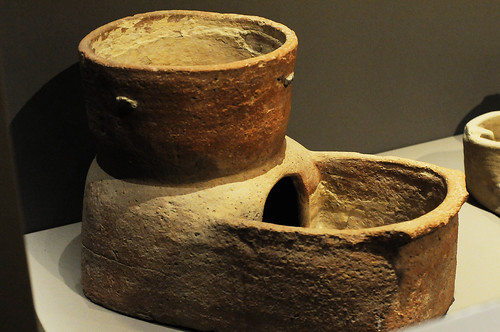
Pompeii Portable Oven
Portable oven

Lucius would have come home for main meals (cena) in his dining room (triclinium) and enjoyed at least three courses: an appetiser of eggs or oysters or other shellfish; a main course of fish, roasted pheasant, peacock, ostrich or pork and veggies cooked with olive oil, wine, vinegar, basil, majoram, coriander, mint or fish sauce (garum); and a dessert of dried or fresh fruit topped with honey or baked custard, all washed down with Pompeiian wine from the lush volcanic soil of Mount Vesuvius.

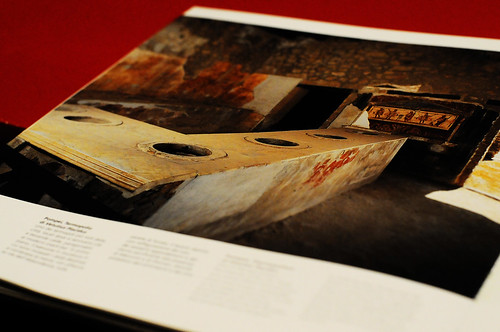
Pompeii Thermopolium - Fast Food Snack Bar
If he felt a bit peckish during the day, Lucius would have had a bite at one of several fast food snack bars, where cooked food was kept warm by constant heat. Thermopoliums were as functionally-named as "cooked food stalls".

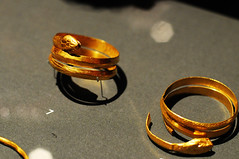
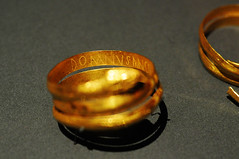
Pompeii Gold Bracelet Pompeii Gold Bracelet
On the inside of this armband is inscribed 'DOMINUS ANCILLAE SUAE' ('From the master to his slave').
For entertainment, there were plays and the deadly gladiatorial contests (complete with heart-throb celebrity gladiators) in a magnificent 5,000-seat theatre and a 20,000-capacity amphitheatre, and, if one was so inclined, prostitutes plying their trade at large elegant heated public baths and brothels, though there were also one's slaves for the job.

Young men were expected to apply themselves to their studies, which was exactly what Pliny the Younger was doing across the Bay of Naples from Pompeii when Pliny the Elder, full of intellectual curiosity and some valour, set sail for Ground Zero after witnessing the eruption from afar. This is why the younger Pliny, his nephew, survived to provide this account of the eruption of Mount Vesuvius on or about 24 August 79 AD to Tacitus. His concern for the objective accuracy of his report is fascinating.

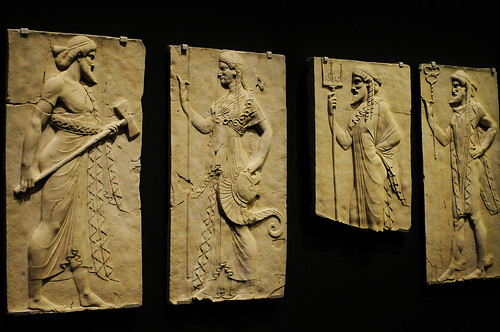
Pompeii Wall Relief of Gods
Pliny the Nephew eventually became a lawyer and then a governor, sending curt civil service memos but also substantial letters containing reports and advice on a religion that was allegedly disloyal to Rome:
They maintained ... that all that their guilt or error involved was that they were accustomed to assemble at dawn on a fixed day, to sing a hymn antiphonally to Christ as God, and to bind themselves by an oath, not for the commission of some crime, but to avoid acts of theft, brigandage, and adultery, not to break their word and not withhold money deposited with them when asked for it. When these rites were completed, it was their custom to depart, and then to assemble again to take food, which was however common and harmless...

The infection of this superstition has extended not merely through the cities, but also through the villages and country areas, but it seems likely that it can be halted and corrected...

Christians are not to be sought out. If brought before you and found guilty, they must be punished, but in such a way that a person who denies he is a Christian and demonstrates this by his action, that is, by worshiping our gods, may obtain pardon for repentance, even if his previous record is suspect. Documents published anonymously must play no role in any accusation, for they give the worst example, and are foreign to our age...
I was encouraged in my Christian faith by the exhibition because I am reminded that my faith is based on fact. The ancients were no less intelligent nor sophisticated than we are now. They had the same concern for justice and governance and accuracy in financial and historical accounts. And so we do not need to discount Luke when he tells Theophilus at the beginning of Luke's Gospel:
Inasmuch as many have undertaken to compile a narrative of the things that have been accomplished among us, just as those who from the beginning were eyewitnesses and ministers of the word have delivered them to us, it seemed good to me also, having followed all things closely for some time past, to write an orderly account for you, most excellent Theophilus, that you may have certainty concerning the things you have been taught (Luke 1:1-4).
Being able to distinguish fact from myth, Luke records that Jesus was the son of God himself. He was born as a man so that he could preach the good news to his fellow men and then die for them. The good news was that though all men everywhere in the world were under God's wrath because they refused to worship him, Jesus' death on the cross would pay for their transgressions against God and they would live, if only they believed this. That God raised Jesus from the dead after three days was confirmation that Jesus' promise was trustworthy.

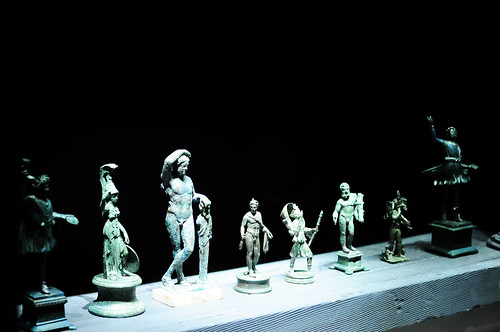
Pompeii Household Gods
Yet it seems we are no different from the poor Pompeians, who, though this same good news had come to Pompeii (Acts 28:14), were found attempting to escape the superheated pyroclastic poisonous gases, incandescent pumice and rock rain and thick ash smoke clutching the things they held dear ("What would you save if a volcano had just erupted in your backyard and your house was burning?") - family wealth (thick gold bands, vast amounts of jewellery, sacks of coins), the keys to their houses (locked to prevent looting) and their gilded household gods;

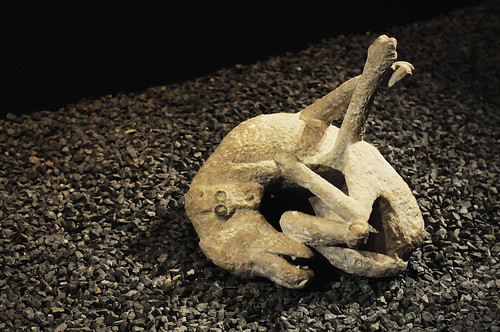
Pompeii Guard Dog Resin Cast
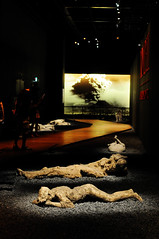
leaving behind babies in their rocking cradles, children behind staircases, guard dogs and prisoners still chained to their posts. They died tragically, without certain hope.

Pompeii Victim Resin Body Casts
If this same God has long warned that there will come a day when the whole world will be destroyed in an event far worse than that experienced by Pompeii, surely our sense of self-preservation (and general humanity) should ensure that we do everything possible to save ourselves and our loved ones (and even that nasty neighbour) from the terrible day of judgment by clinging to the promises of Jesus?


(Having long wondered how Christians managed to gather to worship together in foreign cities where such meetings had to be clandestine, I assumed prior enquiries were made and letters of introduction given together with instructions for getting to the local church(es). However, Ben Witherington III reports that Roger Bagnall has suggested that amongst all sorts of political and gladiatorial advertisements, and profane and plain feckless graffiti on ruined Roman walls (see Pompeii graffiti), there were also Christian notations suggesting to insiders that there were believers in the city who could be found.

Never such amusement since sighting the Viking runes at Maeshowe on Orkney. Reading the Book of Acts and the New Testament letters are going to be so much more fun!)

*************

Pompeii: Life in A Roman Town 79CE
David Jones, The Bankers of Puteoli: Finance Trade and Industry in the Roman World
Smithsonian Magazine, Resurrecting Pompeii
Peter Connolly, Pompeii
Mary Beard, Life of a Roman Town
Core Study: Cities of Vesuvius
Pompeii: Gods Indifferent to Power of Prayer

Labels: ,

Tuesday, April 13, 2010

Quest for Immortality: EPIC FAIL (Ecclesiastes 1:1-15)

The words of the Preacher, the son of David, king in Jerusalem.
Vanity of vanities, says the Preacher,
vanity of vanities! All is vanity.
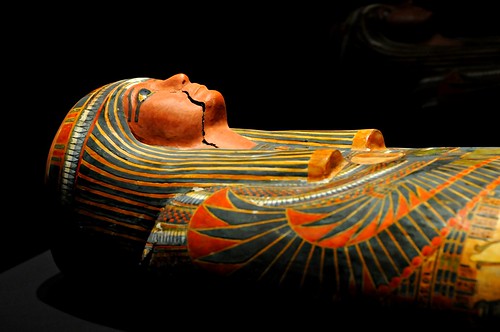
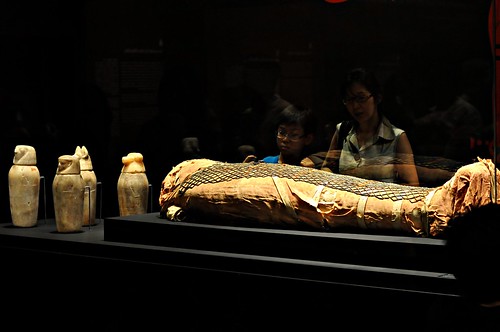
Mummy of Pe-de-ese in cartonnage cover
Mummy of Pe-de-ese in cartonnage cover.
"里面有人" - museum staff
"Pe-de-ese, doorkeeper of the temple of Amun, died when he was 35 to 50 years old. X-rays reveal Harris Lines on the shin bone. These form in bones during the early stages of life - when the bones were still growing - and are caused by stress, disease or poor nutrition. This indicates that as a child, Pe-de-ese must have faced some hardship."
What does man gain by all the toil
at which he toils under the sun?
A generation goes, and a generation comes,
but the earth remains forever.
The sun rises, and the sun goes down,
and hastens to the place where it rises.
The wind blows to the south
and goes around to the north;
around and around goes the wind,
and on its circuits the wind returns.
All streams run to the sea,
but the sea is not full;
to the place where the streams flow,
there they flow again.
The same sun that beat down on the weathered backs of the Egyptians constructing the pyramids now causes eye-straining glare off our computer screens. No one knows the names of those whose sweat stained the stone blocks any more than anyone will remember the cubicled worker bees who make up an economic edifice.
Man comes and tills the field and lies beneath,
And after many a summer dies the swan.*
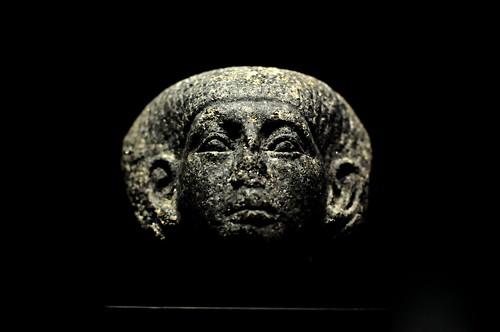
Male Statue Head
"This sculpted head is probably of King Am[...] as the features are reminiscent of images of him in the style of the time. The extensive damage to the lower parts of the wig that the head had been subsequently used as a grinding stone for a manual mill."

A man's life is here today and gone tomorrow, a vapour in the wind. All his hopes and dreams, and work and achievements, and his personality and relationships, condensed into the few years of his existence means nothing in the long history of the world. You and I, we are of no significance in the grand scheme of things.

And even the things that greatly outlast human generations seem without direction or purpose. There is only endless repetition. The tedious days and months and seasons and cycles never produce anything new.

In spite of the constant activity, nothing is of lasting significance in and of themselves; there is no purpose in anything. What's the point of living? Let's stop all the dishonesty about making your life count and living well.

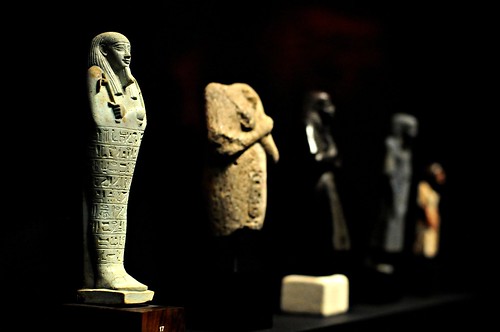
Shabtis
"In ancient Egypt, a labour system existed for important communal projects such as maintaining the irrigation systems that controlled the Nile flood. It was imagined that such a system might also exist in the afterlife. This could be avoided by having small mummy-shaped figurines of the deceased known as shabti, which would magically perform work on behalf of their owner. They were made of stone, wood, faience, pottery or bronze, and were a regular feature of tomb equipment from the Middle Kingdom (2123-1650 BCE) to the Ptolemaic period (332-30 BCE)." Fast forward a few centuries and you'll find skea building customised paper houses, pets and servants for Taoists to burn for their dead.
All things are full of weariness;
a man cannot utter it;
the eye is not satisfied with seeing,
nor the ear filled with hearing.
What has been is what will be,
and what has been done is what will be done,
and there is nothing new under the sun.
Is there a thing of which it is said,
"See, this is new"?
It has been already
in the ages before us.
There is no remembrance of former things,
nor will there be any remembrance
of later things yet to be
among those who come after. (Ecclesiastes 1:1-11)
History teachers tell us that those who do not know history are doomed to repeat it. But the people who intone such motivational spiel might not, themselves, have really studied human history. All revolutions and "radical!" "original!" ideas and movements have been thought of before and are but part of the cycle of human exertion. Nothing really changes; nothing is new.

Mummy of Nekhet-iset-aru and canopic jars
"里面有人" - same museum staff


The human experience for both Christian and non-Christian is the same. Our existence is prima facie fleeting, absurd, valueless, pointless, meaningless. Nothing lasts. And we are unable to change anything; we are unable to escape from these endless cycles until death releases us from this weariness. The existentialists (in all their dreary variations on the same theme) may have been right. And anyone who says otherwise is selling something.

The Teacher - Preacher has left no stone unturned in searching for significance in life. His research paper is the Book of Ecclesiastes and his conclusion is:
I have seen everything that is done under the sun, and behold, all is vanity and a striving after wind. (Ecclesiastes 1:14)
In his great wisdom, the Qoheleth sees that this futility and inscrutability, this unhappy business of searching but not finding and of wanting meaning and purpose but experiencing only endless meaningless repetition and of yearning but never being satisfied by anything done under the sun, has been ordained by God himself (Ecclesiastes 1:12-13).
What is crooked cannot be made straight,
and what is lacking cannot be counted. (Ecclesiastes 1:15)
Who can unravel what God has twisted? How can a finite being understand the infinite? Everything in this present age, in this world, is vapour. Yet there is Someone who stands outside this absurdity who has ordained this emptiness...


Ecclesiastes
Easter Everyday
Quest for Immortality: EPIC FAIL (Ecclesiastes 1:1-15)
Life is Vapour, Therefore Enjoy Life (Ecclesiastes 2:1-3:15)
Life is Far Worse than an iPhone Game, Therefore Harvest the Day! (Ecclesiastes 3:16-5:7)
Rawa Island and Godly Contentment (Ecclesiastes 5:8 - 6:9)
Fallen Frangipani, Really Wise Living (Ecclesiastes 6:10-7:29)

************

Quest for Immortality Exhibition, National Museum of Singapore

*from Lord Alfred Tennyson's Tithonus. Tithonus, having been granted immortality by a goddess was doomed to live for eternity with the effects of sin, in a fallen degenerating body.
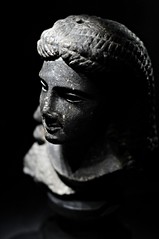
Bust of a goddess
Death to him would have been, in fact, a welcome relief.

Labels: , ,

Wednesday, March 19, 2008

Greek Masterpieces From Musée du Louvre and Peter O'Brien On Prayer

"We're back from the National Museum," gushed the parentals some months ago, waving about Greek Masterpieces From The Louvre brochures, "they've brought in sculptures from the Louvre. You must go and see them!"
"But we've seen them...at the Louvre!"
"Did not."
"We did. We went to the Louvre, you criticised I M Pei's pyramid, then you said you were bored and wanted to go shopping."
"Oh."
In any case, last Sunday, after Peter O'Brien'd delivered his 64th talk in the last 3 months, I popped across the road to the museum for a gawk.
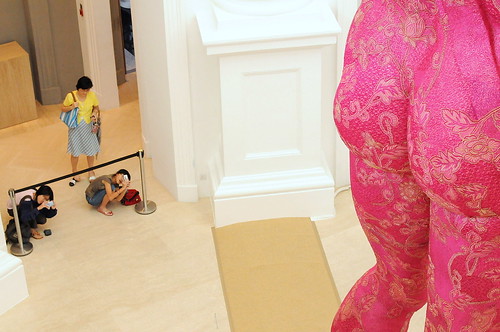
Cheeky: "Surrounding David" by Titarubi
Surrounding David by Titarubi.
Poor old David's so commodified he's attained pink kebaya-cloth kitsch-ness.

The exhibition was fairly small but decently and thematically-curated. Peter O'Brien, being a bit of a scholar in Paul's New Testament letters, had, earlier in the day, painted many word-pictures and made many references to cultural context in which the letters had been written. Even though these statues preceded Paul by a century, there were probably quite a few of them still mooching around with their Augustan brothers when Paul gandered about Athens during the Late Roman Empire (Acts 17:16-34).

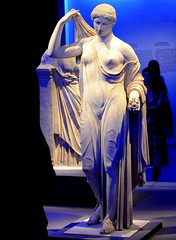
Aphrodite with wet himation
To my initial shame, having always been fond enough of Greek/Roman literature to have an entire bookcase on the subject and Greek/Roman-themed BBS rooms, my main reaction to some (because others looked like really bad copies) of these drapped bodies was one of great appreciation: the proportionality of facial features, bodies and limbs, the rendering of wet himations, and how nice it'd be to have a quiet empty museum for a sit around and a charcoal sketch.

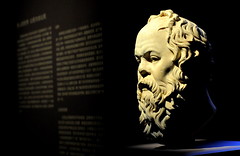
Socrates
But Paul, I thought when I got home and had a flip through the Book of Acts, had got it spot on. Upon seeing these beautifully proportioned idols, he did not bring out the sketchpad. Instead, his spirit was provoked within him. Barely able to contain himself, he went about arguing against the wisdom of that age, reasoning with Jews and devout persons and professional philosophers (Acts 17:16-34). So my reaction of great appreciation = FAIL. But someone later pointed out: all cultural lor. Not idols to ppl of our time liao.
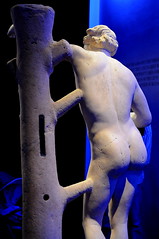
Cheater-buggery
Pardon me, but your butt is cracking.
Simulacra of the Roman simulacra of the Greek simulacra of...well, maybe no long-dead bird/hunk in particular; the Baudrillardic phase where the simulacra masks the absence of basic reality by being its own pure simulacra, these chipped blocks of marble may be, but they are not meaningless simulacra qua simulacra. Instead, they form part of a system of signification for the ancient Greeks and their Roman copiers/consumers. So the late night chat was a good reminder of the "nothing is a sign unless it is interpreted as a sign" of Charles Peirce, the cultural subjectivity of the signifier and the signified, and so the subjectivity of idolatry and therefore the necessary failure of any attempt at legalism.

Nevertheless, such utter incompetence in even identifying the right reaction in any given stimulus is probably a good impetus for prayer. (We had an interesting semiological debate in our DG about the word "prayer", but that's another post.)

Notes from Peter's talks on prayer:
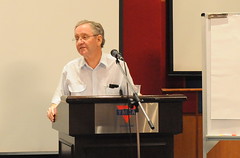
Peter O'Brien
Knowledge, wisdom and understanding and thanksgiving (Colossians 1)
In his letter to the Colossians, Paul tells them that he is constantly praying for them (Colossians 1:3,9). He asks of God because he knows that God is generous and will not withhold good things from his children. What does Paul pray for? He prays that they will be filled with knowledge so they will please the Lord (Colossians 1:9-10). He prays that they will have all spiritual wisdom and understanding. This wisdom and understanding is not what we think of as guidance from God, not "Lord, what do you want me to do?". Rather it is more about what God wants done in his world and how we can fit into God's plan for the world.

And what pleases God? Bearing fruit in every good work (Colossians 1:10b). This does not mean being successful in God's work by the world's standards, but having the fruit of the Spirit to be enabled to do things in a godly way, in growing in love for Christ, in wanting to know Jesus more and more.

It's all very well to talk about these things but how will we be able to do them? Through being strengthened in all power by the Spirit (Colossians 1:11). This same power, this same Spirit, raised Christ from the dead. So it's pretty lethal stuff.

Then Paul returns to thanksgiving. We have all been transferred from the dominion of darkness to the kingdom of light. Gaining citizenship of a country like Singapore or Australia's pretty difficult, but the difficulty level is nothing compared to trying to gain citizenship of heaven. Yet, Christians have achieved it through the forgiveness wrought for them in Jesus Christ. It is not only children who find it hard to say "please" and "thank you". Adults struggle as well. The writer of Hebrews tells us that we can now enter God's throne room with boldness. This should encourage us to pray prayers of thanksgiving.

Suffering and Weakness (Romans 8:18-30)
Voltaire was of the opinion that God either couldn't stop suffering or that he had the ability to do so but wouldn't.

We all live in the midst of suffering. But we are told that we are heirs of God and co-heirs with Christ. We will share in his suffering before we share in his glory. This tension is not just individual, it is also corporate.

Paul's thesis on suffering and glory is in Romans 8:18 - "For I consider that the sufferings of this present time are not worth comparing with the glory that is to be revealed to us". Paul was no stranger to suffering. In 2 Corinthians 1, he told the Corinthians that he was being utterly and unbearably crushed; he was so close to death that it was only a whisker away. Paul didn't have a silver spoon in his mouth. But he believed that the glory to come was a sure and certain thing. If it wasn't, then we would do all sorts of things to put our present suffering out of our minds, to try futilely to gain security, to distract ourselves.

The whole of creation is bound up with suffering (Romans 8:20). It was knocked off its perch of God-centredness because of Adam's sin. But again there is the promise that after this suffering will come glory when the sons of God come into glory (Romans 8:21-22). Suffering and glory go together.

And we Christians also groan inwardly (Romans 8:23). We were adopted as sons of God when we first trusted in Christ. But we now wait for that final adoption and the redemption of our bodies. Every time we have to visit the pharmacist or the doctor we are reminded of how our bodies have yet to be redeemed.

And as we wait in hope for this redemption, we continue to suffer and struggle. We are weak. Part of our weakness is that we don't know what we ought to pray for, "ought" meaning in accordance with God's will. This is part of our suffering. There are some people who approach the throne of God with such boldness that they keep telling God what they want over and over again. And when they don't get what they want, they blame God. There are other people who are just at a loss about what to pray for.

But, Paul says, the Spirit helps us in our weakness, interceding for us with groanings too deep for words (Romans 8:26). There is a content to the Spirit's prayer that we don't know about. Paul is not talking about speaking in tongues. The groanings of the Spirit are wordless. And God who searches hearts knows the mind of the Spirit, not just theoretically but the content of intercessions of the Spirit that are in line with his will. And God answers the intercessions of the Spirit. When we pray, we fire arrows at a target which may go far wide. The Spirit redirects the arrows to make sure we hit the bullseye everytime.
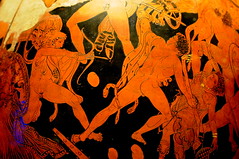
Hercules
When we were younger, we thought that we could do things on our own strength. But when we are older (and hopefully wiser), we rely more on God and his strength and his power. Nothing is too small for God. He numbers the hairs on our heads (Luke 12:7) and does not forget even the littlest bird, the sparrow (Luke 12:6-7).

For those who love God, all things work together for good (Romans 8:28). God works our good through things that were meant to harm us. Joseph, for example. was sold off by his jealous brothers (Genesis 37). After his many adventures in foreign lands, where he was ill-treated and thrown into prison, Joseph met his brothers again. He was now in a position of power and he could have had them killed (Genesis 42-45). But instead he recognised God's hand in his situation, even where his brothers meant evil, God meant it for good. God had sent him to Egypt before them to preserve their lives (Genesis 45:5-8). This does not mean that there are 2 different experiences but that the 2 are sandwiched into 1, the clearest example of this being the death of God's own Son. Wicked men meant for the destruction of Jesus and they will be held responsible for their actions, but their evil was used by God, and infact predestined by God, for good.

We are encouraged to call upon God. His answer to us will not be brilliance in analysing our situation or in summarising the problem. He will not answer us because our motivation is 100% pure because we are wretchedly corrupt. God will answer us because the Spirit intercedes for us.

And we know that God has infinite resources (Ephesians 3:20). Not only that, but also God doesn't hide away his resources like Scrouge. God gives lavishly. God wants to give abundantly. It's almost as if God is waiting to be asked so that he can give.

Faced with the reality of our own weakness, living in a world that is suffering, prayer is real and practical now. We do not need to wait until we are better before we can pray, nor must we do this or that before we can pray.

Prayer: slick? Unrealistic claims? Full of promises too good to be true? (Philippians 4:6-20)
Slick solution? (Philippians 4:6-9)
The poor Philippians were being pressured from without and being given a hard time. But whatever they were distressed about, Paul told them to be anxious about nothing and instead present their requests to God. ("Anxious"ness being unreasonable heresying care.) This sounds like a slick platitude but Paul was in prison then and knew what he was talking about.

God knows all needs. He clothes the lilies of the field etc (Matthew 6:28-33). They weren't to tell God about their needs because he didn't know them and needed to be updated. But by bringing their requests to him and laying their troubles upon him, they were to demonstrate their dependence on him. And this would strengthen their faith.

Did this mean that all our prayers will be answered? Philippians 4:7 promises one sure result: that the peace of God, which surpasses all understanding, will guard your hearts and your minds in Christ Jesus. Whether our particular petition is granted or not, we are assured of divine protection against everything. "Peace" isn't a feeling of peace but is that something objective that was done on the corss (Romans 5:1) - reconciliation and salvation. And this peace "transcends all understanding" and is more wonderful than they could imagine.

Philippi was settled by many retired soldiers who had the protection of a garrision or guard. This peace, said Paul, would similarly keep guard over their hearts and minds, those areas of their lives that were vulnerable to attack from desperate heresying care.

Do not be anxious but instead pray and God will guard your hearts and minds. The promise given in Philippians 4:7 is not slick. As I reflect on what God has done for me, this guards me against all sorts of wretched fears.

I can do everything! Unrealistic claim? (Philippians 4:10-13)
"I can do all things through him who strengthens me." says Paul. Will nothing be beyond our capabilities if we pray, if we had the same faith that Paul had? But yet, Paul had an extremely long list of things he still suffered (2 Corinthians 11). This is not a triumphalistic promise.

The context explains the promise. Paul says that he is content in all circumstances. He has experienced life at both ends of the economic spectrum and he knows how to live at both ends.

How does he do this? Through Christ who gives him strength. He can do all things, that is, be content in all things through Christ. Compare this with the Stoics who taught that the happy man was the content man. The content man was content in and of himself, due to his innate resources. But Paul knew that it was when he was most conscious of his inadequacy (2 Corinthians 12) that he could most rely on God.

Every need met! A promise that is too good to be true? (Philippians 4:14-19)
The doxology in Philippians 4:19-20 brings to a close the thanks to the Philippians. They have supplied Paul's needs, God will supply theirs. This is not a reciprocal tit-for-tat.

"Every need" does not mean just material things like money, but also the whole host of things that they were up against. They needed to stand firm in persecution (1:27-30), they needed unity where there were divisions (eg. between the 2 quarrelling ladies forever immortalised for posterity in the Bible), they needed to shine like stars in the universe even though they were under pressure.

"in glory" - these needs which they had would be met gradually and partially in the present but would be met fully at the end.

"in Christ Jesus" - Jesus is the only one in whom God's promises are fulfilled. Therefore, only when they are united with him fully would all their needs be met.

Our Spiritual Battle, the Devil and Prayer (Ephesians 6:10-20)
The spiritual dimension in Christianity is often ignored, whether in moral decay or in evangelism. This may have more to do with the Enlightenment than with Scripture. Scripture describes things from the world's viewpoint and also from a cosmic dimension. We neglect these things at our peril. We will not be seeing things as God sees them.

God has already won the decisive victory but the Devil and his minions still exist and still act even though they have lost. They will do anything to snatch away the Word when it is preached. This is especially so at morning tea after Sunday service when people will talk about anything but God's Word. The Devil distracts people so that they do not come to repentance.
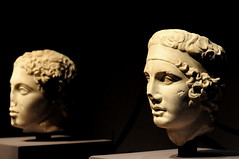
Ancient Jocks
In the Ancient Games, the most important, the blue-ribbon event was wrestling. So when Paul talked about wrestling not against flesh and blood, but against the rulers, against the authorities, against the cosmic powers over this present darkness, against the spiritual forces of evil in the heavenly places, he was emphasizing that the battle with evil is close-contact, hand-to-hand combat. If we think that when we evangelise, we are up against flesh and blood, we have misread the battle. We are up against evil.

The attacks against us can be one temptation over and over again. But the Devil can also switch tactics. He has variety and range. The attacks can be internal and external. Uncontrolled anger and the telling of falsehoods are not from the Devil but he can use them to cause strife within the body of Christ.

What is our strategic objective in the battle? It is to stand firm (Ephesians 6:11, 13,14), to stand up against evil powers. We are not to move ahead (which infact, might be a serious wrong) but to stand firm.

Can we take on such a formidable foe with just our own resources? No. But we can do this by relying on the power of God (Ephesians 6:13ff). In actual fact, the victory has already been won by Jesus Christ on the cross. The Devil's final defeat is imminent. Soon, everything will be subject to Christ. We don't have to try to win that victory over and over again. But for the battles in the meanwhile, God has provided mighty armour for us. This is the same armour that the Lord of Hosts fights in in Isaiah 59 and the armour that God's Messiah wears when he goes out to do battle in Isaiah 11. This armour that God himself wears we also wear. This armour is made of truth, righteousness and salvation - aspects of God himself. When we put on the Lord Jesus Christ at conversion, we put on his aspects, his armour.

The breastplate of righteousness is protection in knowing that we are right with God. We can't be blackmailed. The Devil cannot tell us that we aren't a good Christian because we haven't read the Bible or haven't prayed. Who will condemn us when Jesus has died for us? If we aren't sure of ourselves, we won't share the gospel. This is the ploy of the Devil.

The sword for battle, the sword of the Spirit, is also the same one used by the Messiah in battle.
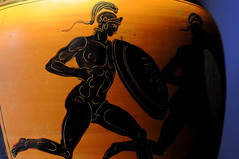
The shield of faith refers not to that little round shield which doesn't protect the head or the limbs in a battle but to the full-length one that covered the whole body. It was soaked in water and could quench dangerous missiles - arrows dipped in tar and then lit and shot. The Devil will try to attack us not just with temptation but also persecution and false teaching. We must trust in God's ability to keep us in the midst of battle.

Prayer is essential and crucial to our being armed. Standing firm and prayer are interlinked.

Summary
Thanksgiving is a mark of being Christians. The world may raise complaints and concerns to an art form, but the Christian is forever thankful because we have been transferred from darkness to light.

The Christian may find it difficult to pray aright. But the Spirit, who intercedes for us, hits the bullseye everytime.

There are some promises in Scripture that aren't what we want them to be. They must be read in their contexts.

We need to pray because our struggles are also in the cosmic dimension. The world is natural, the flesh is natural but the Devil is supernatural. If we live only as if there is the world and the flesh but no Devil, we misread the battle. There are ministers of Satan who will tell falsehoods and who are disguised as ministers of the gospel.

But when Jesus clothed us at conversion, he clothed us with armour that the Devil cannot destroy.

Labels: , , , , , , ,