Monday, November 02, 2009

Cakes for Kierkegaard and Sermon on the Mount as Existentialist Answer Perhaps (Matthew 6:1-18)
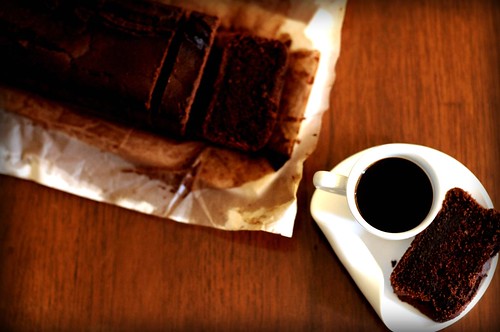
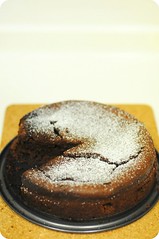
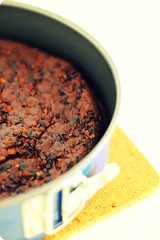
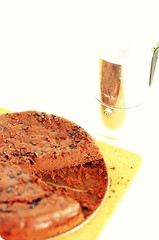
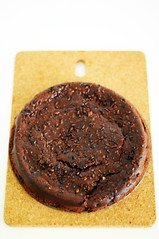
Dense Chocolate Loaf Cake and an Espresso
That which apparently tastes like the chocolate flavoured Sara Lee pound cake (though without the contents of a salt shaker having been emptied into it) and an espresso

One blustery rainy evening, possibly not unlike the one that came upon Nigel Slater (but without the napping cats and speckled brown eggs), there was indeed the warm wholesome smell of a dense chocolate loaf cake in the oven.*

Homey-ness and comfort? As much as might emanate from the Übermensch donning red gingham, the shade of standard issue Stepford wife aprons, for Halloween.

Belatedly clearing some boxes (physical and metaphorical), a mound of unopened birthday presents (physical) was uncovered. With all the archaeological skill of a woolly mammoth, a fossil strata (physical again) was unearthed and found to contain a glass jar of powderily mouldy poppyseeds and a box of more fascinatingly mouldy chocolate (grey mould tendrils reached out in all directions from what were once possiby yummy chocolate spheres). A spate of cake baking followed in an attempt to provide other organic matter an opportunity for the due fulfilment of the purpose of their existence, before being ravaged by the various forms of artistic death that would surely come upon them.

Kierkegaard might have baked them himself, for a pandemic of pantry despair and Sickness Unto Death** was imminent. Despair as a human condition, according to Mr. Poofy Coiffure, is a symptom of the failure to be human in the fullest sense. This despair could be (i) "the despair that is ignorant of being despair or the despairing ignorance of having a self and an eternal self"; (ii) "the despair that is conscious of being despair and therefore is conscious of having a self in which there is something eternal and then either in despair does not will to be itself or in despair wills to be itself" - the awareness of something more than this finite reality but refusing to define one's self by anything more than the immediate and the finite; or (iii) "the despair to will to be oneself" apart from God - accepting the eternal but refusing to accept the purpose for which one has been made, and therefore attempting to create itself according to its own desires (or so I read, probably badly, Anti-climacus anyway). The cure for despair is to become "eternally and decisively conscious of himself as spirit, as self, or (what is the same thing), "became aware and in the deepest sense received an impression of the fact that there is a God, and that he, he himself, his self, exists before this God".

(Kierkegaard's slap-up solution of taking the leap of faith seems as frivolous as frilly lace cuffs and assuring the terminally ill that a gâteau au yaourt with much lemon and many blueberries will surely make everything a-okay because they taste of citrus, which of course connotes summer sunshine. But that's for another time. Because of the lemurs.)

Lemon Blueberry Yoghurt Loaf Cake Lemon Blueberry Yoghurt Loaf Cake, A Spot of Mariage Frères Earl Grey and Some Good News for Breakfast
Gâteau au yaourt with enough lemon to pucker your dying lips and many blueberries because a little anti-oxidant never did no one no harm


There is another sort of despair that comes from reading the Sermon on the Mount as a Christian, with a conscious decisive desire to please God.

First there is the despair of ever hoping to keep the Law without fault and to attain the perfection of our heavenly Father (Matthew 5:17-48). Fortunately, this very accurate assessment of our situation helps to bring on the meekness and the dependence on God for salvation that brings us into the kingdom of God (Matthew 5:3). While the Kierkgaardian despairing man avoids self-examination and the most hurtful knowledge a human can ever acquire, the Christian thanks God for it because it is only the man who has truly seen himself for what he is who is likely to fly to God.

Unfortunately, it isn't happily ever after (at least for the meanwhile) for the Christian. It becomes rather obvious that life post-conversion isn't a panacean existence from the troubles of this life. It is full of difficulties, pitfalls and snares. There are struggles between whom we know we should be and who we are. There are contradictions between whom we know God to be and how we relate to him etc.

While ostensibly on our knees declaring our cannot-make-it-ness and clinging to God, it appears that our hearts and minds will give us the slip and go back to our bad old ways, but now under cover of Christianity (Matthew 6:1- 18). Works of righteousness ought to come out of having being brought into a right relationship with God. But we perversely turn them in vulgar showcases of our godliness so that people will praise us (Matthew 6:1-2, 5-6, 16). It is easy to diss the trumpets of the Pharisees but many of us will admire and praise the obviously saintly and aspire to be seen by others in the same way. Christian activity can look sincere and devout but we can engage in them without having a real relationship with God, being concerned rather on having the spotlight on ourselves. Public prayer is encouraged in the Bible and about encouraging others in their relation with the living God, but are we more concerned with our sonorous tone, the number of incidents of women falling to their knees and weeping as we pray, the right verses quoted to demonstrate the soundness of our theology? Singing songs and playing instruments encourage people to express their relationship with God but are we more concerned with showing the beauty of our voice or our competent musicianship or being the song leader that everyone remembers for his charisma and choice of songs with the most engaging yet biblical lyrics? Do we spread ourselves so thinly in our preaching engagements because we want the word of God to be preached to all men or is our full diary (so that we have little time and energy to prepare for each talk) a result of wanting to pad our preaching CV ("Pastor XXX, a regular speaker at the Very Exclusive Evangelical Conference")? What about how we lead bible studies or counsel people - is it really about pointing people to God or to be known as the go-to leader whose touch of Minas anointed wisdom and godliness always multiplies ministries a hundred-fold? Sin is turning the attention from God and onto ourselves and to continue to do so is encouraging others too to sin. So Jesus warns us: "Beware of practising your righteousness before other people in order to be seen by them, for then you will have no reward from your Father who is in heaven" (Matthew 6:1).

But perhaps even if we are not as uncivilised, even if we do our good works in secret, we do the less obvious: patting ourselves on the back when we have done good and kept to our spiritual disciplines, and recording our deeds in our little book of accounts with bonus points for doing all this in the secret, in the quiet, place. We might even thank God that we are not like those poor ungodly souls in church, because we are neither pastor, nor preacher, nor song leader, nor bible study leader, nor do we bother to serve in any ministry. We can put on a very good show for ourselves in the privacy of our own closet. The utter perversity of it all. So Jesus also warns "do not let your left hand know what your right hand is doing" (Matthew 6:3, cf Matthew 6:16). But not only is our relationship with other people (Matthew 6:1-3) and ourselves (Matthew 6:16) sickening and inauthentic, even the noblest, most important activity available to mankind, prayer, is tainted with petty self-interest and glorification (Matthew 6:5-6). Cue: the despair of ever doing anything with the right motives.

And as if that were not foul enough, we also have to deal with matters that seem inherently contradictory. So we are told to let our light shine before others so that they may see our good works and praise God (Matthew 5:16) yet also to give our alms in secret (Matthew 6:4), pray in secret (Matthew 6:6) and fast in secret (Matthew 6:18). We are meant to do both in the same act - the extremes of great ostentation and cloistered living (so fearful of self and self-glorification that one segregates the self from the world) are to be avoided.

What's to be done? Let every man examine himself.

Which is where the lemurs come in. Ok, sometimes it's lemmings, but they don't last long what with all that running off cliffs and stuff, so mostly, it's lemurs. They sit in the den that is my mind, ensconced in comfy cushy armchairs, smoking fat lazy cigars brought in by Cuban boat people, playing cards and arguing. They might also do so in Italian accents, while eating cannoli, but that's besides the point. The point is that it seems that the Christian life is such a delicate balance that it requires a committee to decide what one should say and do.
"I, Lemur One, would like to table the motion of participating in this new ministry opportunity."
"Lemur One, what is our motive for participating. Is it so that we can get our name in the church bulletin and get the praise of men?"
"Lemur Two, you have too sensitive a conscience! If everyone thought like you, nothing would ever get done for God's kingdom!"
"Lemur One, surely this is a pertinent question. Are you trying to dismiss the warnings of our Lord Jesus Christ?"
"Lemur Three, perhaps if this is such an issue for you guys, I'm gonna make you an offer you can't refuse: why don't we tell the church staff to leave our name out?"
"Ooh Lemur One, cunning you are. By so doing, would we not be trumpeting our "godliness" on the pretext of being godly?"
At which point, a visiting three-toed sloth might have piped up with a wise word but the lemurs would have been too furiously machine-gunning the stuffing out off each others' armchairs to pay much attention.

Perhaps the problem with the lemurs is firstly, legalism. If we are to take Jesus' teachings and warnings as rules, never the twain shall meet because they seem inherently contradictory. The second problem is that they are sitting in a smoky den arguing. This insular self-focus can do no good and is also very bad for the upholstery.

The focus should instead be on God, afterall, all this is about the relationship we have with him. If we have any relationship with God, if we are aware that God is our Father and also the Creator, Sustainer and Judge of the world (Matthew 6:9); if we are aware that God's desire for his kingdom to come in fullness to this world has the certainty of, well, the will of an omnipotent God (Matthew 6:10), then we would be seeking to please him and not ourselves. (The choice is always pleasing the self and God. When we want to please the others around us, when we desire their praise, it is really about us being concerned about having a good opinion of ourselves, and therefore wanting to please ourselves.)

It wouldn't say much about the relationship if we thought we could appear to be working for God but be moonlighting for ourselves on the sly. This would, in fact, be fairly insulting to God since we would be thinking little of his omnipresence and omniscience if we thought we could get away with this. In Matthew 6:1-18, Jesus reminds us that we are always in the presence of God. He sees our every action no matter how small, no matter how secret; he hears our every thought. So therefore, while we must keep examining ourselves, the solution to the possible impurity of our motives is not mulling ceaselessly over the purity of our hearts and spending our lives paralysed by the continuous dithering over whether or not to do this or that good work, but, by filling ourselves with more and more of his word, experiencing the very reality of having a relationship with an omniscient God. In the blinding light of his presence, all hypocrisy, pretence, sham, self-adulation and superiority would surely be moot.

Somewhat like the Kierkegaardian solution to Kierkegaardian despair, the answer to the despair of impure motives is by focusing on God and depending on him who gives us all things, from our daily sustenance to our salvation, and who controls all things (Matthew 6:11-13).

Addio lemurs?


A Trundle Through Sermon on the Mount
Earth Moves Under Feet, Kingdom Comes (Matthew 5-7)
This is the Sound of Inevitability (Matthew 5:1-6)
Breeding - We Hazs It (Matthew 5:7-12)
Coffee, Salt and Light, and the Essence and Use of the Christian (Matthew 5:13-16)
And the Missing Link is Jesus (Matthew 5:17-20)
Perfect Laws for Perfect Relationships (Matthew 5:21-48)
Cakes for Kierkegaard and Sermon on the Mount as Existentialist Answer Perhaps (Matthew 6:1-18)

Lam at Barclays Open Singapore 2009
*Thankfully, I ingested two thick slices of this chocolate loaf amounting to possibly 3 million calories on the final morning of the Barclays Open at the Serapong. Because by the time we found parking near someone's fetching house with a boat in the backyard, we were 3 planets away in Sentosa Cove, and had to board the complimentary inter-galactic shuttle to Sentosa Golf Club, where we discovered that we had only S$12 between us. This was spent on a S$4 bottle of 100 plus and a comparatively cheap S$8 wagyu burger.

** Sickness Unto Death:

So then in the Christian understanding of it not even death is the sickness unto death, still less everything which is called earthly and temporal suffering: want, sickness, wretchedness, affliction, adversities, torments, mental sufferings, sorrow, grief. And even if such things are so painful and hard to bear that we men say, or at all events the sufferer says, "This is worse than death" -- everything of the sort, which, if it is not a sickness, is comparable to a sickness, is nevertheless, in the Christian understanding of it, not the sickness unto death.

So it is that Christianity has taught the Christian to think dauntlessly of everything earthly and worldly, including death. It is almost as though the Christian must be puffed up because of this proud elevation above everything men commonly call misfortune, above that which men commonly call the greatest evil. But then in turn Christianity has discovered an evil which man as such does not know of; this misery is the sickness unto death. What the natural man considers horrible -- when he has in this wise enumerated everything and knows nothing more he can mention, this for the Christian is like a jest. Such is the relation between the natural man and the Christian; it is like the relation between a child and a man: what the child shudders at, the man regards as nothing. The child does not know what the dreadful is; this the man knows, and he shudders at it. The child’s imperfection consists, first of all, in not knowing what the dreadful is; and then again, as an implication of this, in shuddering at that which is not dreadful. And so it is also with the natural man, he is ignorant of what the dreadful truly is, yet he is not thereby exempted from shuddering; no, he shudders at that which is not the dreadful: he does not know the true God, but this is not the whole of it, he worships an idol as God.

Only the Christian knows what is meant by the sickness unto death. He acquires as a Christian a courage which the natural man does not know -- this courage he acquires by learning fear for the still more dreadful. Such is the way a man always acquires courage; when one fears a greater danger, it is as though the other did not exist. But the dreadful thing the Christian learned to know is "the sickness unto death."

Labels: , , ,

Friday, April 17, 2009

Rescue Plans Hit Brick Wall. Israelites Draw Short Straw. (Exodus 5 - 7:7)

Riff on Alice Medrich's Queen of Sheba Chocolate Cake
Estimating the Platonic Ideal of the Chocolate Cake Taste/Texture** FTW.

Riff on Alice Medrich's Queen of Sheba cake from Bittersweet
70% Valrhona chocolate, coarsely chopped
unsalted butter, cut into pieces
Australian smoked salt
vanilla extract
ground almonds
all-purpose flour
large eggs, separated, at room temperature
light muscovado sugar
lemon

Jewish reference for a Passover-ish meal? Tick. Medrich promised an ugglee cake and it sure was craggy but almost rightly dense and moist inside. But whither Chocolate Cake Taste and Texture Ideal etc?

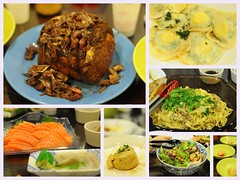
Lovely Dinner
Suffice to say it embarrassed the lovely dinner that preceded it. Well worth the 1 Michelin star (unauthorised) bestowed by D. I still think fondly of certain truffle-laced raviolis from time to time.

But anyway, we are a way from the first Passover. And not just because of the sake sashimi.

At the close of the last chapter of Exodus (Exodus 4), we were stuck with a reluctant rescuer-designate who was neither keen about rescuing his people from Egypt nor terribly trusting of God's ability to effect such rescue through him.

Anyway, the reluctant rescuer & mouthpiece finally meet with the Pharaoh to present God's demands: "Thus says the LORD, the God of Israel, 'Let my people go, that they may hold a feast to me in the wilderness.'" (Exodus 5:1)

Pharaoh is possibly amused by this challenge to the otherwise perfect obedience to his rule. Afterall, his is current the greatest ruler in the known world, and he and the rest of his world think him a deity too. (And if he was indeed Ramesses II the red-head, the loss of free migrant workers might have interfered annoyingly with his fetish for large scale construction. Plus Freud had not yet been born to distract him with psychoanalysis of his repressed jealousy of his father.)

So he flicks the two Hebrews off with a roll of his kohl-lined eyes:
"Who is the LORD, that I should obey his voice and let Israel go? I do not know the LORD" and "moreover, I will not let Israel go" (Exodus 5:2)

But the Hebrews repeat the demands of the God of the Hebrews and he realises they are quite serious about this rejecting his rule over Israel business. After sending Moses and Aaron away, he decides to show them who really holds their tomorrows in his hands ("thus says the LORD, the God of Israel" (Exodus 5:1) cf "thus says Pharaoh" (Exodus 5:10) ) by decreeing that the slaves would have to meet their daily quota of bricks without a ready supply of raw material for the task (Exodus 5:4-12).

Perhaps Pharaoh thought there was no such god in the first place and so Moses and Aaron's words had been "lying words" (Exodus 5:9). And even if there were such a "God of the Hebrews", he must have been a rather incompetent, lesser god. How powerful could their god be if his people were enslaved by the most powerful empire in the ancient world which Pharaoh was like a god over?

So Pharaoh set himself up against the God of the world.

Meanwhile, God's people unfortunately, buy into Pharaoh's hype. They speak to him as to a god: crying to him for mercy (Exodus 5:15) and grovelling before him, calling themselves "your servants" (Exodus 5:15-16).

So God's own people disowned their God.

And spat upon by the angry foremen, Moses spares no time in accusing God of not keeping his word to them back in the dessert: "O Lord, why have you done evil to this people? Why did you ever send me? For since I came to Pharaoh to speak in your name, he has done evil to this people, and you have not delivered your people at all." (Exodus 5:22)

So Moses the rescuer designate failed to trust the God of the world who'd sent him.***

The megalomanical Pharaoh might be easy to swat off the face of the earth but how can God ever fulfil his covenant promises in the face of a stupid people who trust their abusive captor more than the God who wants to rescue them and how can God do this through the man he promised as rescuer without squishing said rescuer in anger in the meanwhile?

What follows shows that God isn't just a nice Platonic Form of the Personification of the Good. He is a person, a being actively concerned with his world and passionately involved in the lives of his people.

The LORD answers Pharaoh's impertinence:
"Who is the LORD that I should obey him"? Why, this is the LORD who pre-existed the Pharaoh who only recently appeared on the scene. Many generations ago, he had already appeared to Abraham, to Isaac, and to Jacob (Exodus 6:2).

"Morever I will not let Israel go"? Well! God will bring them out from Egypt and deliver them from slavery. He would redeem them with an outstretched arm and great acts of judgement (Exodus 6:5-7)

And the LORD answers the people's unfaithfulness and distrust:
After what I am about to do, you should have no doubt whatsoever who is the God you should put your trust in and whom you should worship.
What food can be found in a desert?
A sandwich.
Ok, ok. The sandwich or chiasm here tells us the essence of God being "the LORD":
A - I am the LORD.
B - I appeared to Abraham, to Isaac, and to Jacob, as God Almighty, but by my name the LORD I did not make myself known to them. I also established my covenant with them to give them the land of Canaan, the land in which they lived as sojourners.
C - Moreover, I have heard the groaning of the people of Israel whom the Egyptians hold as slaves, and I have remembered my covenant.
C' - Say therefore to the people of Israel, 'I am the LORD, and I will bring you out from under the burdens of the Egyptians, and I will deliver you from slavery to them, and I will redeem you with an outstretched arm and with great acts of judgment. I will take you to be my people, and I will be your God, and you shall know that I am the LORD your God, who has brought you out from under the burdens of the Egyptians.
B' - I will bring you into the land that I swore to give to Abraham, to Isaac, and to Jacob. I will give it to you for a possession.
A' - I am the LORD.

The essence of God is encapsulated within his covenant with Abraham, Isaac and Jacob. And within that covenant, the meat of the sandwich (C and C'), the central characteristic of God the LORD, would be seen in his rescue of Israel from Egypt - his ability and his willingness to fulfil his promises, his compassion, his power and his judgement.

"Now you shall see what I will do to Pharaoh; for with a strong hand he will send them out, and with a strong hand he will drive them out of his land." (Exodus 6:1) What a promise of exciting things to come. It seems like we're watching the World Cup semi-finals. The camera pans to show the fans in the stands and the field being prepped. Then there's a quick flash away to the background of the more interesting members of the teams about to play. Not a terribly distinguished pair but there you have them. When we return, the banners are out, the field is prepped, the media is waiting, Aslan is on the move (Exodus 6:10-30)... but in the locker room, Moses is still whinging (Exodus 6:12,30).

If Moses was getting nervous about the stakes in God vs Pharaoh - The Showdown, God tells him that actually, the thing is a throwaway. He is complete control over every, that is, every aspect of this situation:

Problem of the reluctant rescuer? "See, I have made you like God to Pharaoh, and your brother Aaron shall be your prophet. You shall speak all that I command you, and your brother Aaron shall tell Pharaoh to let the people of Israel go out of his land." (Exodus 7:1-2)

Problem of the reluctant Pharaoh? Actually, it is God who has hardened/will harden Pharaoh's heart, and though he multiply his signs and wonders in the land of Egypt, Pharaoh will not listen to Moses. Then God will lay his hand on Egypt and bring his hosts, his people the children of Israel, out of the land of Egypt by great acts of judgment. By this the Egyptians would know that he was the LORD. (Exodus 7:3-5)

We humans are fond of claiming the credit for things we have not done. Mark Ashton remind us of the story of the Beaver saying to the Rabbit as they looked up at the Hoover Dam,"No, I didn't actually build it myself, but it is based on an idea of mine". If Moses or the Israelites were to try to claim credit for their salvation after all this was but a distant memory: oh I was obedient, I was. And full of faith too. That's why he chose me/us etc, the Book of Exodus so far just about shoots that out of the sky.

好戏还在后头. Grab some pizza and chips.

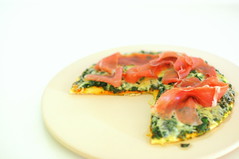
Spinach and Prosciutto di Parma Pizza
spinach and prosciutto di parma pizza. good with Belgian blondes of the drinkable sort

*brick wall pun thanks to D's CLDG entertainment

**for the avoidance of doubt in the minds of the kind folk who have given me much chocolate for which I have been grateful, there is no personal preference for chocolate. It's just the common preference of most folk who eat these confections/conjectures. Artisanal chocolates and otherwise experimenting with chocolate for the sake of it are of much interest however. Attempting not to burn cakes is also of much utilitarian interest.

***and really, this rescue was no skin off his nose really, compared to what Jesus the final rescuer had to go through! Which really brings into focus just how wonderful Jesus' perfect obedience to and trust in God must have been!

Current Read/Think-through of Exodus

Labels: , ,

Monday, March 16, 2009

Askinosie Chocolate, Absolute Sandman Volume 4, Satan's Devices

Askinosie Soconusco Nibbler Bar + Crunchy Cocoa Nibs, Neil Gaiman's The Absolute Sandman Volume 4
Some people are particular about the pedigree of their chocolate, others are antsy about the art in their favourite graphic epics, but a man is rarely sticky about the sins he commits. If there were such a man, he would be reviled at least as an extremist tragically burdened by too sensitive a conscience.

To trick man into writing off rebellion against God so flippantly must be Satan's oldest trick. While our deliberate disobedience is no one's fault but our own, the Devil is ever at hand to help us fulfil our sinful potential (see eg. Genesis 3, Ephesians 6:11, 2 Timothy 2:26).

Whatever sin the heart of man is most prone to, that the devil will help forward. If David is proud of his people, Satan will provoke him to number them, that he may be prouder (2 Samuel 24). If Peter is slavishly fearful, Satan will encourage him to rebuke and deny Christ to save his own skin (Matthew 16:22, 26, 69-75). If Ahab's prophets are given to flattery, the devil will straightaway become a lying spirit in the mouths of four hundred of them and they shall flatter Ahab to his ruin (1 Kings 22) etc

Satan has several devices to deceive, entangle and undo the souls of men:
Device 1: To present the bait and hide the hook
To present the golden cup and hide the poison; to present the sweet, the pleasure, and the profit that may flow in upon the soul by yielding to sin, and by hiding from the soul the wrath and misery that will certainly follow the committing of sin. By this device he took our first parents: "And the serpent said to the woman, You shall not surely die: for God knows that in the day you eat of it, your eyes shall be opened and you will be as gods, knowing good and evil (Genesis 3:4-5). Your eyes shall be opened and you shall be like gods! here is the bait, the sweet, the pleasure, the profit. Oh, but he hides the hook - the shame, the wrath and the loss that would certainly follow!

Device 2: By painting sin with virtue's colours
Satan knows that if he should present sin in its own nature and dress, the soul would rather fly from it than yield to it; and therefore he presents it to us, not in its own proper colours, but painted and gilded over with the name and show of virtue, that we may the more easily be overcome by it, and take the more pleasure in committing of it. Pride, he presents to the soul under the name and notion of neatness and cleanliness, and covetousness to be but good husbandry; and drunkenness to be good fellowship, and riotousness under the name and notion of liberality, and wantonness as a trick of youth.

Device 3: By extenuating and lessening of sin
Ah! says Satan, it is but a little pride, a little worldliness, a little uncleaniness, a little drunkenness etc. As Lot said of Zoar,"It is but a little one, and my soul shall live" (Genesis 19:20). Alas! says Satan, it is but a very little sin that you stick so at. You may commit it without any danger to your soul.

Device 4: By presenting to the soul the best men's sins, and by hiding from the soul their virtues and repentance
By setting before the soul the adultery of David, the pride of Hezekiah, the impatience of Job, the drunkenness of Noah, the blasphemy of Peter etc, and by hiding from the soul the tears, the sighs, the groans, the meltings, the humblings, and the repentings of these precious souls.

Device 5: To present God to the soul as one made up all of mercy
Oh! says Satan, you need not make such a matter of sin, you need not be so fearful of sin, not so unwilling to sin; for God is a God of mercy, a God full of mercy, a God that delights in mercy, a God that is ready to show mercy, a God that is never weary of showing mercy, a God more prone to pardon his people than to punish his people; and therefore he will not take advantage against the soul; and why then says Satan, should you make such a matter of sin?

Device 6: By persuading the soul that the work of repentance is an easy work and that therefore the soul need not make such a matter of sin
Why! Suppose you do sin, says Satan, it is no such difficult thing to return, and confess, and be sorrowful, and beg pardon, and cry,"Lord, have mercy upon me!" and if you do this, God will cut the score and pardon your sins and save your souls.

Device 7: By making the soul bold to venture upon the occasions of sin
Says Satan, you may walk by the harlot's door though you won't go into the harlot's bed; you may sit and sup with the drunkard though you won't be drunk with him; you may look upon Jezebel's beauty and you may play and toy with Delilah though you do not commit wickedness with the one or the other.

Device 8: By representing to the soul the outward mercies that vain men enjoy and the outward miseries that they are freed from while they have walked in the ways of sin
Says Satan, do you see, O soul, the many mercies that such and such enjoy, that walk in those very ways that your soul startles even to think of, and the many crosses that they are delivered from, even such as makes other men, that say they dare not walk in such ways, to spend their days in sighing, weeping, groaning and mourning? And therefore, says Satan, if you are to be freed from the dark night of adversity and enjoy the sunshine of prosperity, you must walk in their ways.

Device 9: By presenting to the soul the crosses, losses, reproaches, sorrows and sufferings that daily attend those that walk in the ways of holiness
Says Satan, do you not see that there are none in the world that are so vexed, afflicted and tossed, as those that walk more circumspectly and holily than their neighbours? They are a byword at home and a reproach abroad; their miseries come in upon them like Job's messengers, one upon the neck of another, and there is no end of their sorrows and troubles. Therefore, says Satan, you had better walk in ways that are less troublesome, and less afflicted, though they are more sinful; for who but a madman would spend his days in sorrow, vexation and affliction when it may be prevented by walking in the ways that I set before you?

Device 10: By working them to be frequent in comparing themselves and their ways with those that are reputed or reported to be worse than themselves
By this device, the devil drew the proud pharisee to bless himself in a cursed condition,"God I thank you that I am not as other men are, extortioners, unjust, adulterers, or even as this publican (Luke 18:11)". Why, says Satan, you swear but pretty oaths, as "by your faith and troth" but such and such swear by wounds and blood; you are now and then a little wanton but such and such do daily defile and pollute themselves by actual uncleanness and filthiness; you deceive and overreach your neighbours in things that are but as toys and trifles but such and such deceive and overreach others in things of greatest concernment, even to their ruin and undoings; you do be sit and chat and sip with the drunkard but such and such sit and drink and are drunk with the drunkard; you are only a little proud in heart and habit, in looks and words.

Device 11: By polluting and defiling the souls and judgements of men with such dangerous errors, that do in their proper tendency tend to carry the souls of men to all looseness and wickedness, as woeful experience abundantly evidences
Ah, how many are there filled with these and suchlike Christ-dishonouring and soul-undoing opinions eg, that ordinances are poor, low, carnal things that should not only be lived above but without also; that the Scriptures are full of fallacies and uncertainties, and not to be heeded unless they agree with us; that is is a poor low thing, if not idolatry too, to worship God in a mediator, such man or person as Jesus Christ, but that all is an allegory, and it signifies nothing but light and love, and such good frames born in men; that there is no God nor devil, heaven nor hell, but what is within us; that there is no sin in the saints, they are under no law but that of the Spirit, which is all freedom; that sin and grace are equally good, and agress to his will... with a hundred other horrid opinions, which has caused wickedness to breaking as a flood among us.

Device 12: To choose wicked company, to keep wicked society
And oh! the horried impieties and wickedness that Satan has drawn men to sin, by moving them to sit and associate themselves with vain persons.

See Thomas Brooks, Precious Remedies Against Satan's Devices, for useful suggested remedies to these cunning devices. (Brooks, in his dedicatory note, calls himself a "Watchman", which naturally brings to mind the question "Who watches the Watchmen?" (check out The New Frontiersman), which can in turn be answered: a fair number people. We did a fortnight ago before stumbling home at 3am.)

Of God, it might be said: Your voice was is the soundtrack of my summer.

Askinosie Chocolate
Crim defense attorney done good. Then again, he was never one of those bad greed-enabling corporate lawyer types. The choc-o-lot number on each bar allows purchasers to track its genesis.


Labels: , ,

Friday, March 06, 2009

Things Cross-Processed: Photos of Le Gâteau de Zoé and Sins

Messing around with recette du chef Pierre Jancou, proprietaire du restaurant Racines à Paris, parue dans Elle à table:

Gâteau de Zoé - cocoa nibs!
6 œufs
300g de chocolat noir
120g de beurre demi-sel
1 expresso très fort
80g de sucre en poudre
cocoa nibs (merci Monsieur David Lebovitz!)

Préchauffez le four à 200°C.
Faites fondre le beurre avec le chocolat et le petit café très serré.
Séparez les jaunes d’œufs des blancs.
Battez les jaunes et le sucre jusqu’à obtenir un mélange homogène.
Battez les blancs en neige bien ferme.
Incorporez le mélange jaunes-sucre et les blancs en neige, mélangez puis ajoutez délicatement.
Incorporez le mélange chocolat.
Versez le tout dans un moule à manqué beurré et fariné.
Parsemer le cocoa nibs.
Enfournez et faites cuire 15 minutes.
Sortez le gâteau du four, le cœur doit être coulant.

Gâteau de Zoé Schadenfreude: a sad cake makes many people happy
A "cross-processed" image of le Gâteau de Zoé. Le cœur doit être coulant - not, because of an unborn child. Still,what Schadenfreude - the sad cake made many people happy, except the sad ones who were unhappy with bittersweet endings.

Sins, when cross-processed (that is, through the cross of Christ), are both paid for and still in need of mortification.
The mortification of a lust consists of three things:
(1) An habitual weakening of it.
Every lust is a depraved habit or disposition, continually inclining the heart to evil. Thence is that description of him who has no lust truly mortified, Gen 6:5, "Every imagination of the thoughts of his heart is only evil continually." He is always under the power of a strong bent and inclination to sin. And the reason why a natural man is not always perpetually in the pursuit of some one lust, night and day, is because he has many to serve, every one crying to be satisfied; thence he is carried on with great variety, but still in general he lies towards the satisfaction of self.

The lust or distemper whose mortification is desired may not always be stirring up imaginations, thoughts, and contrivances but we should consider it to be a strong, deeply-rooted, habitual inclination and bent of will and affections. Hence, men are said to have their "hearts set upon evil," the bend of their spirits lies towards it, to make "provision, for the flesh." And a sinful, depraved habit, as in many other things, so in this, differs from all natural or moral habits whatever: for whereas they incline the soul gently and suitably to itself, sinful habits impel with violence and impetuousness; whence lusts are said to fight or wage "war against the soul," 1 Pet. 2:11, -- to rebel or rise up in war with that conduct and opposition which is usual therein, Rom. 7:23, -- to lead captive, or effectually captivating upon success in battle, -- all works of great violence and impetuousness.

I might manifest fully, from that description we have of it, Rom. 7, how it will darken the mind, extinguish convictions, dethrone reason, interrupt the power and influence of any considerations that may be brought to hamper it, and break through all into a flame. But this is not my present business. Now, the first thing in mortification is the weakening of this habit of sin or lust, that it shall not, with that violence, earnestness, frequency, rise up, conceive, tumultuate, provoke, entice, disquiet, as naturally it is apt to do, James 1:14-15.

I shall desire to give one caution or rule by the way, and it is this: Though every lust does in its own nature equally, universally, incline and impel to sin, yet this must be granted with these two limitations:

[1] One lust, or a lust in one man, may receive many accidental improvements, heightenings, and strengthenings, which may give it life, power, and vigour, exceedingly above what another lust has, or the same lust (that is, of the same kind and nature) in another man. When a lust falls in with the natural constitutions and temper, with a suitable course of life, with occasions, or when Satan has got a fit handle to it to manage it, as he has a thousand ways so to do, that lust grows violent and impetuous above the others, or more than the same lust in another man; then the steams of it darken the mind so, that though a man knows the same things as formerly, yet they have no power nor influence on the will, but corrupt affections and passions are set by it at liberty.

But especially, lust gets strength by temptation. When a suitable temptation falls in with a lust, it gives it a new life, vigour, power violence, and rage, which it seemed not before to have or to be capable of. Instances to this purpose might be multiplied; but it is the design of some part of another treatise to evince this observation.

[2] Some lusts are far more sensible and discernible in their violent actings than others. Paul puts a difference between uncleanness and all other sins: 1 Cor. 6:18, "Flee fornication. Every sin that a man does is outside the body; but he that commits fornication sins against his own body." Hence, the motions of that sin are more sensible, more discernible than of others; when perhaps the love of the world, or the like, is in a person no less habitually predominant than that, yet it makes not so great a combustion in the whole man.

And on this account some men may go in their own thoughts and in the eyes of the world for mortified men, who yet have in them no less predominancy of lust than those who cry out with astonishment upon the account of its perplexing tumultuatings, yea, than those who have by the power of it been hurried into scandalous sins; only their lusts are in and about things which raise not such a tumult in the soul, about which they are exercised with a calmer frame of spirit, the very fabric of nature being not so nearly concerned in them as in some other.
I say, then, that the first thing in mortification is the weakening of this habit, that it shall not impel and tumultuate as formerly; that it shall not entice and draw aside; that it shall not disquiet and perplex the killing of its life, vigour, promptness, and readiness to be stirring. This is called "crucifying the flesh with the lusts thereof," Gal. 5:24; that is, taking away its blood and spirits that give it strength and power, -- the wasting of the body of death "day by day," 2 Cor. 4:16.

As a man nailed to the cross; he first struggles, and strives, and cries out with great strength and might, but, as his blood and spirits waste, his strivings are faint and seldom, his cries low and hoarse, scarce to be heard; -- when a man first sets on a lust or distemper, to deal with it, it struggles with great violence to break loose; it cries with earnestness and impatience to be satisfied and relieved; but when by mortification the blood and spirits of it are let out, it moves seldom and faintly, cries sparingly, and is scarce heard in the heart; it may have sometimes a dying pang, that makes an appearance of great vigour and strength, but it is quickly over, especially if it be kept from considerable success. This the apostle describes, as in the whole chapter, so especially, Rom. 6:6.

"Sin," says he, "is crucified; it is fastened to the cross." To what end? "That the body of death may be destroyed," the power of sin weakened and abolished by little and little, that "henceforth we should not serve sin;" that is, that sin might not incline, impel us with such efficacy as to make us servants to it, as it has done heretofore. And this is spoken not only with respect to carnal and sensual affections, or desires of worldly things, -- not only in respect of the lust of the flesh, the lust of the eyes, and the pride of life, -- but also as to the flesh, that is, in the mind and will, in that opposition to God which is in us by nature. Of what nature soever the troubling distemper be, by what ways soever it makes itself out, either by impelling to evil or hindering from that which is good, the rule is the same; and unless this be done effectually, all after-contention will not compass the end aimed at. A man may beat down the bitter fruit from a evil tree until he is weary; whilst the root abides in strength and vigour, the beating down of the present fruit will not hinder it from bringing forth more. This is the folly of some men; then set themselves with all earnestness and diligence against the appearing eruption of lust, but, leaving the principle and root untouched, perhaps unsearched out, they make but little or no progress in this work of mortification.

(2) In constant fighting and contending against sin
To be able always to be laying load on sin is no small degree of mortification. When sin is strong and vigorous, the soul is scarce able to make any head against it; it sighs, and groans, and mourns, and is troubled, as David speaks of himself, but seldom has sin in the pursuit. David complains that his sin had "taken fast hold upon him, that he could not look up," Ps. 40:12. How little, then, was he able to fight against it! Now, sundry things are required unto and comprised in this fighting against sin:

[1] To know that a man has such an enemy to deal withal, to take notice of it, to consider it as an enemy indeed, and one that is to be destroyed by all means possible, is required hereunto. As I said before, the contest is vigorous and hazardous, -- it is about the things of eternity. When, therefore, men have slight and transient thoughts of their lusts, it is no great sign that they are mortified, or that they are in a way for their mortification. This is every man's "knowing the plague of his own heart," 1 Kings 8:38, without which no other work can be done. It is to be feared that very many have little knowledge of the main enemy that they carry about with them in their bosoms. This makes them ready to justify themselves, and to be impatient of reproof or admonition, not knowing that they are in any danger, 2 Chron. 16:10.

[2] To labour to be acquainted with the ways, wiles, methods, advantages, and occasions of its success, is the beginning of this warfare. So do men deal with enemies. They inquire out their counsels and designs, ponder their ends, consider how and by what means they have formerly prevailed, that they may be prevented. In this consists the greatest skill in conduct. Take this away, and all waging of war, wherein is the greatest improvement of human wisdom and industry, would be brutish. So do they deal with lust who mortify it indeed. Not only when it is actually vexing, enticing, and seducing, but in their retirements they consider, "This is our enemy; this is his way and progress, these are his advantages, thus hath he prevailed, and thus he will do, if not prevented." So David, "My sin is ever before me," Ps. 51:3. And, indeed, one of the choicest and most eminent parts of practically spiritual wisdom consists in finding out the subtleties, policies, and depths of any indwelling sin; to consider and know wherein its greatest strength lies, -- what advantage it uses to make of occasions, opportunities, temptations, -- what are its pleas, pretences, reasonings, -- what its stratagems, colours, excuses; to set the wisdom of the Spirit against the craft of the old man; to trace this serpent in all its turnings and windings; to be able to say, at its most secret and (to a common frame of heart) imperceptible actings, "This is your old way and course; I know what you aim at;" -- and so to be always in readiness is a good part of our warfare.

[3] To load it daily with all the things which shall after be mentioned, that are grievous, killing, and destructive to it, is the height of this contest. Such a one never thinks his lust dead because it is quiet, but labours still to give it new wounds, new blows every day. So the apostle, Col. 3:5.

Now, whilst the soul is in this condition, whilst it is thus dealing, it is certainly uppermost; sin is under the sword and dying.

(3.) In success
Frequent success against any lust is another part and evidence of mortification. By success I understand not a mere disappointment of sin, that is be not brought forth nor accomplished, but a victory over it, and pursuit of it to a complete conquest. For instance, when the heart finds sin at any time at work, seducing, forming imaginations to make provision for the flesh, to fulfill that lusts thereof, it instantly apprehends sin, and brings it to the law of God and love of Christ, condemns it, follows it with execution to the uttermost.

Now, I say, when a man comes to this state and condition, that lust is weakened in the root and principle, that its motions and actions are fewer and weaker than formerly, so that they are not able to hinder his duty nor interrupt his peace, -- when he can, in a quiet, sedate frame of spirit, find out and fight against sin, and have success against it, -- then sin is mortified in some considerable measure, and, notwithstanding all its opposition, a man may have peace with God all his days.

(John Owen, The Mortification of Sins In Particular Described from The Mortification of Sins)
Gâteau de Zoé - does not look good naked
But how can the repentant sinner even commence this mortification of sin? Akan datang.


Gabriel Fauré, Cantique de Jean Racine (Choir of St John's College Cambridge)
Dissipe le sommeil d'une âme languissante,
Qui la conduit à l'oubli de tes lois!

Labels: , , , ,

Friday, February 06, 2009

Stories, the Tongues That Tell Them and James 3:1-12

Saturday Night Vegetarian Pizza
Saturday night pizzas and sparkling rosés. A cake in oven* after the pizzas.

Nothing Says Home Like Mis-shapen Chocolate Cookies, A Cafetière of Earl Grey and a Neil Gaiman
Then chocolate chip biscuits and earl greys. And we were telling stories of stories by telling the stories. Because the best way to describe a story is to tell it.

What a wonderful thing to be a real teller of stories, to entertain refugees from the Black Death or pilgrims on that butt-sore donkey ride to and from Canterbury, to give stories as payment for a tankard of ale, a hot bowl of stew and a kip in a soft bed in a wayside inn, to construct inviting worlds for weary labourers to step into for just a while and forget their sweaty bodies, to use cliffhangers for the postponement of one's own death.

The magic of a good yarn can't really be broken down into its component parts by scholars - oh, here we observe the progression of character, and there, a plot device used to create a point of divergence. Legends, folk tales and fairy tales, myths pay little heed to set literary technique. But everyone knows a good tale when they hear one: the storyteller starts to speak, the tourniquet is tight and the needle is in the vein, then the tourniquet is off and the plunger is in and soon they scarcely notice the world around them fade, replaced by a cosmos of fairies in forests and monsters guarding untold treasures and heros saving worlds and sailing off to adventures in foreign lands.

Some stories are this-world factoids woven with impossible hopes and aspirations. Other stories are dreams articulated. But perhaps, still other stories create the very things they tell of. And perhaps certain other stories are the only permanent things in the world.

Well, God's stories for sure.

Though puny fragile, his creatures know too the longevity of the vibration of their little vocal chords. The stories we tell our children existed in various forms long before ground on which our houses are built was populated and will exist long after any traces of us or our homes can be found. So with an eye to posterity, "historical" accounts have always been commissioned by the victors of bloody skirmishes to commemorate their bravery and divine birth, and by stark contrast, the scumminess of the losers. And so Qin Shi Huang, arriving on the scene to find the stories not quite in his favour, burnt books and buried scholars. But words are not so easily silenced.

It is an amazing thing to consider the power of words, those symbols of thoughts and, when strung together in a language known to at least 2 people, modes of communication. And truly, stories are communicable. Quite innocently, you catch them and are infected by them. They peek out in dreams and nightmares and are subtly stitched into the lining of real life. "I have a dream," says one man and changes the course of entire nations and cultures. Even after the original ones have grown old and died. After all, it was the serpent's five words "You shall not surely die" that changed the path of the entire human race.

Jesus affirmed the permanence of our words, even the throw-away careless ones. They will be remembered and kept in store until the end of this world. Then we will be either justified or condemned by them (Matthew 12:36-37).

This would not worry us if we were navel-gazers, more intent in getting our navels to a "higher rung" in the church hierarchy as teachers or pastors or elders or deacons, liking the sound of our own voices and that people to shush each other to listen to the half-considered notions that spring from our mouths (James 3:1a). But it should.

If even the careless word is judged, then what more the deliberate oratorical sermons or pastoral pronouncements that emerge from our lips that will be heard and will affect tens, or hundreds or thousands**? If we consider that we are all sinful (James 3:2) and that the tongue is the part of the body most induced to sin (James 3:3-8), then surely we ought to have the appropriate safeguards in place before bringing it out for a wriggle, especially in front of a microphone. How careful we must be if the main tool of our job is the part most prone to terrible failure! What a dangerous thing it is to be a teacher!

Sailing and Smoking
Useless live figurehead having a morning fag at the bow


The tongue seems a fairly small organ, roughened up with papillae and taste buds, bashfully tucked away in the oral cavity. But like the bit in the mouth of a horse (James 3:3) or the small rudder on a large ship (James 3:4), that saliva-coated muscle is able to direct great things.

So if we were mature ("perfect" cf James 1:4), we could do great things with our tongues. But alas, our tongues are usually uncontrolled and fulfil their potential for great destruction, much to the delight of the source of all this, the devil (James 3:6). The horrible twisted evil little thing stains and ruins our whole life and destroys those of others too (James 3:6). So whilst humankind can domesticate large predators, it is helpless to control that very thing that resides in our mouths (James 3:7). So the tongue remains wild, restless, full of deadly poison. And we all know how weeks and months and years are sometimes preoccupied with dealing with the fail-out from a sentence or two (James 3:8). The devil isn't in parseltongue, it's in those few rather normally false, biting, slanderous words.

But it's not as if the tongue itself is the evil that resides within us so that if we shear off our tongues, we will be free from the control of our sinful nature and the world. Our tongues are only barometers of our spiritual condition. James looks at outside for evidence of inside. It is our real attitudes and thoughts that are vocalised by the tongue and it is these that corrupt the whole person.

"...it is not what goes into the mouth that defiles a person, but what comes out of the mouth; this defiles a person," said Jesus,"what comes out of the mouth proceeds from the heart, and this defiles a person. For out of the heart come evil thoughts, murder, adultery, sexual immorality, theft, false witness, slander. These are what defile a person" (Matthew 12:11, 18-20, 33-37)

We rail against skimpily dressed women and the rampant and cheap sex prostituted by the mass media, but the tongue is the most unvalued temptation and possibly the most socially destructive instrument of sin. Possibly, the more entrenched we are within a church community, the more people accept without question what we say because of our position or longevity within a social circle, the greater our temptation to sin in this way. In our jealousy or selfish ambition or self-seeking, we destroy reputations on a whim, we tear down rather than build up, we incite disharmony and rebellion, we manipulate, we encourage gossip and slander, all usually under the cover of sharing our concern for God or the church or others. Far too many a post-service snigger or flippant fellowship meal or rash email/sms/chat has spawned untold grief and destruction of lives.

If we claim to have taken hold of the truth and received the Spirit which is able to change us to be more like Christ, then this state of affairs is sick and as utterly unnatural as salty tepid water in our Evian spring water bottled at source or stinky durians growing in our delicate heirloom tomato patch.

And if we hear a brother or sister fall into one of the many traps that litter this area, we must be quick to yank them away. There is nothing like a cabal of shared gossip to build community and togetherness. But this is not the foundation on which Christ's body is to be built. The danger of losing friends, who might perceive one's lack of eagerness to partake of the information exchange as a betrayal of their friendship, is real. But the fire of hell is real too.

Dick Lucas, James 3:1-12
Christopher Chia, James 3:1-12
Desiring God 2008 National Conference had the tongue and words as its theme. Free downloads. As with everything else, use with discretion.

PS:

This is not the worst of it but surely we are all too savvy about this very common inconsistency. Courtesy of Desiring God Ministries.

Saturday Night Chocolate Cake for Sunday Lunch
*Neil Gaiman likens stories to cakes - "Sometimes the cake won't rise, no matter what you do, and every now and again the cake tastes better than you ever could have dreamed it would". This was true of a boca negra, which'd tasted far better when improperly baked, glooped out and a little burnt, than properly baked and characterless.

**"Ministers are noteworthy of their calling. All preachers are vulnerable to the charge of hypocrisy. In fact, the more faithful preachers are to the Word of God in their preaching, the more liable they are to the charge of hypocrisy. Why? Because the more faithful people are to the Word of God, the higher the message is that they will preach. The higher the message, the further they will be from obeying it themselves." R.C. Sproul

***Neil Gaiman reading The Graveyard Book for which he won the Newbery.


James

Labels: , , , ,

Tuesday, January 27, 2009

Lunar New Year Lunacy with the Ox-y Morons, and Faith, Works and Justification in James 2:14-26

"Happy Niu Year. Happy Moo Year. Happy Oxpicious Year." says the cow on the Christmas tree
At dinner, there was an old Christmas tree resisting retirement to the storeroom. It attempted to stay relevant for the lunar new year of the ox by having a squeezy cow tied to it with red ribbon and garnished with a plastic gold ingot. Looking down from her tree perch, festive cow observed the conversation at the table deteriorating from serious talk on global currency, the situation in Gaza and Obama's promises, to walking one's wife at MacRitchie with a human harness and the savvy business idea behind youporn.com (accompanied by neighbour-to-call-999 crazy laughter).

Boca Negra
The boca negra, one chocolatey chocolate cake that takes its major characteristic seriously, claims not to have contributed to the madness but it was completely consumed and is thus persona non grata for the purposes of claims of innocence. Perhaps the blame may also lie in the partial solar eclipse. Or the muddled drinks and the wine. Or the company.

Frying up some turnip cake on the first day of Chinese New Year
On the day of the first somesortof solar eclipse of 2009, which was also the first day of the lunar/Chinese new year, we started as usual on a healthy note by frying up a batch of turnip and carrot cake. Very good with garlic chilli sauce. Chinese New Year isn't Chinese New Year if you don't end the festivities with a raging sore throat.

Like the Mosaic locusts, the relatives descended upon us, ate and laughed and were gone in 3 hours. They rather liked the curry chicken and the chocolate cake-pudding with raspberry yoghurt ice-cream - looks rather dodgy but the interplay of the bittersweet with the soursweet was interesting. And you could legitimately tell the rellies weren't just being polite because of the people queueing in the kitchen for seconds and thirds and eldest uncle, erm, insisting on having it right now right here in his white wine glass.
Whatever was left of Raspberry Yoghurt Gelato and Chocolate Cake-Pudding
The chicken curry took the better part of the night before to prep. The recipe for the chocolate cake-pudding is as follows:
  • attempt to make boca negra
  • forget to switch portable oven from "Grill" to "Oven"
  • wander off
  • ignore smell of burning
  • return to a smoke-filled kitchen and neighbours yelling "Fire! Fire!"
  • calmly take smoking cake-like object out from oven
  • equally calmly turn said object over onto huge plate
  • contemplate pudding-like chocolate stuff glooped all over plate
  • scoop unburnt bits into bowl and refrigerate
  • serve with raspberry yoghurt gelato from Venezia Gelataria
On things half-baked, we come to James 2:14-26. Or perhaps it would be too grand to call the unreal faith of a professed Christian unaccompanied by works "half-baked".

To those who might have grumbled at James' emphasis on doing not just hearing (James 1:19-26), bridling the tongue (James 1:26), visiting orphans and widows, and keeping oneself unstained from the world (James 1:27): Ah James, stop being such a nag. After all, we're all justified by faith not works so spare us the yabber about all these chores!

(And indeed Paul said in Romans 3:28 "For we hold that one is justified by faith apart from works of the law." and again in Galatians 2:15-16 "we know that a person is not justified by works of the law(AE) but through faith in Jesus Christ".)

James isn't disputing sola fide ("by faith alone") in the Pauline sense - salvation through Christ alone, through his blood alone, through the grace of God alone, not by anything we can do. Rather he is emphasising one facet of that truth.

Somewhere along the supernova sugar-high that resulted from a compulsory family dessert buffet (and attendant anti-social bouncing off walls), the concept of "faith" got a good workthrough with some folk. Faith means, to a Christian, a fuller concept than the word might suggest in the minds of any other person. We know that true faith, saving faith, is that trust that lays hold of God through his promises and results in a new life (Romans 5:1). One dimension of this saving faith is an intellectual conviction, a certainty of truths, of things invisible and things future (Hebrews 11:1-2).

Another necessary component of this saving faith is "works" (James 2:14). James does not appear to be talking about the Pauline meaning of "works" by which the Gentiles thought they could be good enough to save themselves, but some outward demonstration that the person before him is a man of faith*. He is challenging the people who seem to have a sort of defective faith, a counterfeit copy of faith that has not resulted in any of the fruits of the Spirit (Galatians 5:22) by giving the ironic illustration of a man of faith snug in furs and bursting from a warm dinner saying glibly to the poor shivering fellow with the grumbling belly next to him in church "Alright, toodle-doo and hope you find some clothing and a bit to eat soon!" without doing anything about it (James 2:16).

So you believe in the 5 solas and are proud that your theology is reformed and sound? You think you and your little friends alone know the full glory of the doctrines of prayer and predestination, and these have more completely informed your faith? Then how can you dismiss a brother in need with a careless "Ok, I'll pray for you"? This absurdity harks back to the forgetful man who stares himself in the mirror only to forget what he looks like immediately after (James 1:22-25). Hearing must lead to doing. Well, yes, it's important to have good theology. The great revelation that God is one is marvellous indeed. Every pious Jew recited this twice daily (Deuteronomy 6:4). This factoid does not escape the attention of Satan's cronies, those demons who caught on faster than any of the disciples that Jesus was part of the Godhead (see Mark 1:24, Mark 5:7). And this knowledge is enough to cause them to rightly fear God (which is more than can be said of an office worker in Raffles Place or the housewife in Ang Mo Kio). But fat lot of good their intellectual "faith" does them. So one might consider them spiritually superior to many but their mental assent and right theology "faith" isn't saving faith, the sort of faith that results in the "work" of repentance.**

Not convinced about this well-rounded concept of faith? Still clinging onto the wrong understanding of justification by faith? says James. Check out the Scriptural evidence. Exhibit One: Father Abraham, father of the faithful, the one through whom Israel's relationship with God began properly after the Fall. Sure, before Abraham had done any works to deserve it, God had already counted his belief to him as righteousness (Genesis 15:6). So in the Pauline sense, it is true that justification, being declared right with God, is not something do work for by perfect obedience to the law because our deeds can never live up to God's standard (Romans 4:3; Galatians 3:6).

But justification of faith is no cover for careless, bochap living. Genesis 22 tells us that what happened decades after Abe was credited righteousness by God was a test of his profession of faith. When he had offered Isaac up to be sacrified in obedience to God, the angel then said "now I know that you fear God, seeing you have not withheld your son, your only son, from me" (Genesis 22:12). Surely God knows everything so James says that this was in fact a fulfilment and completion of the earlier confession of faith and pronouncement of justification.***

And so Exhibit Two: Rahab the Gentile prostitute's faith in the God of the Jews was shown to be true when she acted on her belief by hiding the Israelite spies ("messengers" James calls them, how PC) and, erm, misdirecting their pursuers (Joshua 2).

So our confessed faith, our professed trust in Christ, is also completed when we live a changed life. We cannot claim to have any real saving faith if our lives have not changed.

There are those who were born into Christian families and greatly regret not experiencing a dramatic conversion. While it is great when a person turns from drugs or prostitution or gangsterism etc when they receive Christ, it is not the apparent conversion that matters so much as the God-centred life lived after that should cause us to rejoice marvellously with tears in the eyes etc. So perhaps, to be pedantic (but with pedantry sometimes comes great truth), we should not say so-and-so was converted today but that he made a confession of faith and we'll see if his works justify his profession later.

The faith that saves is not purely about holding the right convictions though it is essential to know the object of our faith. And though important, it is not just about being able to discern between faithful/unfaithful, expository/topical/just plain out of context, good/bad, deep/shallow preaching and teaching. The certainty of our faith does not come from our spiritual heritage: evangelical, reformed, Moore Theological College, Peter Jensen and Phillip Jensen, St. Helen's Bishopsgate and friends, Dick Lucas, David Jackman, Cornhill Training Course, Mars Hill, Don Carson, Mark Dever, C J Mahaney, Albert Mohler etc. It comes from the evidence of such faith in one's life: it must make a man a friend of God (James 2:23) and therefore no friend of the world (James 4:4). It is seen and completed in the man whose faith remains steadfast in trials of various kinds (James 1:2-15), who does not just hear the word of God but also does it (James 1:22-27), who loves his neighbour and does not show partiality (James 2:1-13)****, who controls his tongue (James 3:1-12).

It is pointless have an outward shell that is adorned with flamboyant conversion testimonies or intricate patterns of doctrine or reams of paper explaining Romans or James or Revelation, if it is not animated by obedience to the God it claims to love. Such faith is infact dead in the water.

* Works
Not sure that dichotomisation of the Pauline and Jamesian use of the word "works" into "pre-salvation" and "post-salvation" works helps clarify things. This seems merely to point to chronology rather than motivation behind the works.

** Faith and Works
So we tried out a few ways of expressing this:
Faith = Salvation = Faith + Works doesn't quite work unless Works = 0.

Of course, this could be refined to Faith (Paul) = Salvation = Faith + Works (James) but James doesn't seem to be adding works to saving faith as a separate entity but works as authenticating the confession of faith, so the Martin Lutheran "faith is never alone" doesn't quite work either.

Possibly Faith = Salvation = Confession of Faith + Works (wherein Works = Fruits of the Spirit) might work.

Visually, possibly, saving faith = salvation as a two-dimensional consequence. If you viewed it in three-dimensions, it would become evident that works is a component of saving faith.

Metaphorically, possibly, saving faith is a purple car, let us say the only car, that can get you into Sentosa. Works is the wheels on that car without which it cannot properly be called a car and without which it cannot get you to the island of fake sandy beaches and piped-in Caribbean music.

*** Justification
Some take the Jamesian concept of "justification" to mean the end-time judgements that consider a Christian's post-salvation good works as proof of his authenticity of faith. Am inclined to think that in the context of this passage, the emphasis is not so much on The Day (although that will always be in the picture) but on the confirmatory value of good works in reference back to the hour we first thought we believed.

***** Partiality
The only contemporary application I have heard concerning this is of ushers seating different groups of people during service. In what other situations would this apply? If eg. it's about spending time with groups of people, other considerations come into play. Maybe it's more to do with general attitude said the natter-y neighbour after last Saturday's service. Perhaps.

Dick Lucas, James 2:14-26

James

Labels: , ,

Sunday, January 04, 2009

Caramel-Peanut-Topped Brownie Cakes, Fudge, Brownies and Interpreting Ourstory

So the year-end guinea pig season is at an end, but not before a fresh batch of unsuspecting innocents was terrorised by another Dorie Greenspan recipe: the Caramel-peanut-topped Brownie Cake.
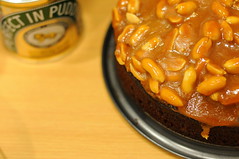
Caramel Peanut-topped Brownie Cake
In spite of horror stories, the caramel was easily made and excellent stuff. Dorie's instructions were enough but for a bit of handholding, David Lebovitz and Joe Pastry would have been great too. Note to self: sticking finger into boiling caramel to test doneness => sticking burnt finger under running tap for 1 hour => being 1 hour late for dinner => caramel topping more set than it should be.

The brownie cake was a FAIL, 1 tsp of salt being just too premix and the little portable oven not agreeing with Dorie's set timing and temperature for real ovens (but my ignoring these trivialities to play Scrabble). The assembly of GPs was kind enough to not only eat half the cardboardy stuff (and burrow through the dense fudgey chocolatey bits of the other half) but also say that the stuff tasted good. Horrors.
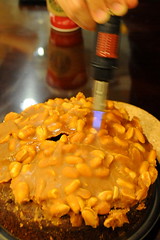
Attempting to melt caramel with a blowtorch B just happened to have in his pocket
Another note to self: top with caramel just before cake-feeding. Otherwise, even people who just happen to have blowtorches in their pockets can do nothing to melt the set caramel.

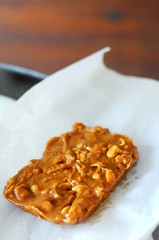
Peanut Toffee Fudge Thing
(A phenomenon just ripe for peanut toffee fudge things? Yes indeed. And such was the fate of the excess caramel-peanut concoction.)

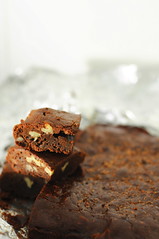
Brownie
The brownie for the family, unhindered by the need to identify with the cake genus, fared much better. After all, David Lebovitz's opinion is that any monkey with an opposable thumb and the right recipe can make one. This recipe was another amalgamation, this time of Nick Malgieri's Supernatural Brownie, Dorie's French Chocolate Brownie and Alice Medrich's New Classic Brownie. Since the brownie foodgroup is one of the best platforms for quality chocolate, prefer my brownies fudgey rather than cakey, with a crunchy crust on top and some lightly toasted walnuts or pecans within for texture.

If Shirley O Corriher and C&H's megaphoned brownie secrets are to be believed, the way to achieve ultimate fudginess with a crunch involves:
  • melting the butter instead of creaming it with the sugar to achieve fudginess
  • using semi-sweet chocolate for a creamier texture
  • not overmixing
  • maturing the mixture for a few hours or overnight
  • baking brownie for a short time at a tempterature
  • removing the brownie from heat once the edges have shrunk slightly away from edge of pan
  • placing the hot pan in an ice bath immediately
Ironically, the current sample ended up more cakey because to the parentals, fudgey = how come this hasn't been baked properly?

The joy of baking is not so much in the finished product (although that must be somewhat tasty so that someone will come along and masticate said product) as in the process. It is the same joy of observing chemical changes and playing a part in action-reaction experiments that accompany the burning or blowing up of stuff, except that this can be achieved legally, without a crater in the backyard and the neighbours on 999.

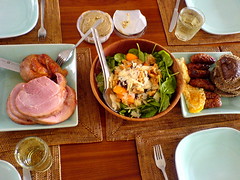
Lunch
In one of my favourite food chemistry books, Bakewise, Shirley O Corriher inserts a little box within each recipe titled "What This Recipe Shows", explaining the reactions between ingredients required by the recipe. This weekend, we had a lovely time with friends reviewing the past year. If there'd been a little summary box titled "What Last Year Showed", what pithy statements would it have contained? It hadn't been an easy year, so it would have been easy to pass Go, claim $200 in victimhood, self-pity and bitterness and conclude something like:
  • People who claim to be Christian are far worse than people who don't.
  • The more entrenched a person is in a church, the more cunning and manipulative you can expect him/her to be.
  • Do as they teach, not as they do.
  • Sanctification is the bollocks.
And possibly the cherry on the devil's cake:
  • They're all hypocrites, it's all fake, why bother persevering? Why not enjoy the here and now while it lasts?*
Regardless of the ability to repeat kitchen experiments, Shirley Corriher's explanations are ultimately mere hypotheses. How much more prone to error and misjudgement are interpretations of unrepeatable past events. Right interpretation can only come from One not only infalliable in observation but One who alone can explain our life events.** For He alone directs them.

There is little more humbling than to realise that we ourselves suck at these most basic of things. And surely this should drive us to an open Bible and, instead of stewing away in self-righteousness, to our knees to pray for our leaders, our brothers and sisters and ourselves. For surely our sinful natures are too primed to fall happily into Satan's snares.

Those maraschino cherries always tasted fake.


*There is something to be said about the limitation of language (language, that is, meaning verbal language, qua Iris Murdoch's Thinking and Language) in capturing mental events and internal cognition.

**If the limited human mind is already thus hindered by language, how much less of God's unlimited mind we must perceive through the Bible.

Labels: ,