Tuesday, March 08, 2011

The Heavens and The Earth, The Sea and The Dry Land
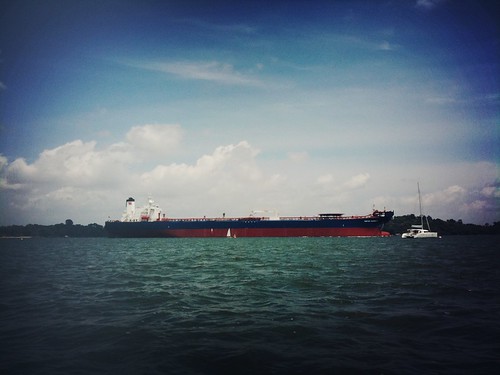
Waters off Changi Sailing Club are really busy
There is much to be said about the romance of cruising the high seas with wind harnessing sails, but when the cold beer runs out and the onshore barbecues are a-calling, an immediate return to land usually necessitates vigorous use of petrol-fuelled mechanical means. So it was only wise to top up RYA's competent crew certification with a powered pleasure craft driving licence - necessary for driving powered vessels from jet-skis to mega-yachts registered as SZ or SZH within Singapore waters.

Church-mates were greatly delighted by the news of the licence, especially since our church's constitution allows for the purchase of boats and ships. There were day-dreams of church services on barges, sailing and deep-sea fishing ministries and diving sessions off Pulau Hantu.

"Yes," I said,"And I am even trained in retrieving people when they fall overboard."
"Good, good."
"When we train, we try to determine how much might be left of the fallen person when we finally retrieve him - if there is a hard knock at the bow, we've probably killed him but he'll be in one piece; if we let him get too far to the stern before going to neutral, he might have lost part of his limbs to the propeller."
"Oh, actually, if we fall overboard, don't worry about us - we'll swim to you."'
"But I passed the test!"
"Seriously, don't do anything, man."

Anyway, while watching The Captain fix an outboard motor on one training boat which had conveniently spluttered its last just as smoke rose from one of the bilges of the other training boat, I realised that few things bring more joy that taking things apart and seeing how they work. Taking the Silly Black Car to the workshop and looking under its hood with John Tan, the long-suffering mechanic, has always been cause for excitement rather than frustration. Unlike others of the same ilk however, my interest has always been more rabid curiosity than useful practicality - in the toy box, together with the much thumbed The Big Book of How Things Work, there used to lie the carcass shells and innards of dozens of toys, alarm clocks and other household items that were taken apart and examined and once their workings were explored and more or less understood, abandoned for the next mystery.

The great thing about God, of course, is that he is endlessly fascinating - so no one can never really tire of him (or his creation for that matter). Which is why reading the Bible, God's word to humans, is so utterly good fun. It's not just exciting on the level that the pointers on getting a PPCDL* might be - that is, only to the speck-like minority who are keen on pleasure boating in Singapore; neither is it a book merely for geeky classicists to obsess over regardless of authenticity of historicity; nor is it just for those insecure types whose fruitless quests for self-improvement serve to emphasise their abject loser-liness.

First, it is a historical document corroborated beyond reasonable doubt by a variety of contemporaneous historical documents - therefore, it cannot be easily dismissed as one might Greek mythology. Second, it claims to be from the God of the whole world, even the God of those who worship other gods - there is no one He does not address. Third, even though it is the Creator's instruction manual to his creation how to make the best use of what he has created (which "experts" will never be able to deduce on their own), that is not the end-point. The historical record of God's dealings with mankind through hundreds of generations is most importantly about whom this God who made everything is, what he wants from all the people he created and about what he will do to the world and everybody in it in the future, depending on how they have related to Him.

One might have thought that such knowledge might be easily imparted in point form on a single A4 sheet. But on account of the mind-shattering complex bigness of God (which obviously the Bible cannot contain) and the stubborn stupidity of almost everyone who has ever lived, we not only need to read the Bible constantly to remind ourselves of its truths and each other to encourage us in the logical matter of living according to the truth, we need God's Spirit to first enable us to understand God's Word and the power to obey it.

Reading through the failure of all those generations in Exodus, Judges and 1 and 2 Kings with various people in the last week is warning enough that the seemingly simple matter of trusting and depending on God to help us is the hardest work of all for us sinners!

________________________________________________________

*To obtain such a driving licence, one might:
Book a course with Captain Jon Lum (97111411, cptjon@singnet.com.sg) - he's a cheerful, chain-smoking, experienced PPCDL teacher who runs courses at Changi Sailing Club and Raffles Marina and has plenty of anecdotes to prevent dozing off during theory lessons. Otherwise, try SAF Yacht Club or One Degree 15 Marina or other recognised PPCDL centres.

Go to Singapore Polytechnic's Singapore Maritime Academy page to register for powered pleasure craft driving licence theory and practical exams.

You'll need to have taken a course at a recognised PPCDL centre and passed an eye examination before taking the theory test.

My perfect score on the theory test came thanks to the Singaporean method of ace-ing exams - the 10-year series - which is basically a compilation of past test questions. Most course instructors will give this out but if yours doesn't, "seahorse" from the fishingkaki forum has been kind enough to make available an Excel spreadsheet which can be downloaded here. The Changi Nautical blog was also somewhat useful.

The theory test is taken on rather old computers at Singapore Polytechnic, Dover Road, W215A (Workshop 2, Level 1, Room 5A) - the sort that has screens that one views through a plexiglass window set on the tabletop. Balvinder Kour from the PPCDL Test Centre will send you a "gentle reminder" of the items to bring and dress code (no singlets, shorts, slippers) shortly before the test.

You'll need to pass your theory test (you'll need to get at least 26/30) before you can sit for your practical boat handling test. Ms Kour will again send you a list of items to bring and the dress code.

It's always useful to go for a refresher on boat handling the week before or on the morning of the practical test (book the 11.30a.m. or 3.30p.m. test if you want to do this). The test site is at PolyMarina, 50 West Coast Ferry Road (at the fork in West Coast Ferry Road, turn right for the PolyMarina and left for the Republic of Singapore Yacht Club). Some students sign up for the course at RSYC for this reason but I met a testee who'd failed twice even though she'd trained in the same area; and a few of us passed on first try despite training at the far more crowded and choppy waters outside Changi Sailing Club and the lovely calm channel outside Raffles Marina, so familiarity with the test site may not be a big factor. There are no snack shops at the venue so eat before you go (if you can stomach any food).

Wait in a hut next to lines of colourful overall laundry. One of the testers will brief the group of testees on the sequence of the test. (Boating, said the briefing examiner, is not about memorising steps to take but about being cognisant of the prevailing weather, wind and tide and acting accordingly. So while your club may have taught you to count a certain number of seconds before doing this or that action, conditions at sea are so variable that you'll be able to drive safely only if you're thinking on your own two sea-worthy feet.)

First, the processing - show your identity card (or passport if you are a foreign citizen) to the examiner and produce your theory test result slip, then write your details down at the top of the examiner's checklist. The group to be tested will then be divided amongst the three Dynaglass test boats and their accompanying examiners, and will go off to the test in pairs, in two waves.
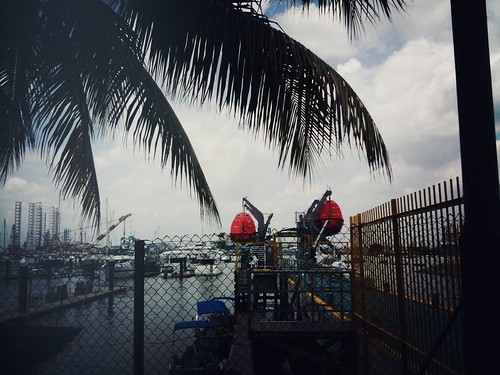
Launch site of PPCDL Boat Handling Test Boats
The underway check takes place down at the jetty. The test boats will slip off as soon as the candidates are done, in no particular sequence. If you are in the front most or middle boat, the danger of hitting a neighbouring boat (= immediate failure) is high so extra caution is necessary. The "unberthing" space is also tight due to the ramp on the starboard side of the test boats, so going astern all the way out is best. But watch out for the kayaks behind the jetty. The "no-wake" zone of 3 knots extends to the end of the pier but examiners will tell you to speed up. Take note of exiting boats on port and fishing sampans on starboard.
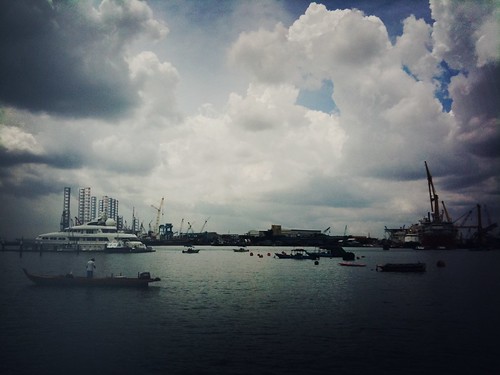
West Coast Park Jetty, looking out to RSYC berths
A site plan of RSYC's berths can be found here. The man overboard test will take place just past the last row of berths. It is important to maintain 360 degrees situational awareness and snap to neutral immediately upon hearing the tell-tale splash - my lookout shouted (and repeatedly insisted) that MOB was on port when the orange fluorescence of the MOB life-buoy was clearly visible on starboard (turning port when MOB is starboard = immediate failure).

The berthing test will take place either at the outer part of the Row J along the megaberths just in front of the Shaws' Seashaw, on the exposed right side of Row J or in one of the stubby finger-piers in Row J. (My examiner told me to berth so that a particular cleat on the test boat was exactly aligned alongside a specific dock cleat on Row Juliet. Was happy to get this over with, spot on, on first try even while he was distracting me with questions about whether to pass a nearby red port hand buoy on port or starboard. He later admitted that he was deliberately trying to set up a bit of a challenge. :-))

When both candidates are done, the examiner will take the helm and motor back for the oral theory test. Unless you're the first person to be examined, you can then mug up on buoyage systems, lighthouses, regulations for preventing collisions at sea, conduct of vessels in restricted visibility, lights and daymarks of vessels and the activities they are engaged in, sound and light signals especially in restricted visibility and the international code of signals while awaiting your turn. (Possibly because I cleared MOB drill and berthing on first go, had only three theory questions while some others were grilled for 20 - 30 minutes. One came out crying.)

If the examiner then asks you to fill in a form headed "Application for Powered Pleasure Craft Driving Licence", and then takes your hand in his calloused one and pumps it vigorously, you've probably passed the handling test. Apply for a powered pleasure craft driving licence. It costs S$20 for applications by post and will last you till you're tossed into Davy Jones' Locker (or Singapore legislation changes).

Labels:

Sunday, February 20, 2011

Boating, Transversing Park Connectors and What We Talk About When We Talk About Prayer (Colossians 4:2-4)

A pant-astic Saturday is:

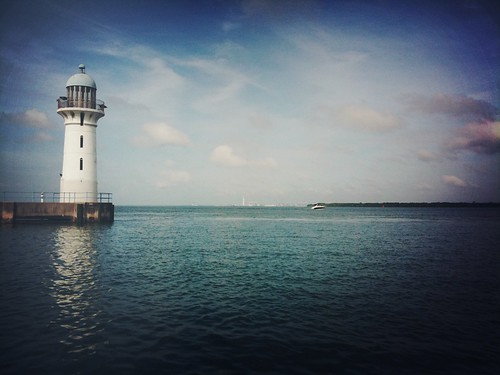
Raffles Marina Lighthouse
being out in the waters off Raffles Marina, waving to coast guards and getting the power boat driving sorted (and also having the Dynaglass gorge out a bit of flesh from the shin),

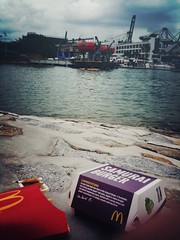
Poly Marina, from West Coast Park
sitting on the breakers, chowing down a McDonald's Samurai burger meal while watching the test launches from the Singapore Poly Marina and commentating obnoxiously on the same (the obnoxiousness is intensified if one of you has a strong American drawl that carries across water),

Flying Pigeon bicycle, Tong Ah & Co
getting a Flying Pigeon from the old Tong Ah & Co bicycle shop,

Crankarm divorces crankset Teck Bee Brothers, Syed Alwi Road
only to have the right crankarm shear off from the crankset about an hour later, being rescued by an uncle who laughed at the assumption of a return policy or warranty of any sort, nodded his tight perm, stroked his small moustache with uncle-bling-ladden hand, directed me to Teck Bee Brothers on Syed Alwi for a fix, took me along backroads of Jalan Besar and Lavender to Kallang River where he offered his number, expressed fear for my safety, then left to continue his attempt to clear his head from last night's binge-drinking,

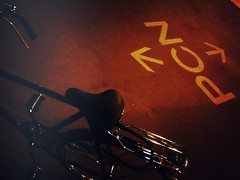
Park Connector Network Flying Pigeon, Park Connector Network (PCN)
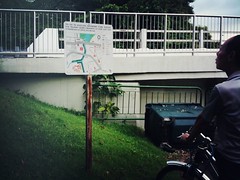
riding the Kallang, Ang Mo Kio and Buangkok Park Connectors till it was too dark to see anything. (National Parks' more useful maps from 2009 are here: Kallang Park Connector, Ang Mo Kio Park Connector.)

A few photos from the trip:
Flying Pigeon, Bridge linking Lavender Street to Kallang Bahru
the bridge linking Lavender Street to Kampong Bugis across Sungei Rochor,

Loysel's Toy Flat White, Loysel's Toy
pitstop at Loysel's Toy at Kallang Bahru for flat white, croissant and water, where a light drizzle made some very nice strangers offer brollies to keep forever,

Flying Pigeon, Kallang Riverside Park
through Kallang Riverside Park, past the huffing dragonboaters, to cross Sir Arthur's bridge to use the underpass on the other side,

Disconnected part of Kallang Park Connector
dismounted and pushed bike along the edge of Geylang Lorong 1 Bus Terminal towards Kallang MRT and connected to the disconnected Kallang Park Connector across Sims Avenue,

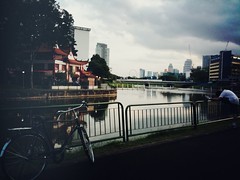
Flying Pigeon, across the river from Chwee Kang Beo temple
swept past Chwee Kang Beo temple, crossed a bridge and paused to enjoy the view of the Singapore Flyer,

Flying Pigeon, The Rivervista @ Kallang
marvelled at the loveliness of staying in a HDB flat at The River Vista @ Kallang,

Overhead bridge across Bendemeer Road
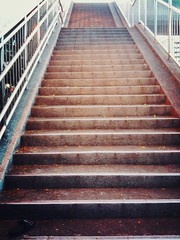
carried the 20kg dead weight of F Pigeon up the overhead bridge across the very busy Bendemeer Road,


National Aerated Water Co. Ltd. - Kickapoo in glass bottles no more,


on the opposite bank of the Kallang River from National Aerated Water Co. Ltd. building where people were chatting and fishing,

Bridge near Moonstone Lane
crossed back over the Kallang River - this bridge had helpful grooves for bicycle wheels,

Turn right at Moonstone Lane
turned right through a little grove and then left onto Moonstone Lane, headed uphill and turned right towards Topaz Road while being amused by the gemstone road names (in the vicinity, "Ruby Lane" and "Opal Crescent"),

Crazy bridge over PIE to St. Andrew's
not so amused to be confronted with the mother of overhead bridges across the Pan-Island Expressway (PIE) to St. Andrew's Village, carted the 20kg dead weight across again, (at which point I wished I could, just like one toggles a weapon-change in RPGs, toggle my ride to the 10kg Strida...)

Bicycle path next to St. Andrew's St. Andrew's
pushed F Pigeon along a narrow path along the walls of the peach-pink Anglican Diocesan Centre, across another bridge where the view of the St. Andrew's bridge was lovely,

Underpass under the CTE
from then it was smooth cycling along the feeder into Kallang River with the charmingly un-upgraded Potong Pasir to my right, until I had to dismount and push F. Pigeon through the underpass under the Central Expressway (CTE) or risk a S$1,000 fine,

Bridge across Braddell Road
past the SBS Transit headquarters and ComfortDelgro Engineering, we were confronted with yet another overhead bridge across Braddell Road, this one fortunately with bicycle wheel grooves for the Fat Princess,

Flying Pigeon, Bishan MRT Depot Flying Pigeon, Warning Signs outside Bishan MRT Depot
another smooth ride along Sungei Kallang SMRT Train Depot to the right, which seemed to promise that trespassers would be electrocuted then shot,

Flying Pigeon, AMK Hub
skirted the edge of Bishan next to the artificial river that was being constructed to run through Bishan Park and turned right to the Ang Mo Kio Park Connector to Ang Mo Kio Town Garden West and crossed the road, pushed bike through the extremely busy Ang Mo Kio central to AMK Hub,

Flying Pigeon, Ang Mo Kio Avenue 5
moved up along Ang Mo Kio Avenue 8 under the MRT track and right onto Ang Mo Kio Avenue 5 to join the Buangkok? Park Connector towards Punggol Park, past Nanyang Polytechnic on the left, back under the CTE again, and Ang Mo Kio Industrial Park on the right.

Then we headed for dinner and bed. Adventures of F. Pigeon to be continued another day.


Just as references to rivers in Singapore's total defence classic This Is Home would be taken by most residents as metaphor ("alas unexplored blue spaces" say the URA planners), so prayer might be taken by many Christians as imagery and ideal rather than daily reality.

John Woodhouse's discerning application of Colossians 4 is well worth a think:

Moore College - John Woodhouse - Colossians 4:2-4 from Audio Advice


There are a small number of subjects that a preacher or Bible teacher can touch on, and be almost certain to stir the conscience of at least many of his Christian hearers. All but the most insensitive of us find certain topics awkward, threatening and guilt-arousing. This is partly because all of us have secrets. What we are, what we think, what we have done are things only partly known to those who know us, even those who know us well. How could it be otherwise? Among the hidden things abotu us there are things we really are glad are hidden (and we would like to remain hidden forever, even from ourselves, if that were possible). The word for how we feel about these things is "ashamed". When a preacher or Bible teacher starts to talk about one of these things, we cringe inside. Those of us whose consciences are sensitive can be troubled, not only about the matter of which we have been reminded, but by the very fact that it is secret: that our life is at this point a pretence. If you are a serious Christian person, you may be troubled, not only by your sense of guilt or shame, but also by your sense of hypocrisy. I am quite sure that most readers of this book know exactly what I am talking about.
...Whenever I speak about prayer, I know that if my hearers are Christian, then their consciences will be easily provoked.

...As the letter draws to a close, he speaks of prayer:
Continue steadfastly in prayer, being watchful in it with thanksgiving. At the same time, pray also for us, that God may open to us a door for the word, to declare the mystery of Christ, on account of which I am in prison - that I may make it clear, which is how I ought to speak (Colossians 4:24)
All the evidence suggests that Paul was a remarkable pray-er. At the beginning of this letter he spoke naturally about "when we pray for you" (1:3), and it is clear that this was not an occasional thing: "from the day we heard [of your faith, love and hope in Christ Jesus], we have not ceased to pray for you" (1:9). When you consider that Paul said something quite similar in letters to Christians in Rome (Romans 1:9,10), Ephesus (Ephesians 1:16), Philippi (Philippians 1:3,9) and Thessalonica (1 Thessalonians 1:2), as well as in his letters to Timothy (2 Timothy 1:3) and Philemon (Philemon 4), we can see that praying is something he took very seriously indeed. It must have taken a considerable amount of his time.

As this great man of prayer spoke of his own praying at the beginning of this letter, he now addresses his readers about their praying as the letter draws to a close.

Reading Paul's words, it is difficult for our minds not to turn to our secret failures in praying - how inadequate we feel as pray-ers - how little time and effort we give to prayer - how easily it is the first thing dropped from our daily activities - and so we could go on. Many Christians feel ashamed, even guilty, about their prayerlessness.

However, I want to suggest that God's Word does not work like that. Certainly here Paul is not playing on the sensitive consciences and guilt feelings of believers who do not pray as much or as diligently as they think they should.

(Preachers and Bible teachers take note. It is easy to achieve certain responses through playing on tender emotions in the hearers. There are various techniques, that come with just a little experience in public speaking, to manipulate the feelings of listeners. This is a significant temptation to the preacher, for the Word of God does deal with many sensitive subjects. It is ever so easy to stir up memories you know many of your hearers have (because you have them too!), to touch raw nerves you know so well (because they are raw for you too!). But is this the work of the Spirit of God? Is this what God's Word in fact does with these sensitive subjects? I am not suggesting that the Word of God does not search consciences, nor that shame and guilt are things we should ignore, deny or run away from. The Spirit of God does stir our emotions and our consciences by his Word. I am simply saying that the preacher's task is to ensure that God's Word does God's work rather than manipulative speaking doing the preacher's work. Faithful exposition of the Word of God allows Scripture to set the agenda, and this take great care. As a general principle, we should understand that the Word of God has not done its work if the hearer is left simply feeling terrible, or just determined to try harder in the future.)

The way in which Paul speaks to his readers about prayer is particularly striking.

A call to pray (Colossians 4:2)
The first thing we should notice is that 4:2 is certainly a call to pray - a serious call to pray. Indeed it is a call to follow the example of Paul himself, as we heard of his praying at the beginning of the letter.

The power of this call to prayer, however, comes from its context in the letter as a whole, not just from the words here in 4:2, heard as an isolated rule or command. Like all that we have heard through chapter 3 of the letter, the call to pray comes as a part of an exposition of the life of faith in Christ Jesus. Paul's theme is:"As you received Christ Jesus the Lord, so walk in him, rooted and built up in him and established in the faith, just as you were taught, abounding in thanksgiving (2:6,7). That will mean praying.

Why? The answer to the questions is: For the same reason that Paul himself had not ceased praying for the believers in Colossae from the day he heard about them (1:9). It is because something absolutely wonderful and extraordinary is going on. Our Lord Jesus Christ is the one through whom on and for whom all things have been made, and by his death on the cross God has reconciled all things to him (1:15-20). Through Christ, God is bringing the universe back together again: order out of chaos, peace out of hostility (2:15), reconciliation out of alienation (1:20). Christ among the nations is the hope of glory (1:27)!

This is why Paul prayed, "asking that you may be filled with the knowledge of his will in all spiritual wisdom and understanding, so as to walk in a manner worthy of the Lord, fully pleasing him, bearing fruit in every good work and increasing in the knowledge of God" (1:9,10). Paul prayed, not simply as a spiritual exercise or discipline, and certainly not in order to move an inactive God into action. Paul prayed because of the extraordinary work that God had done and that God was doing.

Yet it is even more than that. The call to pray in 4:2 comes to us because through faith in the Lord Jesus Christ, God is turning chaos to order, hostility to peace, alienation to reconciliation in our lives (1:21,22; 2:5). Praying is a characteristic of the reordered life. The new life in union with Christ in his death and resurrection has been the subject since 3:1. This life (see 3:12-17) is a stark contrast to the chaos (see 3:5-8). Prayer and peace with God go together. God's enemies do not pray. The reconciled pray; the alienated do not.

In other words, if we have been listening to the teaching in this letter, we will not hear the call to pray in 4:2 as an obligation that condemns and threatens and rouses the sense of guilt but as a gospel invitation. Listen to the particular way in which the call is expressed.

"Continue steadfastly"
"Continue steadfastly in prayer", says the apostle. Other English translations have "Devote yourselves to prayer" (TNIV). Similar expressions are found a number of times in the New Testament. It is what the apostles did in Acts 6:4: they devoted themselves to prayer and the ministry of the word. The three thousand who received the word on the day of Pentecost devoted themselves to the apostles' teaching and fellowship, to the breaking of bread and the prayers (Acts 2:42). Indeed it is what Jesus' disciples were doing immediately after his ascension as they waited in Jerusalem: they were devoting themselves to prayer (Acts 1:14).

Paul certainly calls for a commitment to praying. There is also a sense of privilege. When you know and understand the grace of God in Jesus Christ, praying is what you do. When we are conscious of what God has done and is doing and will do, we will pray. This is precisely what we heard Paul doing at the beginning of the letter. "We always thank God, the Father of our Lord Jesus Christ, when we pray for you, since we heard of your faith in Christ Jesus and of the love that you have for all the saints...And so, from the day we heard, we have not ceased to pray for you, asking that you may be filled with the knowledge of his will..." (1:3,9). Now he invites his readers to do likewise: continue steadfastly in prayer. Devote yourselves to prayer.

"Being watchful"
What will enable us to heed this call? It requires being watchful in it. Being awake. Praying is not the sleepy activity we may sometimes imagine (and perhaps sometimes practise!). It requires alertness. Yet this is not simply a call not to drift off to sleep as we pray, as the disciples did in the Garden of Gethsemane (Mark 14:37). As on that occasion, praying requires being awake to what is really happening. Don't lose sight of the fact that you have been raised with Christ (3:1), that you have died and your life is hidden with Christ in God (3:3). Keep awake to what is soon to happen. When Christ who is your life appears, then you also will appear with him in glory (3:4).

This characteristic of the Christian life is worth emphasising. Jesus taught it:"Therefore stay awake - for you do not know when the master of the house will come, in the evening, or at midnight, or when the rooster crows, or in the morning - lest he come suddenly and find you asleep. And what I say to you I say to all: Stay awake" (Mark 13:35-37); "Therefore, stay awake, for you do not know on what day your Lord is coming" (Matthew 24:42); "Watch and pray that you may not enter into temptation" (Matthew 26:41).

This wakeful watchfulness is alertness to the realities to which "you have heard in... the gospel" (cf 1:5). It is keeping our eyes of faith open. It is having the work of God in Christ and in his gospel in our consciousness. When we see life and the world in this brilliant light, when we understand what is going on, then we can properly hear this call to pray.

With thanksgiving
The third element in the call to pray in 4:2 settles the fact that this call is not intended to be guilt-driven. On the contrary, we are to pray with thanksgiving. Being watchful is not a matter of being frightened, worried, or anxious. On the contrary, like the whole Christian life, praying is energised by thankfulness.

This has been a repeated note through this letter, which has been described as "one of the most thankful documents in the New Testament". It began with Paul's own "We always thank God...since we heard of your faith in Christ Jesus" (1:3,4). Then his prayer for the Colossian believers climaxed with the request that they would be "giving thanks to the Father, who has qualified you to share in the inheritance of the saints in light" (1:12). Indeed the purpose of this letter includes that its readers will "abound in thanksgiving" (2:7). At one point in this letter, Paul simply and starkly says,"And be thankful" (3:15), and then speaks of the "thankfulness in your hearts to God" (3:16). Indeed the Christian life can be summed up as "whatever you do, in word or deed, do everything in the name of the Lord Jesus, giving thanks to God the Father through him" (3:17).

The words of 4:2 should move us to be serious about praying, but if we hear these words rightly we will be moved, not by guilt feelings, but by being "woken up" and by thankfulness.


Labels: , , , ,

Friday, July 16, 2010

Gone Sailing

Yacht, Keppel Harbour

The sun is out.

The lemurs are hamming it up to Lady Gaga's Alejandro* with extreme Spanish accents, interspersed with Ace of Base's The Sign in extreme Swedish. There are lemurs pointing purposefully into thin air. There are roses in mouths and armchair stuffing flung about like so much snow confetti.

The wind is filling the sails, all hands are on deck.

We are in a dead run.

Islands to explore, accidental jibes to avoid, much watching and work to do.

The world is the LORD's and everything in it. Going fishing.

BRB.


*nothing like the official music video, thank you.

Labels:

Wednesday, May 06, 2009

Egyptians Sink To New Depths, God Gets Gobs of Glory (Exodus 13-14)

Last Monday, charity tickets for Lee Chin & Friends, part of the Raffles Girls' School Alumni Tribute Series, meant the sitting through a truly disappointing unsatisfying main course by Siow Lee Chin. In the audience there was one lady right in the middle of the stall seats who had either excellent cellphone reception or a very persistent phone alarm, the rabid pained scribbling of notes and then, the walking out citing severe emotional distress. Later at a comfort food supper for frayed nerves, descriptors such as "screechy", "scratchy", "thin tone", "faulty intonation" surfaced repeatedly. G summed up the performance as "very schoolgirl". Lee Chin seems to have been battling these problems for about a decade. Two reliably frank Inkpot reviews in 1998 and 2000 complain of the same thinness and screechiness and intonation problems.
RGS String Ensemble Waiting for President Nathan. Lee Chin & Friends, Esplanade Concert Hall
Back in 1998, Isaak Koh referred to Lee Chin playing a Strad (or was it the Guadagnini?) and suggested that the Italian instrument was responding adversely to the tropical climate. He also kindly proposed that the acoustics of the Victoria Concert Hall were in issue. And for good measure, thought that Siow's failure to direct the soundboard of the violin towards the audience resulted in the loudness of the instrument wavering as she moved with the music. Suffice to say that Vadim Rapin, when he performed in the same hall, in the same era, with a Ruby Strad (I think) didn't have these issues. Granted this time, she was probably playing the Deconet.

Perhaps this time, the acoustics of the large cavernous Esplanade Concert Hall were to blame for the thinness of sound? Previous experiences with the un-"critically acclaimed": Ang Shao Wen in private recital and Chua Lik Wuk in violin and piano recital with Lim Yan in the Esplanade Recital Studio had been by contrast vastly delightful.

But then, assuming the recording below is as-is, surely the state-of-the-art Esplanade could not do worse than the Ganz Hall in Chicago. Gallia Kastner on violin playing Pablo Sarasate's Zigeunerweissen on a copy of the "ex-Soldat" Guarneri del Gesu violin by Peter Seman (2008), didn't have projection problems in a former banquet hall.

Hot Chocolate, Cappucino, Banana Walnut Cake, Privé Bakery Café, Keppel Island Hot Chocolate, Privé Bakery Café, Keppel Island
Regardless, an audience, whether subject to evergreen crowd-pleasing classics, new world wonders or stock showpieces, should feel secure in the hands of the violinist. They should be able to sit back and relax with their choice of tasty beverage, and not have to bite their nails and wonder what the next note might bring.

Our lives in the hands of the living God should be in a far better situation than our ears in the hands of the best violinist the world has ever known. Afterall, the late greats, Szeryng, Oistrakh, Heifetz, Kreisler, Siedel, Elman, Perlman, Rabin, Menuhin, were never completely consistent and the still living seem far more mastered by their instruments than masters of them.

Well, all very easy to say snuggled safe in Singapore where the biggest news any local has been aware of for a fortnight concerns the sloppily-drafted constitution of a women's group, an AGM, an EGM and media-goaded fights between "the old committee" and "the new committee". Hardly the sort of life-threatening situation Israel faced after they hastily exited Egypt while, after a night of horror, the Egyptians buried their dead firstborns.

So there they were, 600,000 Israelite men and many more women and children and others (Exodus 12:37-38), rich with plunder (Exodus 12:35-36), accompanied by very much livestock, both flocks and herds (Exodus 12:38), hosts of the LORD (Exodus 12:51, 14:19) macho-ly armed for battle (Exodus 13:18), the fresh air of freedom in their nostrils, striding purposefully towards the Promised Land. They were led by the LORD himself, in a pillar of cloud by day and a pillar of fire by night (Exodus 13:21-22). God spared them an early fight with the Philistines and led them over uncontested lands. Perhaps they had been singing "I Will Follow Him" in rounds for the Nth time when Moses was told to make a sharp right (Exodus 14:1-2) and they ended up in a scary cul-de-sac, hemmed in by the wilderness on one side, the Red Sea on another. About 3,000,000 pairs of eyes might have stared down an obliviously cheery little voice singing "there isn't an ocean too deeeep" as the entire military force of Egypt darkened the horizon. Pharaoh had decided that Egypt was not going to face financial ruin just because of some night terrors, nevermind that these were all too real (Exodus 14:5). His heart had been hardened (Exodus 14:4) and he had come for the ex-slaves with everything he could muster: his chariot, his horsemen and his army, plus 600 extra chosen chariots and, for good measure, all the other chariots of Egypt with officers over all of them (Exodus 14:6,7,9). A bunch of civilians (with women and children) on foot whose idea of a fight was fisticuffs in the sand (cf Exodus 2:13) vs the most highly-trained professional army in the ancient world on horseback and in chariots? Sure, some pre-alpha Command and Conquer programmers might possibly have coded MASSIVE FAIL right about here.

But only very recently, Moses had drilled into them the eternal festivals/rituals/markers that were to commemorate their successful escape from Egypt under the strong hand of the LORD - the changing of the Hebrew new year and the Passover (Exodus 12:1-13, 24-27, 43-49), the Feast of the Unleavened Bread (Exodus 12:14-20, 13:3-10) and the Consecration of the Firstborn (Exodus 13:1-2, 11-16). The institution of such festivals and rituals was as good as God's specific promise to them that they would be rescued successfully and settle somewhere where they could celebrate these things and spend many hours recounting the rescue story to their children and grandchildren and they to their grandchildren etc for all generations.

Could God fulfil his promise of rescue? Had they not just witnessed God's finger - the ten plagues on Egypt? Had it not already been rather obvious that the LORD was in control over everything in the universe, everything anyone could think of and everything no one hadn't half a brain to think of?

Would God fulfil his promise of rescue? Hadn't everything God had said through Moses so far come true? Didn't old Jacob's mummy with/without its sarcophagus (cf. Genesis 50:26) that they had packed away in their luggage (Exodus 13:19) demonstrate that God had kept/was in the process of keeping his word - because already the multitude of refugees meant that Abraham's descendants were growing to be as numerous as the stars in the heavens (cf Genesis 15:5), and though they were sojourners and servants in a land that was not theirs, they were coming out with great possessions (cf Genesis 15:13-14) and being brought to the land God swore to Abraham, Isaac and Jacob (cf Genesis 50:24)?

Well, whatever. The Israelites took one look at the heaving horses and without hesitation accused God of being an incompetent guide. No, wait. That's too mild. They accused God of being completely untrustworthy, a liar, an evil being bent on their destruction. (Exodus 14:11-12). They'd known better than to have put their faith in him. Why, didn't they say to Moses "Leave us alone, don't rescue us, we're perfectly jolly being slaves to our oppressors" (Exodus 14:12)?

Which part of I AM the LORD, trust and obey, there's no better way didn't they understand? Well, probably most of that "I AM the LORD" bit which led to the lack of the "trust and obey" bit. If God's attributes, namely his eternal power and his divine nature could be clearly perceived, ever since the creation of the world, in the things that have been made (Romans 1:20) then all men have always been without excuse in claiming not to know God and so not worshipping him. So God's direct communication with Abraham, Isaac, Jacob and lately Israel through Moses would have been quite a concession. The faithful Hebrew midwives way back at the start of the story (Exodus 1) didn't even need that much to fear God instead of Pharaoh. Still, the Israelites did not really know the LORD in all his might and power and God-ness. Not only did they not think him trustworthy, or his character only good all the time, they failed to grasp that as the supreme and ultimate being in the world, if he'd wanted them dead, they would have had already been six feet under or mummified or tipped into a common slave grave, regardless of geographical location.

Actually, God would have been quite justified in doing just that to the Israelites. Afterall, the punishment for sin has always been death. So why didn't a voice boom out of the clouds:
Attention! Attention! Due to disbelief, the way through the Red Sea has been cancelled.*

Good bye.
The psalmist tells us the reason God withheld his hand from decimating them inspite of their dastardly distrust and disobedience:
Our fathers, when they were in Egypt,
did not consider your wondrous works;
they did not remember the abundance of your steadfast love,
but rebelled by the sea, at the Red Sea.
Yet he saved them for his name’s sake,
that he might make known his mighty power.
He rebuked the Red Sea, and it became dry,
and he led them through the deep as through a desert.
So he saved them from the hand of the foe
and redeemed them from the power of the enemy.
And the waters covered their adversaries;
not one of them was left.
Then they believed his words;
they sang his praise. (Psalm 106:7-12)
He was concerned for his own name. One can't tell everyone that one is saving one's people from the Egypt and bringing them to the land promised to their forefathers and then either cause a giant heavenly piano to fall on the lot of them or inflict fatal trauma to their nervous systems with a heavenly violin screech or less supernaturally, allow them to be killed by Pharaoh & Co, no matter how much they deserved it. God had a reputation to keep.

A mass slaughter would not have impacted the fulfilment of his promises to Abraham, Isaac and Jacob, for God could easily
have recreated the entire people, ver 2.0 - even greater and mightier, through Moses the Recently Faithful alone. He suggests as much later in Numbers 14:12. But this mercy in desisting from killing them would give him more glory in the eyes of the world.

We are usually rather quick to explain how the Israelite's lack of trust at the Red Sea might have to do with their socio-economic background, their poor upbringing, their tiredness... well, basically, it was really all rather reasonable. But perhaps our excuse-mongering should warn us of our own lack of understanding of God and what he requires of us.

God has always been concerned with his glory and he has always required the world to give him due honour - in worship, in trust, in obedience. God has worked to achieve this in direct, bare, supernatural ways, eg. the ten plagues, to demonstrate his great power, that there is no god like the LORD; he has also works by the great withholding of his great power. So, briefly, we see, at least:
  • the glory of God's care - in not allowing his people to be tempted beyond what he knows they can bear (Exodus 13:17 cf. 1 Corinthians 10:13);
  • the glory of God's power in the helplessness of his people - he can do what we think is impossible, when we can't contribute anything, even our faith;
  • the glory of God's steadfastness in face of the fickleness of his people - God doesn't need to wait for a proper response before acting to save in his infinite mercy;
  • the glory of God's trustworthiness that justifies the faith that his people put in him;
  • the glory of God's in his judgement of his enemies. God does not subscribe to uttering politically-correct contentless PR phrases when speaking of his enemies. He boasts openly of the decimation of his enemies by his hand because this shows the powerful and just God he is (Psalm 9:16). When God carries out judgement, he isn't terribly sorry about it; it's part of his glory and his fame. And so we too should not be ashamed of this. The God of the OT is the same God of the NT, so just as the LORD was given glory when the Egyptians realised what the sort of LORD they were dealing with ("Let us flee from before Israel, for the LORD fights for them against the Egyptians." (Exodus 14:25)), we are told in 2 Thessalonians 1 that the saints will glorify God when "the Lord Jesus is revealed from heaven with his mighty angels in flaming fire, inflicting vengeance on those who do not know God and on those who do not obey the gospel of our Lord Jesus. They will suffer the punishment of eternal destruction, away from the presence of the Lord and from the glory of his might";
  • the glory of God's mysteries making sense (to us eventually)
A massive picture of God and still only a glimmer of the whole. And as Vizzini might have said,"And that's not all! Wait till I get going!" The Bible's just getting started! It'll probably take us literally all eternity to even try to absorb this. We can't even respond rightly to the little that we know despite repeated exhortation and careful explanation. How myopic we are to think that the seashore showdown is all about us and how God will fight for us oppressed people suffering under a psycho parent/teacher/boss, or that the Exodus is the biblical basis for sociopolitical liberation. It has never been primarily about us but about God and what he will do to display his glory and how we are to uphold his glory by trusting and obeying his word.

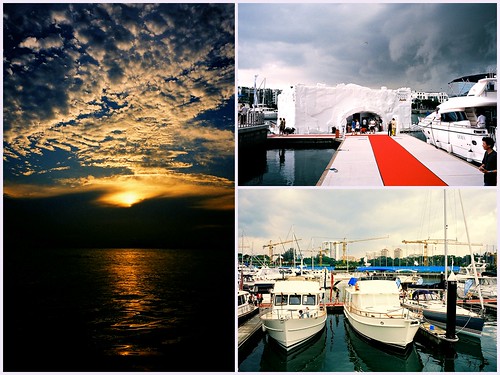
Boat Asia 2009
Being "still" never meant not doing anything, "letting go and letting God". If stoning had been the proper response, the Israelites and their descendants would have been rooted to that same seashore to this day. Being still wasn't about being on a pleasure cruise. It was about not working to save oneself (cf Exodus 14:13 - see the salvation that God will work for you today; also Psalm 37:7, Psalm 46:10, Zechariah 2:13) but, again, about trusting that God would do his will and obeying him: trusting that God's words were true, trusting that God could and would make good his promises and then putting feet to faith by obeying his commands. The writer of Hebrews generously records that by faith the people crossed the Red Sea as on dry land (faith at least that God could and would wall up the sea on both sides while the lot of them passed through!), but the Egyptians, when they attempted to do the same, were drowned (Hebrews 11:29). The Egyptians could not benefit from the promises made to the Israelites because they were not counted as God's people.

And this sea-crossing was only a little foreshadow of God calling his people out of a damned existence in slavery to Satan and sin into his glorious realm. God has already won the victory over the prince and principalities of this world. We need only depend on his victory and obey his commandments while still on this earth.

Too often, our failure to trust God (so that we either try on our own strength to save ourselves or improve on our godliness or think we need neither salvation nor godliness) stems from a dim view of God himself.

Beerfest Asia 2009
Perhaps we think him not quite omniscient - sulking around church buildings and "holy places" but otherwise quite clueless about the happenings in the world. At Beerfest Asia, a former full-time Christian ministry worker was recounting how she came upon a young father having a surreptitious fag in a quiet corner. He was later red-faced and very apologetic that she had witnessed this. She suggested that actually, this was a matter of his conscience and if his conscience was so convicting him that he was sinning against God, then it was between him and God, who, btw, could see him even in his little dark corner. God did not need Christian-worker gossip to keep him updated on the latest news.

Perhaps we think that God, like everyone else we interact with, can only see the masks we put on in the morning. Nevermind our impure motives for doing this or that, as long as we couch it in Christian terms, as long as influential church members or highly-regarded Christians are our friends and endorse our actions, we think ourselves in the clear and, actually, since our own hype is so powerful, rather mature and godly.

Perhaps we think God doesn't really care about his own name or his glory so much so that there will be a judgement day at the end of history for all humans who have ever existed and live our lives intent on glorifying ourselves.

Or perhaps we manage to recognise that God is sovereign and then surmise that he, therefore, must be responsible for taunting us with suffering and trials, not trusting that God has the good of his people at heart and is concerned with refining us through difficulties so that our faith may be proved genuine.

Or perhaps we do realise that God is concerned for his glory and his name but needs the latest in human thinking to reach out to more people, to make hardened criminals and booze-soaked celebreties weep, to build a kingdom for himself. But God can take care of his own name and kingdom, thank you very much. He only asks that you walk in his ways, not the ways of the world that has thrown up yet another foolproof (more like fool-enticing) method for growing the church. (See Tony Payne's little article on Being Biblical Or Doing What Works?.)

Or perhaps again we think that God needs a bit of help in justice and enforcement department and resort to sinful means to dealing with those we consider his enemies, forgetting that the LORD works in his own time and has a far better clear-eyed grasp of the actual situation that we Coke-bottled ones.

Or perhaps yet again we think God's commandments unreasonable, illogical and really against decent common-sense. We know better than to follow them completely and so make convenient exceptions.
...I want you to know, brothers, that our fathers were all under the cloud, and all passed through the sea, and all were baptised into Moses in the cloud and in the sea... Nevertheless, with most of them God was not pleased, for they were overthrown in the wilderness. (1 Corinthians 10:1-5)
These things took place as examples for us, that we might not desire evil as they did (1 Corinthians 10:6). Therefore, flee from idolatry (1 Corinthians 10:14). Therefore, do all things to the glory of God (1 Corinthians 10:31).


*Dale Ralph Davis, God Gets Gobs of Glory

Prive Bakery Cafe
2 Keppel Bay Vista
GF Marina @ Keppel Bay
Tel: 6776 0777

Boat Asia 2009
Marina @ Keppel Bay
An Audi iceberg, a helicopter, the requisite Heineken, Paulaner, Grey Goose waterholes, powerboats, catamarans, luxury yachts, and our favourite, sailing yachts. We went for a spin in RSYC's little J-24(?) keelboat. The salty sea wind, the sunset as we were sailing back, aroused the appetite for more of the same please.

Beerfest Asia 2009
Behind the Singapore Flyer
We got there late enough to hear the end of Hell's Belles - the female AC/DC tribute and almost be run over by their Harley-riding supporters. Frank fellow-imbiber: "Good thing we got complimentary tickets. Otherwise we would have paid S$37.50 each for this noise." At Kelong Seafood, the chips were fat and hot and crunchy and the fresh Fijian tuna lightly pan-seared was very good with a squirt of balsamic vinegar. The satay ladies were well-dressed but lacked experience in counting out and transferring the sticks of very tasty meat to styrofoam cups and then scooping the gravy in. Somewhere apparently the wiseonesthatbe determined that beer is actually "cooling" and therefore good for drinking on hot nights. Good then that the beers were fairly cheap starting from S$3 a pint/bottle. Eschewed the usual Fosters, Vic Bitters, Chimay, Duvel, Hoegaarden, Stella, Carlsberg, Erdinger, Grolsch, San Miguel, Sol, Corona crowd for Flying Dog Brewery offerings. I blame my Ralph Steadman fandom from his Oddbins days for leading me to them light sweet brews.
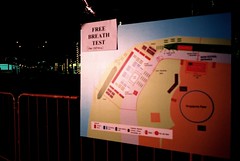
Free Breath Test, Beerfest Asia 2009
At midnight, we found out that the folk who were supposed to test our free breath had gone home early. :-(

Current Read/Think-through of Exodus

Labels: , , ,

Friday, February 06, 2009

Stories, the Tongues That Tell Them and James 3:1-12

Saturday Night Vegetarian Pizza
Saturday night pizzas and sparkling rosés. A cake in oven* after the pizzas.

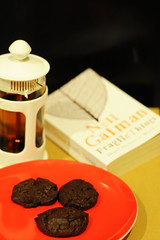
Nothing Says Home Like Mis-shapen Chocolate Cookies, A Cafetière of Earl Grey and a Neil Gaiman
Then chocolate chip biscuits and earl greys. And we were telling stories of stories by telling the stories. Because the best way to describe a story is to tell it.

What a wonderful thing to be a real teller of stories, to entertain refugees from the Black Death or pilgrims on that butt-sore donkey ride to and from Canterbury, to give stories as payment for a tankard of ale, a hot bowl of stew and a kip in a soft bed in a wayside inn, to construct inviting worlds for weary labourers to step into for just a while and forget their sweaty bodies, to use cliffhangers for the postponement of one's own death.

The magic of a good yarn can't really be broken down into its component parts by scholars - oh, here we observe the progression of character, and there, a plot device used to create a point of divergence. Legends, folk tales and fairy tales, myths pay little heed to set literary technique. But everyone knows a good tale when they hear one: the storyteller starts to speak, the tourniquet is tight and the needle is in the vein, then the tourniquet is off and the plunger is in and soon they scarcely notice the world around them fade, replaced by a cosmos of fairies in forests and monsters guarding untold treasures and heros saving worlds and sailing off to adventures in foreign lands.

Some stories are this-world factoids woven with impossible hopes and aspirations. Other stories are dreams articulated. But perhaps, still other stories create the very things they tell of. And perhaps certain other stories are the only permanent things in the world.

Well, God's stories for sure.

Though puny fragile, his creatures know too the longevity of the vibration of their little vocal chords. The stories we tell our children existed in various forms long before ground on which our houses are built was populated and will exist long after any traces of us or our homes can be found. So with an eye to posterity, "historical" accounts have always been commissioned by the victors of bloody skirmishes to commemorate their bravery and divine birth, and by stark contrast, the scumminess of the losers. And so Qin Shi Huang, arriving on the scene to find the stories not quite in his favour, burnt books and buried scholars. But words are not so easily silenced.

It is an amazing thing to consider the power of words, those symbols of thoughts and, when strung together in a language known to at least 2 people, modes of communication. And truly, stories are communicable. Quite innocently, you catch them and are infected by them. They peek out in dreams and nightmares and are subtly stitched into the lining of real life. "I have a dream," says one man and changes the course of entire nations and cultures. Even after the original ones have grown old and died. After all, it was the serpent's five words "You shall not surely die" that changed the path of the entire human race.

Jesus affirmed the permanence of our words, even the throw-away careless ones. They will be remembered and kept in store until the end of this world. Then we will be either justified or condemned by them (Matthew 12:36-37).

This would not worry us if we were navel-gazers, more intent in getting our navels to a "higher rung" in the church hierarchy as teachers or pastors or elders or deacons, liking the sound of our own voices and that people to shush each other to listen to the half-considered notions that spring from our mouths (James 3:1a). But it should.

If even the careless word is judged, then what more the deliberate oratorical sermons or pastoral pronouncements that emerge from our lips that will be heard and will affect tens, or hundreds or thousands**? If we consider that we are all sinful (James 3:2) and that the tongue is the part of the body most induced to sin (James 3:3-8), then surely we ought to have the appropriate safeguards in place before bringing it out for a wriggle, especially in front of a microphone. How careful we must be if the main tool of our job is the part most prone to terrible failure! What a dangerous thing it is to be a teacher!

Sailing and Smoking
Useless live figurehead having a morning fag at the bow


The tongue seems a fairly small organ, roughened up with papillae and taste buds, bashfully tucked away in the oral cavity. But like the bit in the mouth of a horse (James 3:3) or the small rudder on a large ship (James 3:4), that saliva-coated muscle is able to direct great things.

So if we were mature ("perfect" cf James 1:4), we could do great things with our tongues. But alas, our tongues are usually uncontrolled and fulfil their potential for great destruction, much to the delight of the source of all this, the devil (James 3:6). The horrible twisted evil little thing stains and ruins our whole life and destroys those of others too (James 3:6). So whilst humankind can domesticate large predators, it is helpless to control that very thing that resides in our mouths (James 3:7). So the tongue remains wild, restless, full of deadly poison. And we all know how weeks and months and years are sometimes preoccupied with dealing with the fail-out from a sentence or two (James 3:8). The devil isn't in parseltongue, it's in those few rather normally false, biting, slanderous words.

But it's not as if the tongue itself is the evil that resides within us so that if we shear off our tongues, we will be free from the control of our sinful nature and the world. Our tongues are only barometers of our spiritual condition. James looks at outside for evidence of inside. It is our real attitudes and thoughts that are vocalised by the tongue and it is these that corrupt the whole person.

"...it is not what goes into the mouth that defiles a person, but what comes out of the mouth; this defiles a person," said Jesus,"what comes out of the mouth proceeds from the heart, and this defiles a person. For out of the heart come evil thoughts, murder, adultery, sexual immorality, theft, false witness, slander. These are what defile a person" (Matthew 12:11, 18-20, 33-37)

We rail against skimpily dressed women and the rampant and cheap sex prostituted by the mass media, but the tongue is the most unvalued temptation and possibly the most socially destructive instrument of sin. Possibly, the more entrenched we are within a church community, the more people accept without question what we say because of our position or longevity within a social circle, the greater our temptation to sin in this way. In our jealousy or selfish ambition or self-seeking, we destroy reputations on a whim, we tear down rather than build up, we incite disharmony and rebellion, we manipulate, we encourage gossip and slander, all usually under the cover of sharing our concern for God or the church or others. Far too many a post-service snigger or flippant fellowship meal or rash email/sms/chat has spawned untold grief and destruction of lives.

If we claim to have taken hold of the truth and received the Spirit which is able to change us to be more like Christ, then this state of affairs is sick and as utterly unnatural as salty tepid water in our Evian spring water bottled at source or stinky durians growing in our delicate heirloom tomato patch.

And if we hear a brother or sister fall into one of the many traps that litter this area, we must be quick to yank them away. There is nothing like a cabal of shared gossip to build community and togetherness. But this is not the foundation on which Christ's body is to be built. The danger of losing friends, who might perceive one's lack of eagerness to partake of the information exchange as a betrayal of their friendship, is real. But the fire of hell is real too.

Dick Lucas, James 3:1-12
Christopher Chia, James 3:1-12
Desiring God 2008 National Conference had the tongue and words as its theme. Free downloads. As with everything else, use with discretion.

PS:

This is not the worst of it but surely we are all too savvy about this very common inconsistency. Courtesy of Desiring God Ministries.

Saturday Night Chocolate Cake for Sunday Lunch
*Neil Gaiman likens stories to cakes - "Sometimes the cake won't rise, no matter what you do, and every now and again the cake tastes better than you ever could have dreamed it would". This was true of a boca negra, which'd tasted far better when improperly baked, glooped out and a little burnt, than properly baked and characterless.

**"Ministers are noteworthy of their calling. All preachers are vulnerable to the charge of hypocrisy. In fact, the more faithful preachers are to the Word of God in their preaching, the more liable they are to the charge of hypocrisy. Why? Because the more faithful people are to the Word of God, the higher the message is that they will preach. The higher the message, the further they will be from obeying it themselves." R.C. Sproul

***Neil Gaiman reading The Graveyard Book for which he won the Newbery.


James

Labels: , , , ,

Wednesday, November 26, 2008

Running Away To Sea

Sailing
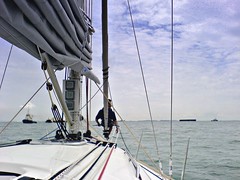
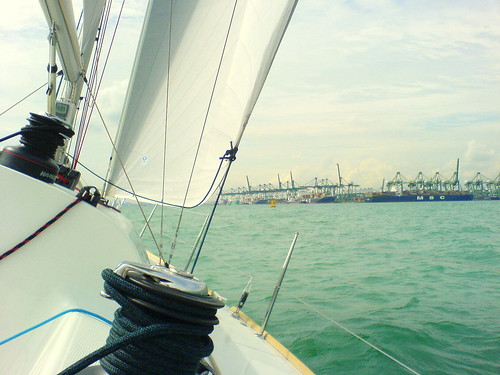
So we ran away to sea and lived aboard a Beneteau First 40.7 sloop and learnt to crew her.

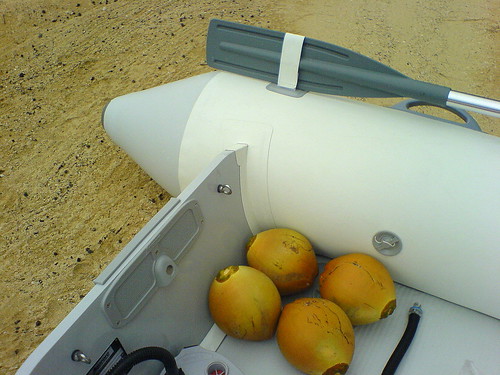
Coconuts from Pulau Hantu in a Dinghy
Living on the water. Most days were blessed with clear blue skies and sunshine – friendly warmth in the salty strong sea-wind. Despite slip-slap-slopping on sunblock, nut-bronzed bodies in large sunnies were soon drapped about the fresh white deck and lounged against the pushpit as we cruised over sparkling emerald waters. Lazy hot afternoons, we anchored off a Southern Island, pumped up the dinghy and rowed ashore to pick coconuts while the others of us with the boat dived off from the bow and boom into the waters that were cool and calm and deep.

But this was no luxury pleasure cruise. In a good wind, we sped along at more than 8 knots, hiking our asses as the boat heeled at an angle so improbable, it defied this landlubber's logic that we'd yet to capsize altogether. Once, we spotted a slightly smaller keelboat practising some tacking off the coast of Changi and proceeded to race her to a designated finishing line. She beat us by 5 boat-lengths and as we drew alongside to applaud her crew, we saw they were well-equipped with water squirt guns which they proceeded to use to great effect on us!

No rest for the weary was to be had while the day was young: between figuring out points of sail, doing tacks ("Ready about?", "Helm to Leeeeee!", "Lee Hold!") and gybes and reefs and other sailing manoeuvres as the wind permitted, helming best course to windward while aiming for a fixed point in the distance and keeping an eye on the windex, learning ropework, keeping a good lookout in the heavy traffic in the Singapore sea (bumboats, tugboats, tankers, refuellers, cruise ships, naval vessels returning from friendly naval exercises, lasers, powerboats and deep-sea fishing boats encircled by hopeful seagulls on weekends, a hot pink and purple boat the skipper called his "gay boat" and even a motorised sampan containing a dodgy pirate-looking man dressed completely in black and wearing a full black balaclava on a hot day), interpreting buoys and offshore markers, remembering the rules of the road, practicing man-overboard runs and doing logs, there was hardly time for a sit-down and a cup of tea.

Then there was being on mother watch - cooking in the sweltering galley, making drinks, washing up. Fortuitously, no one was poisoned while I was on, though those on deck were treated to the sight (through the companionway hatch) of me being thrown from the gas stove on port to the navigation table on starboard while stubbornly holding a pan of half-cooked dinner in one hand and a frying slice in the other and then back again towards the gas fire, as the vessel rocked to and fro. The other Mother managed to slice off a bit of finger together with the green capsicums during a particularly strong wash.

SAF Yacht Club
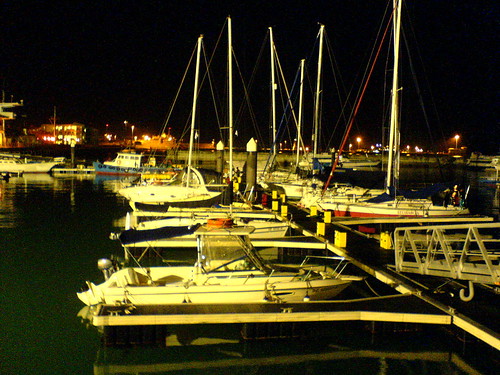
Nightfall, nipping between anchored ships with their decks twinkling like Christmas lights, we were guided by red light to port and green light to starboard in the approach channels to berths at Raffles Marina near the Second Link to Johor Bahru, Marina at Keppel Bay and SAF Yacht Club where the skipper pointed out some salty old sea dogs who lived onboard their own vessels. Imagine the joy of spending their days with the sun always on their faces and salty sea breeze in their hair, roaming the open seas, the simplicity of being temporarily untethered to society. At one marina, a passing wine proprietor was invited to a dinner we'd russelled up on our mother watch, and not only did he not keel over and die, he pronounced it fantastic and sent along his boy with two boxes of Coke, 100 Plus and Fiji water which stood us in good stead for the hot days ahead. Berthing at marinas meant an abundance of water and therefore, the luxury of showers. Other nights, when we hooked up mooring balls and moored in the waters off Changi Beach Club, water conservation dictated only a powder or wet-wipe bath.

It being too hot and stuffy to sleep in the shared cabins below deck, I took to spending the night on the hard wooden benches in the cockpit under the stars, lulled into deep slumber by the bobbing of the boat in calm waters, the familiar chinking and flapping of ropes and the cool night breeze. At the mozzie and sandfly-infested SAF Yacht Club, had to rig a large scarf to act as a mosquito net to pass the night unscathed.

Well, even if a cloud of bloodsuckers had descended, might have been none the wiser. This was confirmed by my snoozing through storm winds while the boat rocked violently from side to side, apparently waking up only to hand a crewmate who'd come on deck to check on things some wet-weather gear, before absently sinking back to sleep again.

One of the best bits of sailing was when we were far from any other group of humans, and huge silver fish flew through the air beside our boat and a pair of dolphins nosed up for a look, and then, coming out of heavy rain into some sunshine, the sight of a beautiful double rainbow. (Was at the helm so no photographic evidence of any of this.) It was pretty difficult not to break out into song at this reminder of God's grace.

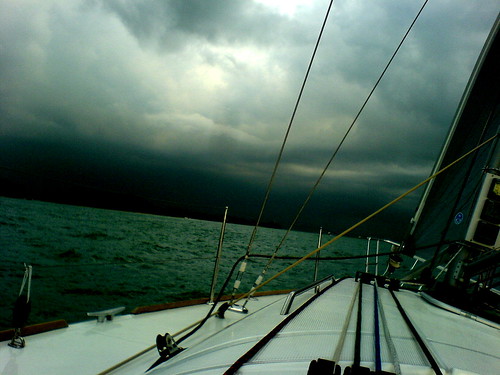
Sailing Into A Storm
In fact, it was really hard-going not being able to marvel expressly about the Creator of sea and the sky and the wind and the sun and all the creatures that live under it, or speak about how frightened the disciples must have been in the storm when we on our modern vessel could hardly see where we were going in heavy rain while being pounded on all sides by bone-achingly cold wind and wild waves, or discuss the Jewish fear of the sea and the characterisation of the Leviathan and Behemoth as creatures of the sea. On Sunday morning though, while anti-bac-ing the saloon with Class 95's Soft Rock weekend on loud, Jars of Clay's Love Song For A Saviour came on air unexpectedly. Lyrically shabby but cathartic.

Back on land, was asked to consider doing some offshore yacht racing around the world for a few months, full sponsorship thrown in. Really love the sea, the open water, and the sailing and the idea of going around the world, and the offer is very tempting. This morning, I woke in my own bed and didn't recognise it. But there is pause for thought - less than a week and already I missed spending a few lazy hours with God's word... :'-(

Anyway, enough already of yabber. Now to get cracking on the good shrewd stuff.

Indescribable
From the highest of heights to the depths of the sea
Creation's revealing your majesty
From the colors of Fall to the fragrance of Spring
Every creature unique in the song that it sings
All exclaiming

Indescribable, uncontainable,
You placed the stars in the sky and You know them by name
You are amazing, God
All powerful, untamable,
Awestruck we fall to our knees as we humbly proclaim
You are amazing, God

Who has told ev'ry lightning bolt where it should go
Or seen heavenly storehouses laden with snow
Who imagined the sun and gives source to its light
Yet conceals it to bring us the coolness of night
None can fathom

Indescribable, uncontainable
You placed the stars in the sky
And You know them by name
You are amazing, God
Incomparable, unchangeable
You see the depths of my heart
And you love me the same
You are amazing, God

Chris Tomlin

Labels: ,