Monday, June 23, 2008

Opera In The Park On Sunny Weekends and Successful Cities

One year on and Singapore is hosting the inaugural World Cities Summit 2008. Unfortunately, it has also been tossed out of Monocle's top 20 listing of the world's most liveable cities.
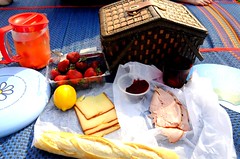
Sunny Weekend Picnic at Singapore Botanical Gardens
We were lounging on the lawn at the Singapore Botanical Gardens. On the picnic mat: a little brown basket, good Ford Farm oakwood smoked cheese, a rather squished baguette, honey-baked gammon ham, sweet beetroot, sweet strawberries, a pitcher of iced homemade strawberry lemonade for the hot afternoon and a frisbee. Later, a boy would eat strawberries voraciously then put a foot on the cheese.

And we were discussing countries of residence. I'd previously been pegged as one of the country folk, given to Land Rovers and the great outdoors, long woodland hikes and fresh air, composting and matted hair. Be that as it may, I'd said, still I will need good access to an urban centre, a city, a metropolis. For the music, I may have added, but the Singapore Lyric Opera Children's Choir began to sing.

Singapore Symphony Stage, Singapore Botanical Gardens
(What is there to say about Darrell Ang and the inaugural Opera In The Park? Nothing about acoustics obviously. Nothing about the grandoise costumes that would have wilted in the heat. There was no space for a deus ex machina. And there was time only for scraps, "operatic favourites". Still, great to get out and lie about in the balmy weather and listen to Mozart and Mascagni. But as the afternoon wore on, more and more people were pressed around our picnic mat. Perhaps, I'd suggested, we can bring durians next time so everyone will give us a wide berth. Right on cue, the unmistakable scent of durian wafted past. Dog poo! complained the ang moh next door but did not budge.)
[The] clustering [of musicians in cities] is puzzling because music-making requires little, if anything, in the way of physical input (such as iron ore or coal) to succeed, and they don't generate economies of scale.

Because musical and artistic endeavours require little more than small groups to make their final products, you would think that musicians should be able to live anywhere they want.

Music scenes have every reason to "fly apart" and spread out geographically, especially in this age of the Internet and social media. But they don't. Instead, they concentrate and cluster in specific cities and regions... (The Globe and Mail, Why making the scene makes good cents for the rest of us)
We are far removed from the days of 17th century Vienna, and even 1990s' Madchester. Still, people go to the city to test their ideas, perform, learn, sell, discuss, share. And they do this physically and digitally, in and around cities like Goteborg and soon maybe Shanghai. Richard Florida suggests that the congregation of musicians in cities demonstrates that the concept of "place", especially in developed countries, has leapfrogged over vocation in the Abraham Maslow's pyramid of skilled, educated people in their twenties and thirties. More people have the means to be more internationally mobile than ever before in human history. And wherever they go, they bring to a city large amounts of human capital, which helps increase entrepreneurship and deepen the area's talent pool. The highest levels of economic growth and development is concentrating in cities, and certain cities are experiencing much faster economic prosperity expansion than others. The same migration brings people who stimulate development by moving to neglected neighborhoods and making long-term investments in schools, homes and businesses.

Florida refutes Thomas L. Friedman's assertion that the world is flat; the world is spiky and the peaks are the cities. Tyler Brûlé totally had his finger on the pulse with the macro-vision Monocle. Micro-vision Wallpaper*-ing had become so yesterday.

And the folk in developing emerging economies know this. Replacing economists and technocrats in the political power stables are urban planners and city visionaries, shaven-headed and goateed, touting creative urban renewal schemes in Macs and Moleskines. Chatting and brainstorming offline* with some of them over the last year has been interesting.
Building the TowerAnd it is the economies emerging from decades of communism/socialism that promise the most fun. Imagine SimCity divinity, a pliant population, vast untapped resources and foreign money lining up eagerly at your door. What could stop you from building a city (or two, or ten) other planners can only dream of, straitjacketed as they are by local/national politics, interest groups, exhausted resources and saturated markets?

And what, in the first place, characterises a successful city? Even if one assumes, simplistically, economic growth as the most important characteristic of a good city, economic growth, according to Florida, cannot be divorced from a vibrant urban environment: "regional economic growth is powered by creative people, who prefer places that are diverse, tolerant and open to new ideas".

The perfect city, the place a talented global nomad would want to stash his Yohji Yamamoto and build his life and career in, is less about cleanliness, safety, healthcare and good schools for the kids; it isn't about iconic buildings (see also Roger Scruton, Cities For Living in City Journal), new sports stadiums or pedestrian malls; it is about buzz and energy and a thriving counterculture. "The same kind of community that allows a music scene, an art scene, a gay scene to develop also allows entrepreneurs to come into those communities to mobilise resources," Florida says. As cities come under increasing pressure to compete for global talent, it is not surprising that the governments of certain cities have seen it necessary to make ambiguous statements about emerging tolerance.

(Well, that just takes care of the humans. But what about the environment? The rise of deliberately developed sustainable eco-cities suggests that the world has embraced stewardship of the environment as necessary to entry to the clique of hip and cool kids.)

But before governments and city councils join the curated graffiti fad and panhandle for the pink dollar, it's worth querying the accuracy of Florida's theories about the relationship between urban economic growth and "the creative class". Does "the creative class" actually contribute to economic growth (see Steven Malanga, The Curse of the Creative Class in City Journal)? And if so, is it actually urban density and diversity that hothouses collaborations and creativity (see Anya Kamenetz, The Laws of Urban Energy in Psychology Today)? And if it is, how can urban planners and city CEOs avoid the pitfalls of eg. urbanism myths: over-relying on high profile, "sexy" projects for urban regeneration; having an unhealthy fascination with unique, charismatic civic leaders; misapplying of other cities' approaches etc (see Five Innovation Myths Applied to Urbanism)?
Tearing Down the Tower...There is immense power in governing a group of people and planning their living space. And with great power, as the superhero sage advice goes, comes great responsibility. Urban places are such intricate and complex ecosystems. How can we avoid, in our best-intentioned enthusiasm, taking an existing city to bits and boinking ourselves on the head with the pieces?

My money is on going back to the one who created the world in the first place. He alone as architect and designer of the universe should be able to give better advice than the world's most highly-paid (but inevitably ignorant) consultant. And this much at least is clear from the instruction manual on human beings: WARNING: sex outside a one man-one woman marriage not according to manufacturer's specification. Misuse will result in damage and death. (Leviticus 18:22; Leviticus 20:13; 1 Corinthians 6:9-10; 1 Timothy 1:10).

The "creative class" theory is probably due for a bit of an overhaul.
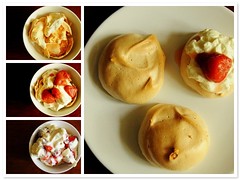
Vanilla Meringues, Freshly Whipped Cream and Strawberries

For the succulent sweetness of sunshine, green grass, good food, good friends and a good God:
Edson Sunday, Lovely Sunday (Pelle Carlberg)
The Secret Life of Sofia Nanda Devi (myspace)
The Secret Life of Sofia Outside (myspace)
Starlet Sunshine (myspace)
Airliner Everything That's You
Acid House Kings London School of Economics (myspace)
Acid House Kings I Write Summer Songs For No Reason
Starlet When The Sun Falls On My Feet
Airiel Sugar Crystals (featuring Ulrich Schnauss) (myspace)
Sambassadeur Between The Lines (myspace)
Sambassadeur Kate
Brideshead Love Makes The Sun Shine Bright
Irene Little Things (That Tear Us Apart)
Red Sleeping Beauty Summer Tells Stories (myspace)
The Maccabees The Picnic Song
Oh No! Oh My! Walk In The Park (myspace)


Also, though not on last.fm:
Dirty On Purpose Girls & Sunshine - download from SXSW 2006 (myspace)
Plants and Animals Feedback In The Field - watch youtube vid (myspace)
Cloud Cult Bobby's Spacesuit - hidden track. Watch youtube vid (myspace)
Weezer Island In the Sun - listen on youtube

Thank you Britpop, North American shoegaze, Swedish twee and Labrador Records.


*cf online: Airoots, All About Cities, BLDBLOG, Urbanology, Where and even, Antiplanner! :-)

Labels: , ,

Thursday, May 01, 2008

Inevitabilities, Boat Asia, Strawberries, 五月天 (wuyuetian, MayDay)'s 回到地球表面 (Down To Earth) Concert and 2 Samuel 12

A crazy week filled with inevitabilities.

Boat Asia 2008 at Marina@Keppel Bay, Keppel Island, Singapore
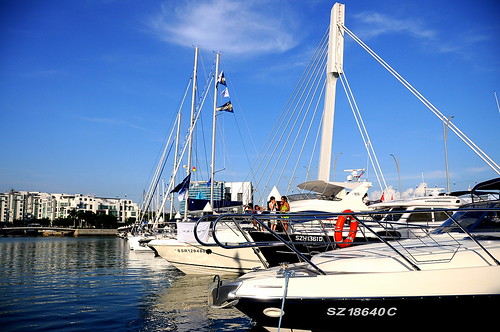
It was inevitable that the gloriously hot weekend was just the thing for Boat Asia 2008 at Marina@Keppel Bay on Keppel Island. There were jetskis and sailboats for sale, and floating platoons to put together like real life Lego, and yachts to clamber onto for joyrides and also houseboats to dream of living and navigating the world in.

Marina@Keppel Bay, Keppel Island, Singapore
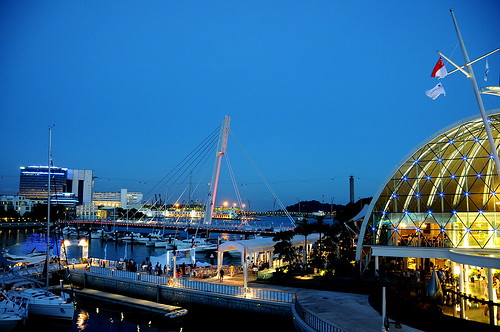
Out of the heat, in the air-conditioned confines of TCC, we sat and chatted till the lights came on and some of the boat crew sounded their foghorns, untied big bunches of balloons and let the wind carry them up into the darkness.

Le Fraisier
It was also inevitable that the heat made it impossible to eat much, so fruits were the order of the day. Because strawberries were cheap in the fresh produce section, there was an attempt at Le Fraisier, but really, that was far too precious.

TGIF Breakfast Faux-Trifle
Much better was just heaping them in a bowl with leftover vanilla sponge and natural Greek yoghurt and drizzling some manuka honey over the lot.

Fresh Strawberries and Greek Yoghurt
And even better just kosong: strawberries and yoghurt and nothing else.

(When some friends rolled into town from half-way across the world though, we managed (for their sake, of course) a bit of chilli crab and cereal crayfish (the receipt said "clay fish"). After, durians were hunted down.)

Ashin and Monster
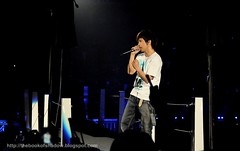
Again, it was inevitable that we would not have had been able to enjoy completely 五月天 (wuyuetian, MayDay)'s 回到地球表面 (Down To Earth) (新加坡第一站 hor) Concert at the Singapore Indoor Stadium, however novel the concept of Chinese pop music concert-going, however free the tickets, however better the sound system than the one at Singapore Expo Max Pavilion,

DSC_6205.JPG
however innovative the stage,

Monster
however wonderful the guitar antics of Monster (here with pink bear standing by),

Guanyou/Ming
however crazy the drumming of Guanyou/Ming (here with unwelcome helpers),

DSC_6271.JPG
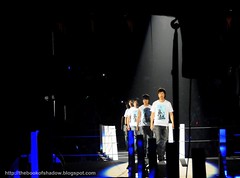
however communist and equal-opportunity the UFO-like skybridge,

Raptuous Audience
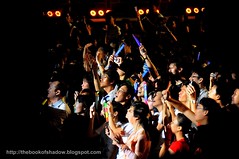
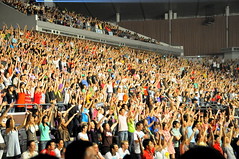
however raptuously the crowd greeted the proximity of band members,

DSC_6297.JPG
drummer Guanyou/Ming and bassist Masa
however cheeky the banter that put paid the innocence of candles on birthday cakes,

"O""V"
however "high" the audience and however companionable the neighbours. A function, no doubt, of the fact that no amount of earnest emotion set to catchy music can guarantee the future and the understanding that all good things are but a pale low-quality imitation of the great party-to-come (see Revelation).

Setlist/Song list (mostly thanks to the fans at mdmd.net forum):
Ashin hamming it up for the camera
lead singer Ashin hamming it up for the camera
五月天 回到地球表面
The stage was covered with a ceiling-to-floor white sheet. 4 "armed" men rappelled down from the ceiling wearing gas masks. Continuation of video from their last concert 離開地球表面.
1. 抓狂 - MV, Singapore concert
2. 香水 - MV
3. 叫我第一名
4. 為愛而生 - MV, Singapore concert
5. 一千個世紀 - MV, Singapore concert
6. 雌雄同體 - MV, Singapore concert
7. 愛情萬歲 - MV, Singapore concert
8. 離開地球表面 - MV
9. 生命有一種絕對 - MV
10. 孫悟空 (每個人各唱一小段) - MV, Singapore concert
11. 小太陽 (「回到地球表面」演唱會主題曲) - MV, Singapore concert
12. 九號球+離家出走 - MV, Singapore concert
13. 闖 - MV, Singapore concert
14. 生活 + 疯狂世界 - MV, MV, Singapore concert
15. 垃圾車 + 生日快樂 (瑪莎慶生 Masa's birthday) - MV, Singapore concert
16. 愛情的模樣 - MV, Singapore concert
17. 最重要的小事 (阿信彈吉他) - MV, Singapore concert
18. 我又初戀了 - MV
19. 戀愛ING - MV, Singapore concert
20. 溫柔 - MV, Singapore concert
21. 洋蔥 - Singapore concert
22. 軋車 - MV
23. 溫柔 (還你自由版)
24. 倔強 - MV (the sinner's song, said the B)
25. 人生海海 - MV, Singapore concert

Encore
UFO-like Skybridge Does An Encore
Second descent of UFO-like skybridge

Encore
26. 天使 - MV, Singapore concert

Ashin
27. 知足 - MV, Singapore concert (I waited the whole concert for this, said the C)

Ashin
28. 離開地球表面 電音版
then they threw their sweat-drenched towels into the audience. One man's bio-hazard, another's prized possession.

And it was also inevitable that, living in the community of believers, there would be the shared pain of the suffering of fellow brothers and sisters: young mothers diagnosed with third stage breast cancer, sudden deaths of loved ones in swimming pools, the tearing apart of families in the bid to make new ones, disillusionment with the manifestation of God's kingdom on earth, the lust for gossip and the injustice of the manipulation and lies so rife within Christ's body.

2 Samuel 12-13
is one of those passages in the Bible ripe with the complexity of reality that couldn't have been dreamt up by the human mind.

At the end of 2 Samuel 11, David seemed very much in control. He'd taken and gotten what he'd wanted and the cover-up of his adultery with Bathsheba and murder of her husband Uriah appeared flawless. But we are told at the end of 2 Samuel 11 that what the thing David had done displeased the Lord. And we know that several centuries before, Moses had already warned that one could be sure that one's sin would find one out (Numbers 32:23). Whereas 2 Samuel 11 is all about David sending people out to do his bidding, 2 Samuel 12 opens with the LORD sending Nathan to David. It was God who was in control and despite David's erstwhile relationship with God, he'd incomprehensibly forgotten that he would have God to answer to.

David's strong reaction to Nathan's story (2 Samuel 12:1-7a) demonstrated that David was not incognisant of right and wrong, but merely deliberately blind to his own sin. "The man must die" he said of the rich man in the story, thereby accusing and condemning himself. "You are that man," said Nathan. And God was as livid and outraged at what David had done as David was indignant at the rich man in Nathan's story.

It wasn't just that David had broken some laws and destroyed the lives of people, he was that he had despised the LORD himself (2 Samuel 12:9). When we breach God's laws, it isn't just about socio-economic-political consequences; when we sin, we show utter contempt for God, the law-maker/giver.

David acknowledged that he had indeed sinned against the LORD (2 Samuel 12:13). This was a great change from his predecessor, Saul, who had a whole slew of excuses for disobedience ("you didn't come on time, what was I to do" etc). David didn't bring forth defences nor character witnesses to attest to his general generosity and the good he had done for his people, instead, we see in Psalm 51 the plain confession of his sinfulness. David knew that that had not been a one-off, a moment of weakness, a temporary aboration, a sorry-won't-happen-again incident. He had been sinful from birth and would forever be inclined to spit on the living God. He was a born adulterer and born murderer. He admitted that he deserved punishment.

Yet, immediately, David received gratuitous forgiveness. "The LORD has put away your sin," said Nathan, "you shall not die" (2 Samuel 12:13). But this was not the slap on the wrist given to smug perpetrators that cause grieving members of victims' families to attack them outside the courtroom with foldable umbrellas. Nevertheless, and this was a big nevertheless, despite David not getting the death sentence he deserved, his son would die (2 Samuel 12:14). And there would always be the perpetual reek of death in David's family (2 Samuel 12:10). And there would always be the dreadful agonising tyranny of evil on his loved ones (2 Samuel 12:11).

(Several centuries later, in the New Testamental times, Jesus would explain that suffering was not always caused by sin. The man born blind and the people killed by the falling tower of Silom did not suffer because of their sin and rebellion. But other times, suffering and difficulties are the consequences of our sin and we must bear the responsibility for that - the illegitimate child, being made a paraplegic from drinking and driving, the broken relationships caused by gossip and slander etc. But in David's case, the cause of his suffering was quite certainly his past sins. Because God said so.)

So sure enough, the child took sick. David lay on the ground all night pleading with God to spare his son. He refused to get up and took no food. His grief freaked out his aides. (2 Samuel 12:15b-17) They figured him for a suicide risk and when the kid in fact died, they didn't know how to break the news. They needn't have worried. When David heard that his son had died, David got up, had a bath, put on clean clothes, slapped on some Old Spice and worshipped God. Then he went home and had a good meal (2 Samuel 12:20), possibly while his servants stood gaping. David explained: he'd thought that perhaps, just perhaps, God's word through Nathan wasn't his last word and plus he knew that he could rely on God's graciousness to let the child live if he wished. But, in a way that did not impinge on his graciousness, God's judgement through his prophet had been his last word on the matter and David accepted and trusted God on this (2 Samuel 12:22).

2 Samuel 12 ended with a note of hope - God gave David victory over the Ammonites in battle and David begot a son with Bathsheba whom the LORD loved.

There are certain inevitabilities we can be sure of in this 疯狂世界:

The Initiative of Grace
God is the one in control. He takes the initiative and seeks sinners to bring them to repentance. (Sinners, inevitably don't seek after the real God, no matter how they might claim to be looking for him.)

The Severity of Grace
"T'was grace that taught my heart to fear". Grace reveals and exposes and brings people to repentance so that they might be saved. The only heart that God can accept is a broken and contrite heart so therefore, in his love and his grace, he must break us so that we can see the death sentence which we are facing because of our rebellion against him, and turn to him for mercy.

The Miracle of Grace
Grace gives totally free forgiveness. But the consequences remain with us. The rest of David's life is grim: David's baby son dies even before he can be named; David's other son Amnon rapes his daughter and Amnon's half-sister Tamar (2 Samuel 13); David's yet other son Absalom murders Amnon for what he did, then leads a rebellion against his father; David's other other son Solomon eyed the crown while David was still alive etc.

And though the sinner has to deal with the consequences of his sin, he does not pay for them through his suffering. The fact is, he can never do enough to pay for even a quark of his sin because the wages of sin is death. What is free for sinners is costly to God because it cost him his only son who died on the cross in our place so that we will not have to face eternal death.

Dale Ralph Davis, 2 Samuel
Jonathan Fletcher, Grace Abounding

_________________________________________

Labels: , , , , , ,

Friday, April 11, 2008

The Return of Sunshine and the Return of the Ark in 2 Samuel 6

She beckoned through the ceiling-high windows, flaunting her freedom, vaulting through luminous leaves, sparkling off the azure sea (the really real simulacra of cheesy literary adjectives). But we were inside the board room, haunted by the spectre of inter-governmental meetings, gathered round the enormous whiteboard, adding structure upon structure to an already complicated deal.

Then at last it was over. And I ran like a beggar's dog into the last light of the day.

Sunset at Siloso Beach, Sentosa, Singapore
Finally, the fresh salty taste of sea air and warm soft sand between the toes, frisbee pick-up on Siloso Beach and spectacular dives into the foamy water. And the very fetching silhouettes of oil tankers and refineries on the horizon.

Sunset at Siloso Beach, Sentosa, Singapore
Later, we lay on deck chairs at Coastes, cocooned against the cold breeze with hot fat chips and alot of garlic mayo, cheese-splurting hotdog sausages and a goodly rack of ribs. In front of us, kids dug huge holes and buried each other in the sand, then ran about screaming in excitement at the fireworks.

(We shall not speak in further detail of the Ah Beng-blue xenon dancing lights of a certain skateboard.)

Frisbee at KovanFrisbee at Seletar
The sunshine and blue skies lasted through the weekend, good for lazing around in vast grassy fields then for more frisbee, whooping at the silky beauty of flight trajectories until the cicadas awoke and it was time for sunburnt noses to head home.

Blueberry and Strawberry Galette Bound for Oven Hell
As hot day melted into sweltering hot day later in the new week, it was difficult to keep from lolling about in ice-cold pools with only ice-blended juices and cut fruits by the cold truckload for sustenance. But I needed to carbo load for the upcoming race, and puff pastry seemed the lightest and most minimalistic way of getting some carbo delivery, so a blueberry and strawberry galette it was.

Absolut Vodka bottle as rolling pin
In the appliance-challenged kitchen, the good old Absolut vodka bottle had to be enlisted for rolling-pin service and it discharged its duties faithfully. Unfortunately, there isn't an "After" photo of the galette because I was too engrossed with 2 Samuel 6.

Chapter 6 records the story of the return of the Ark of the Lord to the centre of Israelite life.

The Ark of God was sitting around in Abinadab's house on a hill in Baale-judah (2 Samuel 6:2, also known as Kiriath-Jearim (1 Samuel 7:1)). It had been lost to the Philistines in the, erm, battle against the Philistines (1 Samuel 4).

The Ark wasn't merely a mouldy old piece of antique furniture. It was constructed at the specific instruction of God (Exodus 25:10-21) as a symbol of his presence with Israel (Numbers 10:35-36). David called it God's footstool, a reminder of God's kingship and rule (1 Chronicles 28:2). It was sprinkled with the blood of sin-offering, a reminder of man's guilt against God and inability to approach him without mediation (Leviticus 16:14-15). The Ark also contained the stone tablets on which were inscribed the word of God (Exodus 25:16,21; Deuteronomy 10:1-5), a reminder that the substance of God is informed by his word.

There are no magical objects in the Bible with inherent magical powers. The Ark wasn't worshipped as an idol but was instead a physical demonstration of the difficulty sinful man faced in relating to a holy God. The word "difficulty" suggests a possibility of relationship, no matter how remote; perhaps "impossibility" would be more accurate. Sinful man could not (and still cannot) expect to approach a holy God and live. The Philistines discovered their terrible error in presuming otherwise: the men who did not die were struck with tumours (1 Samuel 5). Being terribly logical folk, they were not completely certain that the God of Israel was behind all this until their little experiment in kiasu-ism proved it to be so.

But lest anyone think that the holiness of God was a problem for only the non-Israelites, even the rejoicing men of Beth-shemesh were struck dead when they looked upon the Ark (1 Samuel 6:19-20). And again at the start of 2 Samuel 6, when David decided to bring the Ark to his city, in the midst of great revelry and singing and dancing, the oxen carrying the Ark stumble and the unfortunate Uzziah reached out to steady it. He was struck dead instantly (2 Samuel 6:7).
David was incensed (2 Samuel 6:8). As are we. Why so legalistic, God? Why so finicky? These people weren't against you; they were for you, they were rejoicing at your presence.

Then David was afraid (2 Samuel 6:9). The reality, whether we like it or not, is that we have a deluded sense of reality. We refuse to understand that no guilty party can draw near to a holy God without death, the rightful punishment for sin, intervening. We cannot deal with God on our own terms. The reality is that God'd explained this reality to the Israelites but they didn't think it worthy of notice.

It was so as to keep them alive that God had warned them not to look at the Ark nor touch it, but to have Levites carry it on their shoulders with poles slotted through rings on the Ark itself (Numbers 4:15, 17-20; Numbers 7:9; 1 Chronicles 15:15). God's instructions on the subject were not the arbitrary shrubbery preferences of the Knights Who Till Recently Said "Ni" in Monty Python and the Holy Grail; they were real warnings about a real danger.

Why so arbitrary? Why only one way to God through Jesus? Why have such a strict God who hasn't kept up with our tolerant open-minded era?

Because, says the Bible, that's the way things are. Take it or leave it, that's reality. I'm just warnin' ya. In fact, I'm pleading with you to take this warning seriously: God was, and still is, dangerous (1 Corinthians 11:30-31; Hebrews 10:26-31). God has remained consistent throughout the Old Testamental and New Testamental times and still remains so: remember Ananias and Sapphira (Acts 5:1-11). Ignore him, choose not to believe in him, approach him lightly, at your own risk.

Coastes
50 Siloso Beach Walk
Sentosa

__________________________________

Labels: , , , ,

Wednesday, July 11, 2007

More Birthday Stuff, Lord Of The Rings, Psalms And Songs for Sleepy Sunny Sunday Picnics

It has come to be that, more than a month after this year's birthday, the celebrations show every sign of stretching their sparkly festive fingers to Christmas (this year). Birthdays in themselves seem nothing little more than annual milestones towards death, but they're always good excuses to party and parties are always good for fellowship, friendship and reunion allsorts.

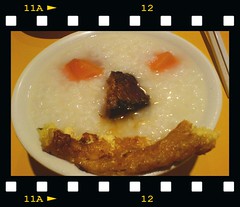
Taiwanese Porridge
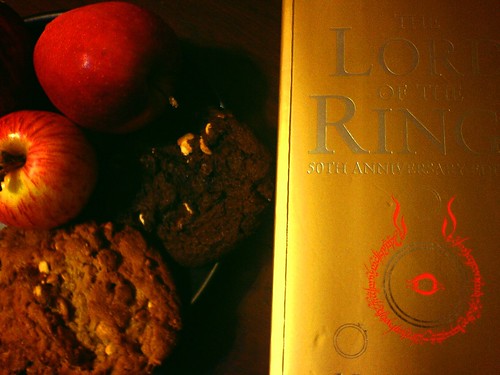
Anyway, breathers between the festivities are for light fare and, from a dip in the tub of unopened presents, J.R.R. Tolkien's Lord of the Rings in shiny gold clothes.

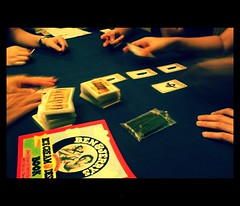
Council of Cardgamers
A few nights ago, I was torn between summons to a council of card gamers and rescuing the fair folk of the Company from frozen-framed eternity: poor Gandalf and Pippin mid-gallop towards Minas Tirith, and Frodo and Sam mid-trudge to Mordor, with Gollum not far behind.

Card gaming was a good choice: homemade ice-cream, a sheriff suicidally killing off her deputies, endless laughing at "can you turn on your rubber duckies so I can play with them?" asked seriously and politely, then, while shuffling for Saboteur, real life intervening with an unexpected call, an emergency pray-together demonstrating of the reality of dependence on God and tangible fellowship.

Games and real life. Myth and truth.

Tolkien was of the view that all myths of the world are a mixture of truth and error - truth because they are written by those made by and for God and error because they were written by those alienated from God. But there is one true myth, a true accounting of truth: the Bible.
Lord of the Rings and Nibbles
Even if LOTR isn't Christian allegory, the song bits appear faint echoes of the Book of Psalms: the beauty of the descriptive poetry, then the frustration of having to guess at the music that might have accompanied the verses, as trying to see through a brick wall. Oh, the psalmist tries to help of course: "to the tune of The Death of the Son" he says of Psalm 9, "to the tune of The Doe of the Morning" for Psalm 22, "to the tune of Lilies" for Psalm 45 etc. But the Top 40 hits of the ancient Hebrews have been lost in the intervening millennia.

Still, melodies misplaced don't taint the meat of the Psalms. And very tasty meat it is too.

Mike Reeves hosts an express gravy train through the stuff for a sampler: Understanding The Psalms.

The Psalms, misused, are unfortunately brilliant for insipid navel-gazing. It is often said how much they reflect a good range of human emotions, a well-stocked aural Hallmark shop (maybe someecards might work better?). But if we think that is all the Psalms are about, we're really missing out on the big show.

The Books of Psalms are not goody bags of Bible sweeties. We don't just open up the Psalms when we're feeling a bit nibbly and grab one to enjoy on its own. They are not just King David's songs on random shuffle, but more like Handel's Messiah: the story of Jesus put together intelligently and set to music, different pieces of text and music working together to tell a story.

Just as Moses gave Israel the 5 Books of the Law, so David gave Israel the 5 Books of the Psalms, as if they were a commentary on Moses' 5 Books of the Law.

The root word in Hebrew for "psalms" can either mean "to praise" or "to be foolish". So the Psalms, like the other wisdom books, are about wisdom and folly. These are the options set before us: to praise the LORD or to be a fool, the fool being the idiot who says in his heart,"There is no God". The judgement on them is that they are corrupt, their deeds are vile; there is no one who does good (Psalm 14:1).

If the 5 Books of the Law correspond to the 5 Books of the Psalms, Book 1 of the Psalms, comprising Psalms 1 - 41, corresponds to the Book of Genesis. Psalms 1 - 4 end with the evening and in Psalm 5, it is morning again, recalling the day-night-day cycle of Genesis 1. Psalm 8 too sounds like in Eden at the end of Genesis 1.

But the Psalms not only commentate on the Books of the Law but also prophesy the future: what God has willed to happen, what Jesus is going to do. Psalm 16 for example, as is explained in Acts 2, is not about King David, but a direct prophesy about Christ. And Jesus quotes Psalm 22 on the cross,"My God, my God, why have you forsaken me?". The fulfilment of Psalm 22:18, the dividing of clothing and the casting of lots for them, is described in the Gospel narratives. What happens after his death? Psalm 23 speaks of the LORD, the shepherd, who comforts the one who goes through valley of death and finally returns to the house of the LORD forever. Psalm 24 speaks of one ascending the hill of the LORD. Who is the one ascending? The LORD himself. Trinitarian tidbits.

On the cross, Jesus quotes Psalm 22:1 and Psalm 31:5. He was very probably using these 2 verses as bookends, to make his hearers think of everything between those 2 verses. He was declaring what would happen in the future even while he hung on the cross. Psalm 22:1, he is in pain but Psalm 22:23, 27 there is great praise of God. Even while he is on the cross, Jesus was saying that he would be triumphant. He wanted us to see that he knew what will happen: he knew that was not the end. His calling on the Lord was justified.

Book 2 consists of Psalm 42 - 72, dealing with liberation and escaping from slavery, very much like the Book of Exodus.

We see in this book many songs of the sons of Korah. Korah's claim to fame is a whole chapter of his misdeeds in Numbers 16 where he rebelled against God and was neatly, together with all his people and household and goods, swallowed up by the earth. But we know from Numbers 26 that the line of Korah did not die out. The sons of Korah, who should have been in the grave with their father, still lived. They are, to us, a picture of a redeemed people who do not deserve life but yet, by the grace and mercy of God, have life. From the Psalms, we see that the sons of Korah were always surrounded by trouble, but still they get really joyful. The climax, it seems, is in Psalm 49: why should I fear in times of trouble? For God will ransom my soul from the power of the grave (Psalm 49:15).

Book 2 ends with Psalm 72, a great psalm all about the remnant people and the coming of the king.

Book 3 consists of Psalms 73 - 89 and corresponds with the Book of Leviticus. These psalms were written by Levites and mostly concern priestly issues: the temple and sacrifices. Asaph's name pops up quite a bit in this book (see, eg. Psalm 74). The chap was Levite from the Korah-ite clan and a director of the singers who served in the house of the LORD. He is also described as a prophet in 2 Chronicles 29:30, because the Psalms are not just praise but also prophesy. The last Psalm in this book, Psalm 89, ends with the death of God's own chosen one (Psalm 89:45). All the levitical stuff and sacrificial stuff leads up to this: the death of messiah.

Book 4 (Psalms 90 - 106) corresponds with the Book of Numbers. Loads of desert scenery here. Psalm 90 is a prayer request of Moses. Psalm 91 is what Satan quotes to Jesus where? In the wilderness, the desert. But while Israel was faithless in the wilderness, Jesus the true king was faithful in desert; he doesn't trust Satan in the least. Psalm 106 is basically the story of the Exodus. It ends in great prayer: save us. O LORD our God and gather us from the nations that we may give thanks to your holy name.

Lastly, Book 5 (Psalms 107 - 150) corresponds with the Book of Deuteronomy. It is all about living by God's word. Deuteronomy opens with the Israelites about to enter God's land, so in parallel, Psalm 107 gives thanks that the people of God have been gathered (107:3). The prayer of Psalm 106 has been answered.

Psalm 120:5 is a tale of woe: a man in distress, living in exile not in Israel. This is rubbish, he says, I want to be in Israel. no more pagan land for me. Let's go to Jerusalem. And he starts travelling knowing that the Lord will protect him on his journey (Psalm 121). In Psalm 122:2, we see that he's gotten to Jerusalem from exile and proceeds to praise the wonder of Jerusalem rapturously. He now lifts his eyes to the holy place and starts thinking about building temple of the Lord (Psalm 132). And what more, the Messiah himself is going to go and join them in Jerusalem. Extremely cool. And Jerusalem will be their resting place forever.

It's really nice to get to the end of LOTR when the Ring is destroyed and there is peace for all peoples (and also in-jokes about Sharkey's End). It is similarly nice to wait with bated breath for the last instalment of J.K. Rowling's Harry Potter series coming to good bookstores near us from 12.01am on 21st July 2007, which most are sure will end with the defeat of Voldemort, the epitome of evil, and peace for all the wizarding world. For us non-literary-critic plebs who do not begrudge their popularity, these books, while they last, let us walk in other worlds and enjoy the ultimate triumph of good over evil. But when the final page has been turned and the final word has been read, and there is a sigh of satisfaction and a goodly stretch, the book is closed, goes back onto the shelf, and we go back to real life.

Keeping it real is so much more totally awesome. But in reality, we are not, neither by default nor nonchalant effort as we like to assume, on the side of the good and ultimately victorious. And if reality is about the ultimate triumph of the good God and God's people and about the destruction of evil, of those who do not acknowledge the lordship of God and do not repent of their rebellion against him, then happy endings will come only to those who choose to be wise, who choose to rely on Jesus for their salvation, who choose to be blessed:
Blessed is the man
who walks not in the counsel of the wicked,
nor stands in the way of sinners,
nor sits in the seat of scoffers;
but his delight is in the law of the LORD,
and on his law he meditates day and night.

He is like a tree
planted by streams of water
that yields its fruit in its season,
and its leaf does not wither.
In all that he does, he prospers.
The wicked are not so,
but are like chaff that the wind drives away.

Therefore the wicked will not stand in the judgment,
nor sinners in the congregation of the righteous;
for the LORD knows the way of the righteous,
but the way of the wicked will perish. (Psalm 1)
If we acknowledge God as our master and trust only in Christ's blood to save us, there will be no more despairing winter, only the joy of a spring and summer to come far more marvellous than the marvellous summer of the Shire with its wonderful sunshine and delicious rain and air of richness and growth, far more yearned for than white shores and beyond them a far green country under a swift sunrise. There, we shall see our Master face-to-face and dwell in his house forever.

(For now, only a pale shadow of that great summer holiday: merely the Sunday sun. Blue sky. Butterflies. Green lawn. Shady trees. Picnic basket. Red checked mat. Cold lemonade. Sandwiches. Crisps. Lemon meringue pie. Sweet cherries. Noshing, reading, sleeping. Dreaming together. Rockin' bop-abouts for the drive home.

Harry Nilsson, She Sang Hymns Out of Tune
Marbles, I Love The Summer Days
Ted Leo & The Pharmacists, The Gold Finch and The Red Oak Tree
Yoko Kanno, Dreams In A Pie
4 bonjour's parties, Satellite
Cibelle, Green Grass
Angel Tech, Slow Toy Piano
The Veils, Under The Folding Branches
The Red River, The Birds And The Boats (Hitchcock's birds?)
Julian Carax - Under The Sun (Frenchie under ze sun.)
Toy, Rabbit Pushing Mower (Too much sun means monsieur sees bunnies doing the gardening.)
Belle & Sebestian, I Know Where The Summer Goes (Cos all that sugar will give you diabetes.)
Feeder, Seven Days In The Sun (Rockit home!)
The Positions, Summer Nights (Summer in Singapore? Whatever. Clap and duetit!)

Jack Johnson? He's not here. He's out surfing, getting angsty and drinking coconut juice.

Nice but only a pale shadow.)

Labels: , , , , ,

Thursday, May 10, 2007

Songs For Sunny Days

Lazy mornings brimming with sunshine. Slow long drives with the windows down and wind in the hair. Picnic baskets, mats and hammocks in the shade. Good friends and cold lemonade. Strawberries and cream. Blue skies and chatting. Dappled sunlight on lush grass. Pink petals floating down. Faroff birds, singing. Strumming guitars and humming. Praising the Maker Of All. Sleeping under strawhats. Being tickled by butterflies. Vast expense of green. A deaf girl in a pretty floaty summer dress, dancing. She loves a boy who lives in the Evil Empire. They are married in the summer.

(Eschatological in sentiment, not lyrics.)

There is something in
heart-bursting-with-song sunny days that always seems to point forward to the marvellous Last Day where the City of God will be lit not by the sun nor the moon but by the glory of God himself with Christ as the lamp (Revelations 21:23). But that bright and happy day for the saved will be a terrible fiery one for the damned. Since there'll surely be time enough for rest then, back to work while God still allows the sun to rise on both the evil and the good (Matthew 5:45)!

Belle & Sebastian - Another Sunny Day
The Walls - To The Bright and Shining Sun
El Perro Del Mar - It's All Good
El Perro del Mar - God Knows (You've Got To Give To Get)
Thao Nguyen - Feet Asleep (Daytrotter session)
Wilco - Blue Sky Blue
Oh No! Oh My! - Walk In The Park
Suburban Kids With Biblical Names - Trees and Squirrels
The Billy Nayer Show - Rabbits and Bears
Cats On Fire - Praying On A Sunny Day
The Be Good Tanyas - Littlest Birds
Adem - These Are Your Friends
Apples In Stereo - Benefits of Lying (With Your Friend)
Dean & Britta - The Sun Is Still Sunny
The Butterfly Explosion - Sophia
Gorky's Zygotic Mynci - Face Like Summer
Cloud Cult - The Deaf Girl Song
Peter, Bjorn & John - Young Folks
Of Montreal - Du Og Meg
Lou Reed - Perfect Day

Did you honestly think Lily Allen would be let anywhere near this mix? Cheh.

PS: All mp3s up only for limited time. Must obey God-instituted authorities, therefore, copyright etc etc.

Labels: , ,

Saturday, February 24, 2007

Wake Up To A Day In Tioman

C'est magnifique.
Turbo Props
40 minutes away from Singapore's Seletar Airport by Berjaya Air's 48-seater Dash 7s are the white beaches and azure waters of Tioman Island, gleaming off the East coast of Malaysia. The days were nothing less than hot and sunny right through. Unusual, we were told, for a monsoon season.

The tide was high in the mornings, good for sand in the underpants before breakfast (doing our bit for the Singapore construction industry, no doubt), smiling in sunnies and straw hats, the excitement of suntan oil on hot skin, swimming snorkelling with fishes, giving a wide berth to sea urchins clustered about like sea mines, and diving whilst beset by jellyfish. And also for chapped lips from one regulator too many in the gob.

At Renggis Island, where underwater visibility was excellent though surface current was strong, a vibrant reef system spread out its colourful wares in glorious magnanimity. I proved to be a clumsy oaf amongst the dense nimble schools of Scissortail Sergeants (closely followed by crescent warusses) who came alongside for a look and a peck on the goggles, then left me far behind with a few nonchalant swishes of the tail. Small sting rays fluttered along the seabed, countless clownfish(?) flirted with the corals, and everywhere swam silver and bluefaced angelfish, butterflyfish, yellow pufferfish, rather stonyfaced groupas, golden trevally escorts, gaudy napoleanfish...As Faithless said (but in a completely different context) so much more than I thought this world could ever contain. The dive centre enthused about Boris the barracuda who was resident in those parts, but didn't see a fin of him.
Beach Reading for Low Tides
Drowsy afternoons, when the tide was low, were for alternately lapping in the pool and reading and throwing frisbees on the beach. One day, we managed to rouse ourselves enough for a speedboat sea taxi to Salang, where there were 3 dive centres, monitor lizards lounging in the river, milkshakes and fruit juices at Salang Dreams Café and passable fare from the little Ramly burger hut nextdoor.
Dinner at Barbura Seafood Restaurant
Nights were for being "deceived, by trees!", and beers (yay, dutyfree island) and seafood dinners at Barbura Seafood Restaurant, next to the black nothingness of the wide calm sea. There, cats curled round your shins in calm lazy search of a scrap of black pepper crab, and ravenousness sated, you were welcome to lie back on the weathered planks outside and gaze up at the glistening constellations above, unknowable lightyears away, the twinkling, perhaps, of now-dead stars.
"Look," said someone,"is that an airplane there, under the moon?"
"No lah. It's the Son of Man coming in the clouds of heaven. With flashing lights."
Pool not Billards
Some nights, there were also arcade games and countless rounds of pool and karaoke (all before the clock struck 2 in the morning).
Elvis - Original Beach Boy
Public karaoke sessions in rank smoky bars meant loads of drinks, Swedish girls singing ABBA, German boys whopping La Bamba, crazy dancing to Senggol-senggolan, drunk boorish Teutonic retirees befuddledly blocking the karaoke screen, and trying to shake a particularly sticky dance cover of Moonlight Shadow (Shadow) out of our ears.
Supper and Dancing
After karaoke, the party continued into the early hours on the edge of the cliff, courtesy of makeshift stalls touting murtabak, satay, and roti john for supper, teh tarik for a washdown, a strolling Filipino band with a vast repertoire, and an enthusiastic crowd of pop-collared frat boys and girls living up their year out.

And we cannot forget this: departing from the tiny Tioman airport, someone went in search of ice-cream and managed to return with a 1-litre bottle of Glenmorangie.

Trust John Piper for a pithy quote (though his theology is, at times, vague and therefore questionable). This one, purportedly from "In The Godward Life", has been making its rounds:
Jesus Christ is refreshing, but flight from him into Christless leisure makes the soul parched. At first it may feel like freedom and fun to skimp on prayer and neglect the Word, but then we pay: shallowness, powerlessness, vulnerability to sin, preoccupation with trifles, superficial relationships, and a frightening loss of interest in worship and the things of the Spirit.
Thank God for the luxury of time out to catch up on sleep, faff about, and think clearly away from the muddied hustling and bustling, and to get my bearings right and home in on his kingdom. It sux arse to, in the clearing air, gaze upon the continued corruption of my own sinfulness. But sin is sin and there is no excuse of exhaustion or self-righteousness for what is ultimately rebellion against God.

Thank God salvation is by grace and not works! How completely undeserved it is.

Thank God, also, for his kingdom that is infinitely and vastly more than me and my timeout; his vast ordered kingdom chugging along to fulfilment in human history which is ultimately to his glory, for who else is worthy of such majesty?

O LORD, our Lord,
how majestic is your name in all the earth!
You have set your glory above the heavens.
Out of the mouth of babes and infants,
you have established strength because of your foes,
to still the enemy and the avenger.

When I look at your heavens, the work of your fingers,
the moon and the stars, which you have set in place,
what is man that you are mindful of him,
and the son of man that you care for him?

Yet you have made him a little lower than the heavenly beings
and crowned him with glory and honor.
You have given him dominion over the works of your hands;
you have put all things under his feet,
all sheep and oxen,
and also the beasts of the field,
the birds of the heavens, and the fish of the sea,
whatever passes along the paths of the seas.

O LORD, our Lord,
how majestic is your name in all the earth! (Psalm 8)

The Sun Sets on Tioman
Not meant to be a naff inspirational pic

(In other news, David Jackman will be back in Singapore this year for Project Timothy's Ministry Matters. Details here.)

Labels: , , , ,

Saturday, August 05, 2006

Picnic at the Botanics and 1 Samuel 11-12

Saturday morning, at the end of the work week, is glorious skies and cloudless sunshine. We bounceburst out of our homes, happy and free, shouting,"A picnic! A picnic!" ("Vacate! Vacate!", yells someoneelse,"Fire in the hole!", just to be different and retain some semblance of macho-ness*. But we think, instead, that he means his morning toilet was somewhat explosive.)

(The soundtrack for the car-ride is this:
Jane Herships "Don't Be Afraid, I've Just Come To Say Goodbye (The Ballad of Clementine Jones)"
Mary Lou Lord "I've Figured You Out"
KT Tunstall "On The Other Side Of The World"
Imogen Heap "Hide and Seek"
Imogen Heap "Speeding Cars"
Snow Patrol "Chasing Cars"
Quite a bit of estrogen, no wrinkly Leonard Cohen. So somehow, despite the morose lyrics, the songs sound quite cheerful if chorused at the top of one's voice on a sunny day with the wind in our hair and a well-stocked picnic basket on someone's lap. A VW camper van with red plush upholstery, without Bob Dylan and his garish harmonica, would be a nice extra.)

(Too many estrogen-y singers also gives us this StrawberryShortcake descriptive:)
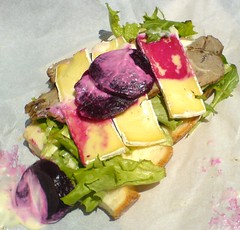
Messy Sandwich!At the Singapore Botanic Gardens, butterflies dance ahead of us, past the bushy-tailed squirrels rustling in flowering bushes, past the lush morningglory-trellised walkway heavy with fleshy purple, past the fragrance of frangipanis hanging in the air like a thick pink cloud, and onto our usual spot on the undulating lawn, where there is shade under great palm trees. There, there is the laying out of mats and food and drinks. There are straw hats and sunnies. There is a bronzed barechested man, his baseball cap set jauntily, juggling, the red and white skittles winking in the sun. There are rosbif beetroot brie sandwiches wrapped in paper and packets of crisps. There are children running after excited puppies. There are children running away from excited puppies. There are copious amounts of icy drinks. There are lazy games of crocker. There is more cheese and chilled Misiones de Rengo Sauvignon Blanc. There is a contented breeze and quiet reading. There is the faint soundwall of cicadas in the rainforest nearby.
Reading at Botanics
And when the ants find us, by the nasty black battalion, we leave.

*************


Salvation from External Enemies
While we (and the rest of Israel) are wondering at the end of 1 Samuel 9-10 if Saul will fulfil his role as king to save Israel from external enemies and from themselves, Nahash the Ammonite thoughtfully provides Saul with the opportunity to prove himself by besieging Jabesh-gilead (1 Samuel 11:1).

The people of Jabesh-gilead are so certain of defeat, so sure of death at the hands of Nahash that as a last resort, they offer themselves as his vassals (1 Samuel 11:1). But cruel old Nahash wants more than their servitude. He wants to rub salt in their wounds; he wants, literally, to put out their right eyes and thus bring disgrace to all of Israel (1 Samuel 11:2).

Faced with a fate worse than slavery, the people of Jabesh-gilead ask Nahash for a 7-day grace period to find for themselves a saviour. So complacent is the Ammonite that he grants their request, thus making him the forefather of all loser evil dudes in movies who exhibit great reluctance to kill the captive hero/heroine while they can, and instead waste time boasting about their own cunning clever evilness, allowing the heroic sidekick ample opportunity to rescue the captive.

The camera pans to another town, where Saul is coming in from the field behind the oxen (1 Samuel 11:5). He hears of this outrage, and the Spirit of God rushes upon him and he rallies 330,000 men to the Jabesh cause (11:6-9). Together, they overrun the Ammonites and save the people of Jabesh-gilead from their enemies.

This is a great start. Saul shows that he can and will deliver the people under his care; he will go out and fight their battles for them (1 Samuel 8:20).

Salvation from Themselves
What is better is that Saul gives credit to whom it is due. It is the LORD, says Saul, who has worked salvation in Israel today (11:13). For it was the Spirit of God who first moved Saul into action (how different he is from the mousy man hiding amongst the luggage (10:22) or the one who wanted to crawl back to the comfort of home without finding his lost asses (9:5)). It was also the dread of the LORD that fell upon the people so they responded to Saul as they did, turning out as one man to save the people of Jabesh-gilead (11:7-8).

And the people, acknowledging God's ultimate kingship, make Saul king before God. Things are indeed looking up. It looks as if God's people and their king are finally living in a right relationship with God.

But Samuel reminds them of the dark cloud hanging over their heads: in asking for a human king in place of God the divine king, they have rebelled against him. And the judgement for rebellion against God is death and destruction. Oh, perhaps the reason why the people sinned is because Saul was a stumbling block to them. Or was it because, really, God wasn't worthy of his kingship and if the incumbent was of no use, then a revolution, understandably, was in order; a human king would do better than a divine one?

Unfortunately, Saul himself was not the stumbling block. The people agree that since he was a young child serving at the temple, he had neither defrauded the people, nor oppressed them, nor taken anything from any man's hand (1 Samuel 12:3-5).

Even more unfortunately, God was far from unworthy of his divine kingship. Saul reminds the people of the righteous acts the LORD did for the people, of his power and his faithfulness to them: whenever they cried out, whether they were under their Egyptian oppressors or hardpressed by their enemies, it was the LORD who had the heart and the ability to deliver them, so that they could dwell in safety (12:6-11).

The problem is neither with Saul nor with God. The problem is the people themselves: their rebellious hearts, their ungratefulness, their myopia. Time and again, they forgot what God had done for them, and how he had punished them for previous sins and yet, how in great mercy, he delivered them from their enemies when they cried out to him (12:8-11).

So the whole of Israelite history was repetitive cycle of sin, punishment and grace on a linear timeline. And in that cycle, the Israelites, just having rushed past the Sin platform having rebelled against God by wanting to replace him with a human king, are hurtling towards the next stop: Punishment.

Do the people doubt that God is able to punish them? God demonstrates his ability to do so by sending a thunderstorm to destroy their harvest (12:16-17). If the people thought that the growing of the crops, the sure harvest, their daily lives were in their own control and were a matter of no concern to anyone else but themselves, they were surely disabused of that idea in a hurry. God's ability to send thunder and rain in the driest season show that the people are completely dependent on God for everything for he alone controls the world. They, mere creatures, are at his mercy. God is not impotent or ignorant or imaginary. He is very real, omniscient and omnipotent. That is a Very Good Thing To Remember.

The horror of what they've done, their faithlessness despite God's faithfulness, their distrust of God's proven trustworthiness cuts them to the heart. Face to face with the enormity of the evil they perpetuated, the people greatly fear for their lives (12:18). What terrible punishment surely awaits them.

Yet Samuel says,"Do not be afraid" (12:20). Even though they have done this evil, there is a way to escape what they rightfully deserve: fear the LORD and serve him (12:14), follow the LORD their God (12:14) and obey his commandments. God is merciful and patient, not destroying completely like he easily did to the harvest. Because grace is pardon freely given, there is no need for prior punishment, no requirement for purgatory.

However, warns Samuel, if they continue on their current path, if they continue not to obey the voice of God, if they continue to rebel against his commandments (12:15), then there will be no hope left for them. They and their king will be swept away (12:15).

Perhaps this time the people would save themselves much grief and obey God? Perhaps their new king will be able to lead them well and restrain them from doing evil?

See 1 Samuel 13-15.

*************

*A picnic, a picnic
The Smurfs are on their way
To go and have a picnic this bright and breezy day

A picnic, a picnic
We're bringing drinks and food
All Smurfs are in a happy mood

Upfront goes Papa Smurf and then the other Smurfs
And there they all gather merrily singing along
Oh this is such a happy day
[Or something similar. If anyone has the definitive lyrics, please let me know.]

Labels: , ,